
Taiwan President Ma Ying-jeou Monday said his administration would push ahead with plans to purchase arms from ally Washington while trying to improve ties with traditional rival China.
Ma, who was elected in a landslide in March and took office in May, has pledged better relations with China. The two sides launched regular direct flights for the first time in nearly six decades last month.
His government has also allowed more Chinese tourists to visit the island and relaxed controls on China-bound investments.
"However, the ongoing steps to improve ties with mainland China will not influence Taiwan's proposed procurement of US-made weaponry," Ma said while meeting a group of visiting members of the US House of Representatives.
"As a matter of fact, Taiwan presented an arms shopping list to the United States last year. We hope the US authorities could review the list in accordance with their law," he said.
On Taiwan's wish list are 66 US F-16C/D fighter jets in a deal worth at least 3.3 billion US dollars that is currently going through the US Congress.
Taiwan applied to purchase the fighter jets early last year, but the deal was held up amid frustration in Washington at tensions between Taiwan and China sparked by Ma's predecessor, the independence-leaning Chen Shui-bian.
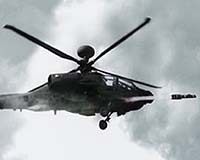
Taipei is also looking to purchase 30 Apache attack helicopters, 60 Black Hawk helicopters, eight submarines and four Patriot air defence missile batteries, according to local media reports.
Ma has promised to increase Taiwan's military spending to at least three percent of gross domestic product in what he said was a move "to display our determination to defend ourself."
In 2007, Taiwan's military spending accounted for 2.85 percent of GDP, up from 2.6 percent in 2006.
Ma was speaking on the eve of his first overseas trip as president. He will stay overnight in Los Angeles before heading to Paraguay and the Dominican Republic, two of only 23 nations that recognise Taiwan rather than China.
Taiwan and the mainland have been governed separately since they split in 1949 at the end of a civil war, but Beijing sees the island as part of its territory awaiting reunification, by force if necessary.
China has repeatedly pledged to invade Taiwan should the island declare formal independence.
