
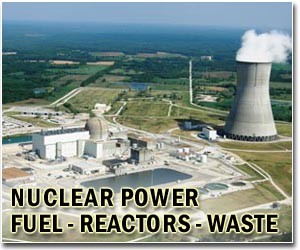
The company which operates Japan's crippled nuclear plant has an aversion to change that left it ill-equipped to handle the crisis, the prime minister's special advisor on the disaster said Wednesday.
The Fukushima Daiichi plant, where reactor cooling systems were knocked out by the March 11 quake and tsunami, has leaked radiation into the air, ground and sea in the world's worst nuclear disaster since Chernobyl 25 years ago.
"Tokyo Electric Power (TEPCO) is a very conservative company that dislikes change," Goshi Hosono told a news conference.
"Electricity supply is routine work. That characteristic is not suitable for coping with a crisis situation," said Hosono, a member of the ruling Democratic Party of Japan.
"The corporate nature of TEPCO and its preparedness for the tsunami and loss of power should all be subject to investigation," he said.
"The outcome of the investigation has to be acceptable to the international community."
He also indicated that overseas experts may take part in the probe.
"I have no intention of making the investigation process the second round of the Tokyo tribunal," he said, referring to the war crimes trials that took place after World War II. "But it is of course possible that overseas experts may participate in the process."
Japan has raised the level of the crisis from five to the maximum seven on an international scale, the same "major accident" category as the 1986 Chernobyl disaster.
Hosono stressed that although the accident was rated seven, "Japan has been taking control of the situation".
He said no one had died from radiation or been exposed to levels beyond legal limits by the accident.
However TEPCO said Wednesday that a woman working at the plant was exposed to radiation equal to more than three times the legal limit for females over a three-month period.
TEPCO has said it to aims to achieve a "cold shutdown" of the reactors within six to nine months.
Hosono said that handling radioactive water from cooling operations at the plant and lowering radiation levels were the major obstacles to following that timetable.
But he added: "There are far more options we can use now to handle the crisis compared to the initial situation that was very hard to control."
Share This Article With Planet Earth
