
Astronautics is the discipline of designing, building, and operating space vehicles. This field of endeavor addresses the design of space missions, spacecraft and in-orbit operations. Related technological areas include rocket engines, launch vehicles, orbital mechanics, satellite dynamics and control, space navigation and numerous others.
An astronautics education provides the foundation for positions in space exploration, national security and numerous civilian space applications.
The term "astronautics" was first thought to be the theory and practice of navigation beyond Earth's atmosphere. It was coined by analogy with aeronautics, as there is a certain degree of technology overlap between the two fields. The term "aerospace" is often used to include both fields.
There are several common technological concerns and restrictions such as those on mass, temperature and external force. In space, equipment must survive extreme conditions such as high-grade vacuum, radiation bombardment and the effects of magnetic belts.
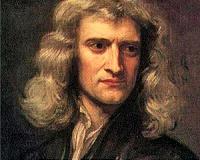
The field of astronautics began with Isaac Newton's 1687 treatise, Philosophiae Naturalis Principia Mathematica. Other early contributions in the 18th and 19th centuries came from Leonhard Euler and Joseph Louis Lagrange. The theories needed for space flight were established early, but practical applications were not possible until the mid-20th century.
Today, there are many professionals working in important space-related positions who have not had formal training in astronautics. Launchspace has developed a special short course for those professionals who need to be conversant with key aspects of space flight, launch vehicles and in-orbit operations. See the course description below and contact Launchspace for details on a course presentation at your facility.
