
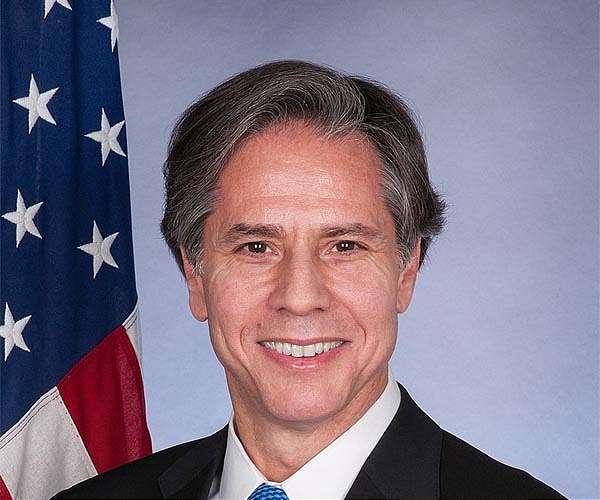
US Secretary of State Antony Blinken said on Wednesday the moment has come to withdraw troops from Afghanistan and that Washington would work with NATO allies on a "coordinated" pull-out.
"Together, we have achieved the goals that we set out to achieve and now it is time to bring our forces home," Blinken said in Brussels ahead of talks with NATO partners.
US President Joe Biden is to announce formally later Wednesday that Washington will withdraw its remaining 2,500 troops from Afghanistan by September 11 — 20 years after the attacks in the America that sparked its longest war.
NATO partners meeting in Brussels, some physically but most virtually, look set to agree to wrap up the alliance's 9,600-strong mission in Afghanistan at the same time as the group's major military power leaves.
"This is an important moment, for our alliance," Blinken said.
"Together, we went into Afghanistan, to deal with those who attacked us and to make sure that Afghanistan would not again become a haven for terrorists who might attack any of us."
Blinken said the allies "will work very closely together in the weeks and months ahead on a safe, deliberate and coordinated withdrawal of our forces from Afghanistan."
He insisted that, despite the pull-out, "our commitment to Afghanistan, to its future, will remain".
The draw down delays only by around five months an agreement with the Taliban by former US president Donald Trump to withdraw troops, amid a growing consensus in Washington that little more can be achieved.
The decision came as Turkey announced an international peace conference on Afghanistan in hopes of reaching an agreement that brings stability to a nation battered by nearly 40 years of war.
But the Taliban, newly emboldened, said they would boycott the conference.
Timeline: US intervention in Afghanistan
Kabul (AFP) April 14, 2021 –
The US-led invasion of Afghanistan in 2001, following the 9/11 terror attacks, targeted Al-Qaeda in the sanctuaries provided by the then Taliban government.
As US President Joe Biden prepares to finally end America's longest war by withdrawing all its troops from the country before the 20th anniversary of the attacks, here is a timeline:
– 'War on terror' –
On October 7, 2001 — less than a month after the September 11 attacks that killed around 3,000 people in the US — President George W. Bush launches operation "Enduring Freedom" in Afghanistan.
The country's Islamic fundamentalist Taliban regime had been sheltering Osama bin Laden and his Al-Qaeda movement, which carried out the attacks.
The operation opens a military front in the US "war on terrorism".
Within weeks, US-led forces overthrow the Taliban, in power since 1996.
About 1,000 American soldiers are on the ground by November 2001, rising to 10,000 the next year.
– Forgotten war –
American attention is diverted from Afghanistan when US forces invade Iraq in 2003 to oust dictator Saddam Hussein.
The Taliban and other Islamist outfits regroup in their strongholds in southern and eastern Afghanistan, from where they can easily travel between their bases in Pakistan's tribal zones, and launch an insurgency.
In 2008, the US command in Afghanistan calls for more manpower. Bush sends additional soldiers and about 48,500 US troops are deployed.
– Peak of 100,000 troops –
In 2009, Barack Obama — elected president on campaign promises to end the Iraq and Afghanistan wars — boosts the US deployment to around 68,000. In December, he sends another 30,000.
The objective is to stymie the growing Taliban insurgency and to strengthen Afghan institutions.
By 2010, more than 150,000 foreign soldiers are deployed in Afghanistan, of which 100,000 are American.
– Bin Laden killed –
Bin Laden is killed on May 2, 2011 in a US special forces operation in Pakistan.
– Combat operations end –
The NATO alliance ends its combat mission in Afghanistan in 2014.
But 12,500 foreign soldiers — of which 9,800 are American — remain to train Afghan troops and conduct anti-terrorist operations.
Security in Afghanistan degenerates as the Taliban's insurgency spreads, with the Islamic State (IS) group also becoming active in 2015.
– US reinforcements –
In August 2017, new US President Donald Trump scraps any timetables for a US pullout and re-commits thousands more soldiers.
However, deadly attacks multiply, especially against Afghan forces. The US steps up air strikes dramatically.
– Talks –
In 2018, Washington and Taliban representatives discreetly open talks in Doha, led by US special envoy Zalmay Khalilzad, focused on slashing the US military footprint in Afghanistan.
In return, the US demands that the Taliban prevent the country from being used as a safe haven for jihadist groups including Al-Qaeda.
– Historic deal –
On February 29, 2020 the US and the Taliban sign a historic deal in Doha.
It paves the way for the withdrawal of all foreign forces from Afghanistan by May this year — in return for the insurgents offering some security guarantees and agreeing to hold peace talks with the Afghan government.
The peace talks begin on September 12 but violence surges in Afghanistan and negotiations between the Taliban and Afghan government largely stall.
Over the following months there is an uptick in high-profile assassinations particularly in Kabul, which officials blame on the Taliban, though the group steadfastly denies any involvement.
– End date –
The troop figure by the end of Trump's presidency in January 2021 had gone down to 2,500 as support for military action waned. As of February, NATO had around 10,000 service members in the country.
The drawdown planned by Biden delays by around five months the agreement with the Taliban by Trump to for the troop pullout, amid a growing consensus in Washington that little more can be achieved.
