
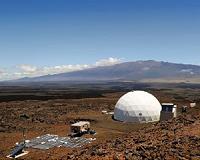
The University of Hawai'i at Manoa is leading a study on the effects of long-term space travel to humans, a UH news release said.
Six members of the Hawai'i Space Exploration Analog and Simulation (HI-SEAS) team are in isolation, as they closed the door to a simulated faux Mars habitat on the northern slope of Mauna Loa on Wednesday, Oct. 15. The crew will spend eight months in isolation.
UH will investigate the human factors that contribute to astronaut crew function and performance over time.
"We need to know more about how the mind works, how individuals contribute to a team, and how that team dynamic changes over time in order to anticipate how astronauts will react during long-duration space travel," said UH Manoa Associate Professor Kim Binsted, principal investigator for the program.
"It's essential that we understand these factors before we start assembling a team for a manned mission to Mars."
