
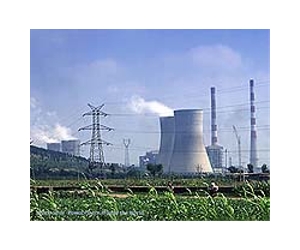
China has no other choice but to shift to a low-carbon pathway, says a U.N. report.
If China fails to adequately address the negative impacts of climate change and environmental degradation, it could face the reversal of 30 years of social and economic achievements, states the report, "China and a Sustainable Future, Towards a Low Carbon Economy and Society" released Thursday.
Commissioned by the U.N. Development Program, the report comes ahead of April 18-19 climate talks in Washington.
"The shift to a low-carbon development pathway is imperative as China balances further economic development with environmental sustainability and the need to respond to the threat of climate change," said Khalid Malik, U.N. resident coordinator and UNDP resident representative in China in a statement.
With the expected migration of nearly 350 million rural Chinese into urban areas over the next 20 years.
China will need to introduce and enforce strict standards of energy efficiency for building and electronic appliances, says the report.
"Most of the energy-consuming assets needed between now and 2020 have yet to be built," the report states. "China's success in moving toward low-carbon development will be shaped by the types of investments, choices of technologies and organizational decisions that are made in the near future."
The report calls for an increase in low-carbon energy sources such as wind, biomass and solar energy, while phasing out obsolete carbon-intensive production techniques.
It also suggests a domestic carbon tax and setting up a nationwide cap-and-trade plan in which companies could trade carbon quotas.
China, the world's largest emitter of carbon, will also need to reduce carbon emissions from the residential sector and vigorously develop public mass transportation to prevent a massive increase in carbon emissions from the transport sector, it says.
Pointing out that, prior to U.N. summit on climate change in Copenhagen last December, China had pledged to lower its carbon dioxide emissions per unit of gross domestic product by 40 to 45 percent by 2020, the authors said China has "no other choice" but to shift to a low-carbon pathway when defining future social and economic development agendas.
According to government statistics released April 8 to Xinhua, China's state-owned news agency, low-carbon energy sources will account for more than 25 percent of the country's electricity supply by the end of 2010.
And a study released by the Pew Charitable Trusts last month shows that China in 2009 for the first time led the world in clean energy investments, spending $34.6 billion, nearly double that of the United States.
While the U.N. report authors note that adopting a low-carbon model may result in short-term job losses, higher prices and revenue shortfalls for China, the long-term payoffs for the country include more sustained green job growth, an improved standing in the world, technological innovation, lower risks to health as well as protection of vital ecosystems.
Share This Article With Planet Earth
