
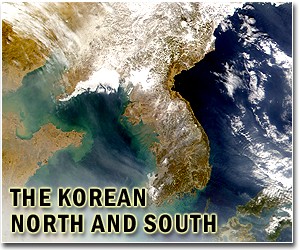
Defense Secretary Robert Gates on Thursday is due to meet Japanese leaders to try to forge a common strategy towards North Korea, amid rising US concern over Pyongyang's missile arsenal.
In a week-long tour of Asia, Gates arrived in Tokyo on Wednesday after warning that North Korea had made progress in its long-range missile programme that would soon put the United States under direct threat.
North Korea is expected to dominate the agenda when Gates meets his Japanese counterpart Toshimi Kitazawa, Foreign Minister Seiji Maehara and Prime Minister Naoto Kan.
Washington has worked closely with its allies in Tokyo and Seoul to try to prevent tensions in the region from spinning out of control after Pyongyang shelled a South Korean island in November.
Gates — who will stop in Seoul on Friday — offered a pessimistic US assessment of North Korea's military power during an earlier visit to Beijing, saying the North could have a "limited" number of intercontinental missiles within five years.
North Korea has test-fired three ICBMs, most recently in April 2009 when one crossed over Japan and landed in the Pacific.
He also described a "sea change" in public attitudes in South Korea, with the country's population losing patience over North Korea's provocations.
Tensions soared on the divided peninsula after the North launched an artillery barrage on Yeonpyeong island on November 23.
Seoul and Washington also accuse the North of torpedoing a warship last March with the loss of 46 lives. Pyongyang denies the charge.
"Clearly if there is another provocation there will be pressure on the South Korean government to react," Gates said in Beijing.
To revive diplomacy, he said it was vital that North Korea take concrete actions to prove its intentions, such as freezing further missile or nuclear tests.
North Korea on Wednesday reopened a cross-border hotline and sought talks on bolstering business projects with South Korea, part of apparent peace overtures made after months of confrontation.
In Tokyo, Gates also is expected to discuss efforts to draft a new strategic "vision" for the US-Japan alliance, Japan's potential interest in US fighter jets as well as the delicate issue of relocating a US military base on Okinawa.
Speaking to reporters in Beijing, Gates said plans to revisit the US-Japan alliance's strategic goals this year were "independent" of the controversial base relocation on Okinawa.
Share This Article With Planet Earth
