
The United States warned on Monday it may seek tough new sanctions on Iran if the Islamic republic misses a September deadline for agreeing to hold talks on its suspect nuclear program.
US lawmakers have been pushing President Barack Obama to squeeze Iran by targeting its heavy reliance on gasoline imports, and The New York Times said that a White House envoy had discussed that option with Israel last week.
"We're not prepared to talk about any specific steps," Secretary of State Hillary Clinton said after holding a video conference with US diplomats around the world who keep a close eye on Iran.
"But I have said repeatedly that, in the absence of some positive response from the Iranian government, the international community will consult about next steps, and certainly next steps can include certain sanctions," she said.
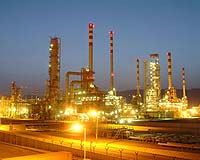
Because of a lack of domestic refining capacity, oil-rich Iran is dependent on gasoline imports to meet about 40 percent of domestic consumption.
For months, US lawmakers have pushed legislation targeting firms that provide such imports, or otherwise invest in Iran's energy sector, as a way to get Tehran to end its defiance of global pressure over its nuclear program.
Iran gets most of its gasoline imports from the Swiss firm Vitol, the Swiss/Dutch firm Trafigura, France's Total, the Swiss firm Glencore and British Petroleum, as well as the Indian firm Reliance.
The New York Times reported Monday that Obama's national security adviser, Jim Jones, mentioned that possibility to officials in Israel during a visit there last week.
At the White House, spokesman Robert Gibbs declined to comment on the Times report, but underlined: "We think it's important to do what has to be done in order to prevent Iran from acquiring a nuclear weapon."
Foreign ministers of the Group of Eight industrialized democracies are expected to review the Iran nuclear issue in late September, in line with a timetable set at their summit in Italy in June.
Obama will "evaluate" the status of diplomatic overtures to Iran in September and decide on the way forward in the dispute, but "I do not want to get into discussions amongst allies," said Gibbs.
But US officials also say that the deadly turmoil in Iran following the disputed reelection of President Mahmoud Ahmadinejad may have shifted the attention of senior leaders there to exclusively internal matters.
"Iran has its hands full right now. Even today, you know, two days before the inauguration of a president, it still has not yet convinced its people that this is a legitimate government," said State Department spokesman PJ Crowley.
Iran has defied UN Security Council sanctions by continuing to enrich uranium, a process which makes fuel for nuclear power plants but can also form the core of an atomic bomb.
Iran has been in crisis since Ahmadinejad's bitterly disputed re-election in a June 12 presidential poll triggered a wave of mass public protests and the worst unrest since the 1979 Islamic revolution.
Washington and Israel, widely considered the Middle East's sole if undeclared nuclear armed state, suspect Iran is trying to build atomic weapons under the guise of a civilian nuclear program, a charge Tehran denies.
Share This Article With Planet Earth
