
Twenty days ago, President Obama sent his proposed FY 2017 budget to Congress. It included a request for $582.7 billion in discretionary budget authority to fund DOD. This request complies with the Bipartisan Budget Act of 2015, which requires both funding stability and protection from the damage of sequestration.
The proposed budget reflects recent strategic threats and changes that have taken place in Asia, the Middle East and Europe. Also included are changes due to Russian aggression, terrorism by ISIS and China's island building. Finally, threats and actions in Iran and North Korea also affect the budget.
Of course, this budget must include funds for the US Air Force, which oversees DOD space activities. The Air Force is asking for a budget of $8.9 billion in FY 2017 in order to keep its satellite assembly lines operating, improve space situational awareness capabilities and conduct five rocket launches for DOD. For FY 2018, expect a request for significant increases due to the next wave of new programs.
These are expected to include next-generation satellites for missile warning, secure and protected communications, and advanced weather forecasting. In addition, the Air Force's five-year plan calls for another $1.2 billion to assist industry in developing needed launch vehicle improvements.
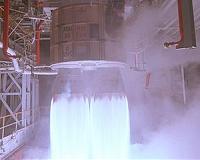
Looking at the current inventory of military launch vehicle options, one would think no new vehicles are needed. However, over the past two years, U.S. lawmakers have haggled over the continued importation of Russian RD-180 rocket engines used on the Atlas 5 vehicles. This situation appeared to be settled in November when the President signed the National Defense Authorization Act of 2016.
This allows nine more RD-180s to be imported. The Air Force had requested 18 RD-180s in order to keep launching national security payloads until a replacement engine is ready. Apparently, after some behind-the-scenes dealings, a few weeks later, the President signed another bill, the 2016 Consolidated Appropriations Act. This lifted the RD-180 limits beyond the nine authorized previously.
As a result of this latest executive action, a new rocket fight is starting to emerge in Congress. Lawmakers are divided over steps required to end dependence on the RD-180. The Air Force has clearly expressed its desire for a new launch vehicle, but some lawmakers are still insisting that a new engine is all it needs.
In fact, Congress has given the Air Force $444 million over the past two years to terminate the usage of the RD-180. Furthermore, the 2015 National Defense Authorization Act states that the money must be spent on a new U.S. liquid propulsion system, not a new launch vehicle. And, the fight goes on.
