
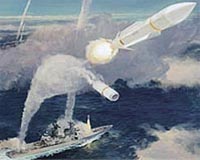
The U.S. Navy achieved the longest surface-to-air intercept in naval history using Raytheon's Standard Missile-6 in a recent flight test.
During the demonstration, Navy operators onboard the USS Princeton were able to successfully destroy an over-the-horizon target. The test aimed to integrate Navy ships, the SM-6, and airborne sensors into a single network using latest Aegis baseline 9 combat system.
Raytheon credits the successful operation to their SM-6's versatility on the battlefield.
"The multi-mission SM-6 is in a class of its own as it demonstrates its ability to go further, faster and counter more threats to offer maximum mission flexibility," SM-6 senior program director Mike Campisi said in a press release. "The missile's ability to defend against so many different threats makes it the go-to solution to meet modern fleet defense needs across the globe."
Prior to the demonstration, the SM-6 broke the previous long-range intercept record in January, beating its own milestone set in 2014.
Raytheon's SM-6 is deployed on a variety of naval platforms, including the U.S. Navy's cruisers and destroyers. The missile is designed to defend warfighers against both manned and unmanned airborne threats.
