
The United States reported "progress" Friday in pressing Turkey to participate in the fight against the Islamic State group, noting a pledge from Ankara to train and equip moderate Syrian rebels.
The head of the US-led coalition, retired general John Allen, and US pointman on Iraq, Brett McGurk, completed a two-day visit in Turkey to press the NATO ally to engage militarily against the jihadist group that has taken over a wide swath of Syria and Iraq.
Washington had been frustrated over Ankara's reticence to commit its well-equipped and well-trained forces in the fight against the militants.
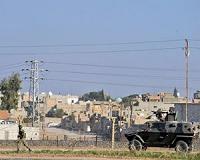
The battle for the Syrian Kurdish town of Kobane, just across the border with Turkey, has caused fears the city may soon fall into the militants' hands.
Asked if the Turkish-US meetings — attended by Prime Minister Ahmet Davutoglu and military officials — had led to "progress," State Department deputy spokeswoman Marie Harf said yes.
"Turkey has agreed to support, train and equip efforts for the moderate Syrian opposition," one of the main components of US strategy in Syria unveiled September 10 by US President Barack Obama.
Allen and McGurk also met with leaders of the Syrian opposition in Ankara.
Meanwhile in Washington, Hakan Fidan, head of the Turkish National Intelligence Organization, met with US Deputy Secretary of State William Burns at the State Department, a spokeswoman told AFP.
Fidan also met with Obama's top counter-terrorism advisor Lisa Monaco to "to discuss ways to deepen already close counterterrorism cooperation and to further integrate Turkey's unique capabilities into the international coalition against ISIL (IS)."
Monaco "expressed appreciation" for Turkey's support and "the importance of accelerating Turkish assistance," according to a statement from the White House.
She also "emphasized the need to more quickly build the capacity of Iraqi security forces as well as the moderate Syrian opposition."
Harf confirmed that a US military team will visit Turkey next week to meet with their Turkish military counterparts.
Washington had sent Allen and McGurk to the Turkish capital to discuss "several measures to advance the military line of effort against ISIL," the State Department said Thursday.
"Turkey is well-positioned to contribute" to the coalition, Harf had said, citing its potential to cooperate militarily, halt terrorist financing, counter the flow of foreign fighters into the region and provide humanitarian assistance.
EU calls for greater international cooperation against IS
Brussels (AFP) Oct 10, 2014 –
The European Union called on Friday for greater international cooperation in the fight against the Islamic State group after the jihadists seized the headquarters of Kurdish fighters defending the Syrian border town of Kobane.
"We are deeply concerned by the security and humanitarian situation in Kobane and the rest of the Syrian Kurdish self-proclaimed autonomous region after three weeks of siege and fierce fighting," said the statement from the office of EU foreign policy chief, Catherine Ashton.
"The people of Kobane have demonstrated to the international community their resolve to use all means to protect their fundamental rights and values and to resist oppression."
"The EU remains committed to play its role to the full in the fight against ISIL and in solidarity with all people suffering from ISIL actions," the statement said, using an alternative name for IS.
It called for the EU, Turkey and other regional and international partners "to work together more, to isolate and contain the threat of ISIL."
It raised concerns about recent deaths in Turkey, where Kurds have launched a wave of violent protests against the government's refusal to cross the border and engage militarily with IS fighters.
"The EU is seized of the urgency of the situation and is working on the details of a significant further package of additional support," the statement added.
UN envoy for Syria Staffan de Mistura warned on Friday that some 12,000 civilians still in or near Kobane, including 700 mainly elderly people in the town centre, "will most likely be massacred" by IS militants if the town falls.
Kobane was "literally surrounded," except for one narrow entry and exit point to the border, de Mistura said.
