
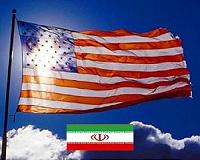
The United States warned Monday it would not trade concessions on Iran's nuclear program for Tehran's cooperation in combating the Islamic State group.
Ahead of the UN General Assembly in New York, and with nuclear talks with Iran, known as the P5+1, at a critical point, Washington made its most explicit statement yet that the two issues were not linked — reflecting growing political pressure on the White House.
"The United States will not be in a position of trading aspects of Iran's nuclear program to secure commitments to take on ISIL," White House spokesman Josh Earnest said.
"These two issues are entirely separate, and the focus of the P5+1 talks will remain on resolving the international community's concerns about the Iranian nuclear program."
Iran's supreme leader Ayatollah Ali Khamenei said last week that his government had rejected a request from the United States for cooperation on the battlefield.
US officials have not confirmed or denied making an offer in private, but they do not regard Iran as part of the coalition they are building to fight the IS group.
They have also been adamant that Iran could not expect a watering down of the US negotiating stance in nuclear talks in return for Tehran's help in battling IS, which has carved out a haven in vast tracts of Syria and Iraq.
Israeli Prime Minister Benjamin Netanyahu warned on Sunday that the West should not ease sanctions on Iran to win its support in the fight against the jihadists.
Netanyahu said "respected commentators in the West" were counseling a softer approach to enlist Tehran in an alliance against Islamic State militants.
Israel opposed an interim deal which world powers struck with Tehran last November, paving the way for talks on a comprehensive agreement on Iran's future nuclear activities.
Iran and the six powers involved in talks — Britain, China, France, Russia and the United States plus Germany — are meeting at United Nations headquarters on the sidelines of the General Assembly.
Chinese warships in first call at an Iran port: media
Tehran (AFP) Sept 21, 2014 –
Two Chinese destroyers have arrived at Iran's Gulf port of Bandar Abbas, in an unprecedented visit attesting to a new rapprochement between the two countries, Iranian media reported Sunday.
The four-day visit is the first time a Chinese naval vessel has called at a port in the Islamic republic, across the Gulf from Bahrain where the US Fifth Fleet is based.
The two navies will conduct joint search and rescue exercises and training for maritime accidents, according to Admiral Hossein Azad, a senior commander of the Iranian navy, quoted by media.
Iran's navy has boosted its international presence over the past few years, in particular to help guard commercial vessels in the Gulf of Aden against pirate attacks.
Ships from Iran's navy have called at Chinese ports in the past.
Iran and China have greatly enhanced their trade and economic relations in recent years.
China has become Iran's largest trading partner.
Trade between them is this year expected to exceed $45 billion, despite the economic and banking sanctions against Iran because of its controversial nuclear programme.
China is among so-called P5+1 states (the United States, Russia, China, France, UK and Germany) negotiating with Tehran in the hope of ending more than a decade of crisis over the nuclear issue.
