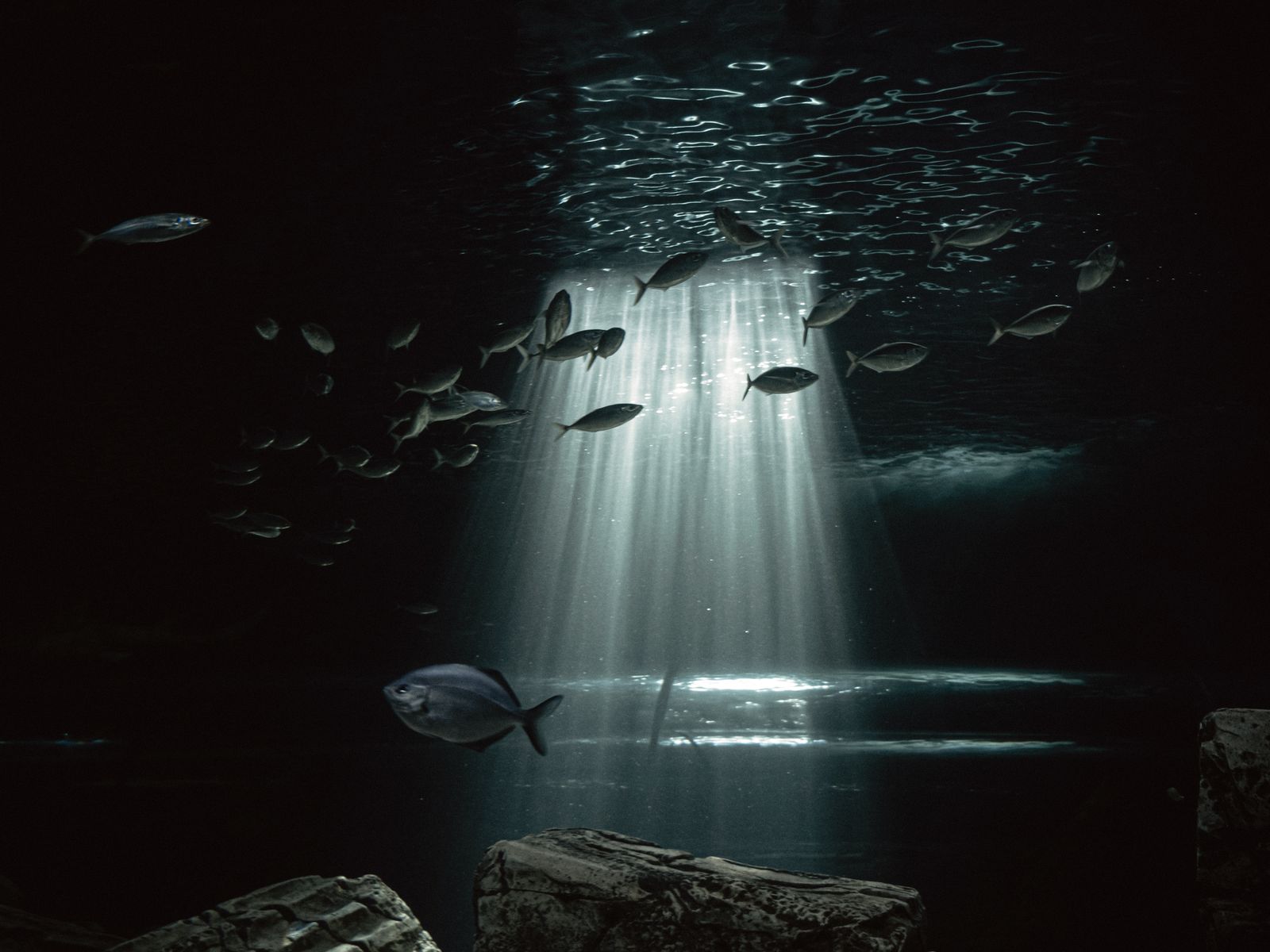
In the black water below the Arctic pack ice, a fish the length of a delivery van is swimming through its fourth century. The Greenland shark (Somniosus microcephalus) can live more than 400 years, which means some of the individuals gliding through the North Atlantic right now were already alive when Johann Sebastian Bach was writing cantatas in Leipzig. And almost every one of them is doing it half-blind, because a small parasitic crustacean has anchored itself to the surface of each eye.
The lifespan figure comes from a 2016 paper in Science led by researchers at the University of Copenhagen, who radiocarbon-dated the eye lens nuclei of 28 female Greenland sharks caught as bycatch. The two largest animals in the sample, at 493 and 502 centimetres long, came back at roughly 335 and 392 years old, with an average lifespan for the species estimated at about 272 years.
That makes it the longest-lived vertebrate ever measured. The ocean quahog clam has been documented at over 500 years, but the quahog is a bivalve.
A fish that grows one centimetre a year
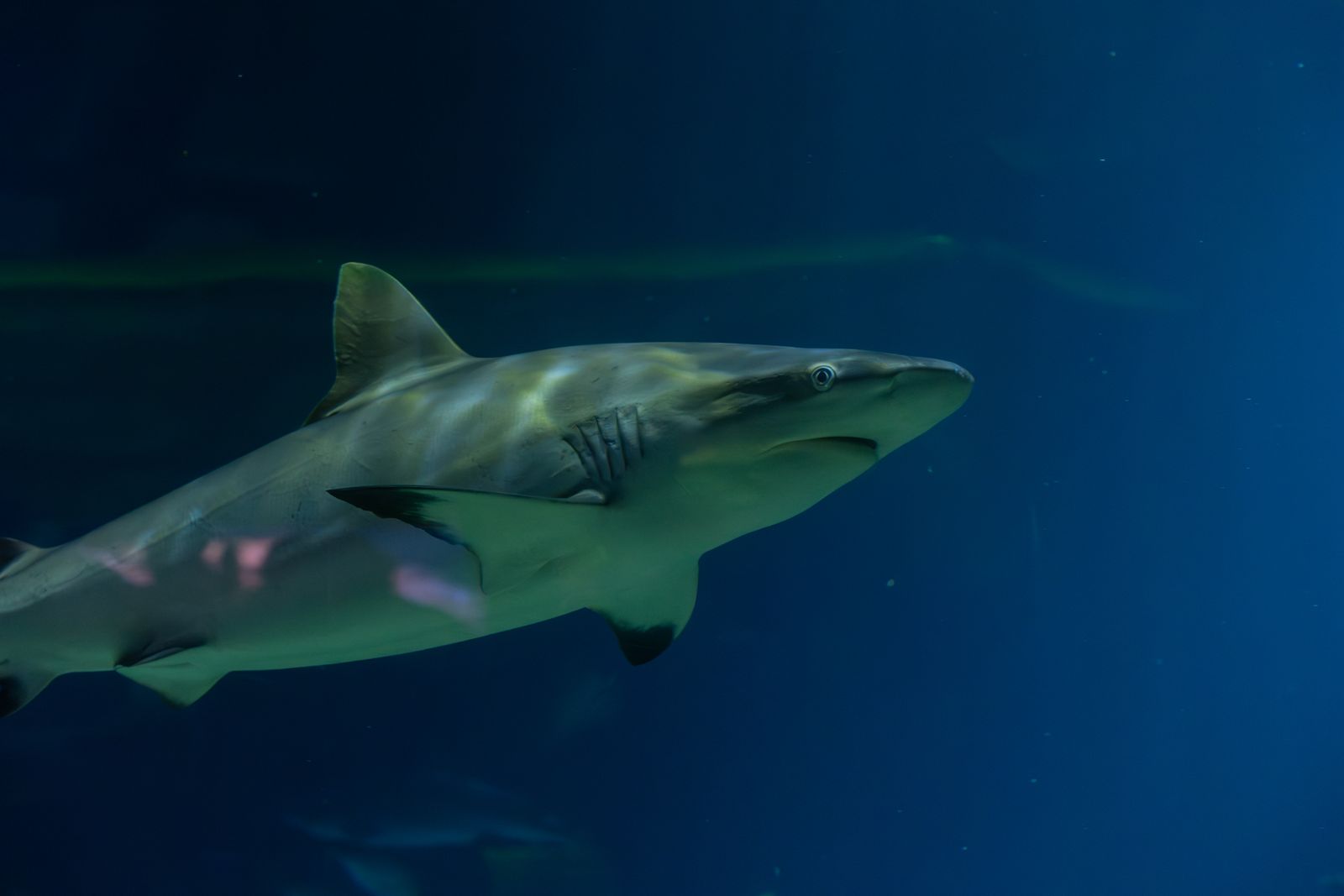
The Greenland shark grows at roughly one centimetre per year. A five-metre adult, then, is the product of half a millennium of slow accretion in water that hovers between minus one and four degrees Celsius. Individuals can exceed 19 feet in length, putting them among the largest fish in Arctic waters, and they prefer the deep, dark, cold layers of the North Atlantic where sunlight never reaches.
Their metabolism is glacial. They move slowly through the water. They eat rarely. They reach sexual maturity at around 150 years old, which is older than the United States.
The dating trick that produced these numbers is worth pausing on. Eye lens nuclei in vertebrates form before birth and never turn over. The proteins laid down when the shark was an embryo stay put for the rest of its life. Copenhagen’s team measured the carbon-14 signature in those proteins and cross-referenced it against the atmospheric spike from mid-1950s thermonuclear weapons tests, a signal that has become a kind of accidental birth certificate for anything alive when the bombs went off.
The parasite on every eye
Now the second half of the title claim. Almost every Greenland shark encountered by researchers carries a copepod parasite called Ommatokoita elongata attached to the surface of its cornea. The parasite is a small crustacean, a few centimetres long, that anchors into the eye tissue with a specialised holdfast and grazes on the cornea for the rest of its own life.
The damage is severe. The cornea becomes scarred, cloudy, and largely opaque. Sharks with heavy infestations are functionally blind, at least in the sense that a human ophthalmologist would recognise.
And yet the shark does not appear to care. It lives in water so dark that vision is a minor sense anyway. It hunts by smell, by the lateral line system that detects pressure changes, and by ambush. Stomach content analyses have revealed a varied diet including fish and marine mammals, with occasional scavenged remains.
Some researchers have speculated that the parasite might be a mutualist rather than a straightforward pest, its wriggling body acting as a lure for curious prey. The evidence for that is thin. What is clear is that being blind, in this animal’s line of work, is not a disqualifying condition.
Bach, Newton, and a shark
The temporal arithmetic is what stops people. If the Copenhagen team’s oldest animal was 392 years old when it was measured in the mid-2010s, it was born around the year 1620. Bach was born in 1685 and died in 1750. A shark that hatched under Charles I of England would have been more than a century old when Bach sat down to write the Brandenburg Concertos, and would still have been swimming when the first commercial radio broadcasts went on air in the 1920s.
The BBC’s wildlife team notes that some individuals alive today were born around 1625, in the reign of Louis XIII. The margin of error on the radiocarbon dating is wide for the oldest specimens, but even the conservative end of that range puts the animal’s birth before the founding of the Royal Society.
The claim about Bach is a rhetorical illustration, not a certified biography of any one shark. But it is inside the physical envelope of what the species can do.
Why the heart keeps beating
The interesting biological question is how any tissue in any animal can keep functioning for four centuries. Recent research led by Alessandro Cellerino of the Scuola Normale Superiore in Pisa and the Leibniz Institute on Aging in Jena looked at Greenland shark hearts and found something surprising. The hearts were not, in fact, protected from aging. They showed pronounced fibrosis, lipofuscin buildup, mitochondrial damage, and elevated 3-nitrotyrosine, all classic markers of cellular decay.
By every molecular measure, the tissue looked wrecked.
According to Cellerino’s team, the cardiac lesions observed in the shark tissue samples would be fatal in humans, yet the sharks remained alive and functioning normally.
The conclusion Cellerino’s team drew is that the Greenland shark is not avoiding aging. It is absorbing it. Its cells accumulate damage the way any vertebrate’s do, but the animal has some capacity, still poorly understood, to keep the whole system running despite the damage. The genome of the Greenland shark may contain clues to mechanisms for DNA repair and cell protection.
The framing matters. A lot of longevity research assumes the goal is to stop cellular damage from happening. The shark suggests another route entirely — let the damage happen, and get very good at working around it.
Eyes that don’t cloud from within
There is a second twist involving the eye, separate from the parasite. The lens itself, the part encased inside the eyeball, does not appear to develop the protein aggregates that cause cataracts in humans and most other vertebrates. Research has pointed to unusually stable crystallin proteins in the Greenland shark lens that resist unfolding and clumping over centuries.
So the picture is strange and specific. The outer eye is scarred and cloudy from a parasite that has been chewing on it for decades. The inner eye, the lens, is chemically pristine, its proteins folded the same way they were when the animal was an embryo in the 1600s.
The Discover Magazine writeup of the crystallin research notes that this could point to molecular tricks worth borrowing for human ophthalmology, where age-related cataracts remain the leading cause of blindness worldwide. Whatever holds a Greenland shark’s lens proteins together for four hundred years is doing something human lens proteins stop doing at about sixty.
An animal built for the deep dark
Put the pieces together and the shark stops looking like an eccentric outlier and starts looking like a specific solution to a specific environment. Deep, dark, cold Arctic water rewards patience and punishes waste. Grow slowly. Move slowly. Eat rarely. Repair carefully. Do not bother investing in vision that a parasite is going to trash anyway, because the water is too dark for it to matter.
The species has been doing this since long before the Industrial Revolution began pushing carbon into the atmosphere and warming the poles. The clean-energy transition that Solar Daily has covered is, in one sense, a race being run against animals whose generational clocks were set when Newton was still working out gravity. A single Greenland shark born today will not reach breeding age until roughly 2175. Whatever climate the North Atlantic has by then is the one it will have to live in for another two centuries after that.
What the numbers actually say
The Times of India summary of the vision research lays out the practical draw for biomedicine. If human lens crystallins could be stabilised the way the shark’s are, age-related cataract surgery — currently the most common surgical procedure in many countries — might become largely unnecessary. That is a long research pipeline, and the shark is a difficult study subject. It lives at depths where retrieval is hard, it is protected in several jurisdictions, and it grows so slowly that captive breeding on any human timescale is not a serious option.
The 2016 Science paper’s authors, drawn from institutions including the Greenland Institute of Natural Resources, the Arctic University of Norway, the University of Oxford, and the Virginia Institute of Marine Science, worked entirely with animals caught as bycatch by fishermen chasing other species. Every specimen in the dataset was a fish that died in a net that was not meant for it.
That is one reason the sample size is small. It is also why the age estimates carry the wide error bars they do.
A quiet body in dark water
Somewhere in the North Atlantic tonight, a Greenland shark that hatched during the Thirty Years’ War is swimming at less than a mile an hour through water a degree above freezing. Its cornea is scarred by a parasite that has been feeding on it for longer than most human lives. Its lens proteins are folded the same way they were folded four centuries ago. Its heart, riddled with fibrosis and pigment deposits that would kill a person, is still beating.
It has never seen the sun.
It will still be swimming when the children born this year are old.