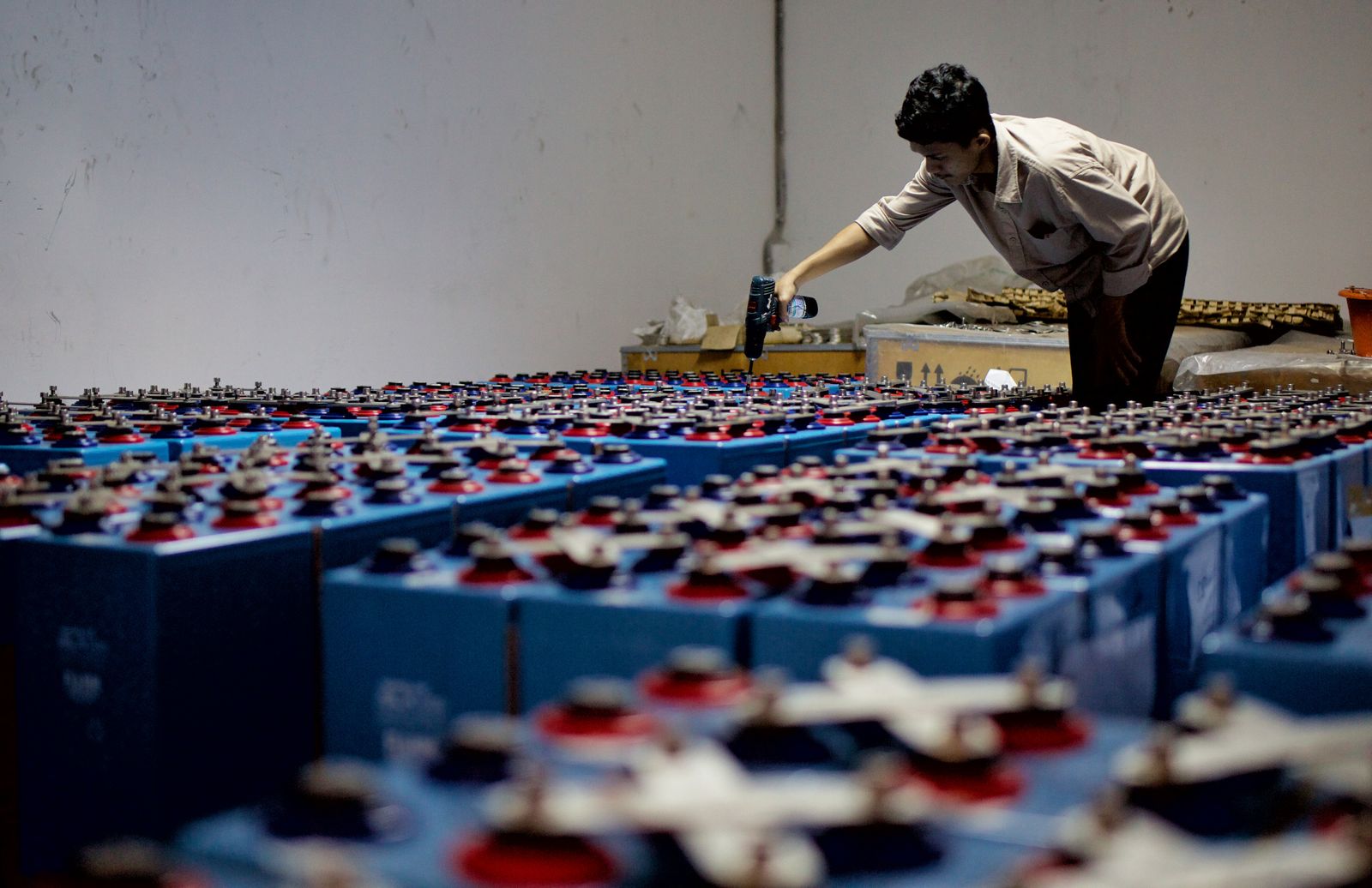
A spent lithium-ion cell does not necessarily reach the end of its useful automotive life because its nickel, cobalt or other valuable materials have disappeared. In the cells studied by Cornell University chemical engineers, a major barrier was the accumulated interphase material coating the electrodes and increasing resistance. The researchers showed that an electrochemical treatment could remove much of that buildup and return a rebuilt cell to about 95 percent of its original capacity, without first shredding the electrodes, smelting their metals or dissolving them in an acid-leaching circuit.
The technique is called Direct Electrode-to-Electrode Regeneration, or DEER. It treats a worn electrode as a component that may still be repairable, rather than automatically reducing it to a mixture of raw materials.
The crust that contributes to battery decline
Lithium-ion cells develop protective films from their first charging cycles. On a graphite anode, this is commonly called the solid electrolyte interphase, or SEI. A related film develops on the cathode and is often called the cathode-electrolyte interphase, or CEI. The Cornell researchers use the broader term electrode-electrolyte interphase, or EEI, because their process addresses accumulated material on both electrodes.
Thin interphase layers are necessary because they limit unwanted reactions between the electrolyte and electrode surfaces. Over repeated cycling, however, inactive components can accumulate, increase resistance and obstruct lithium-ion movement. Other degradation mechanisms also occur, but the Cornell study found that removing this interfacial buildup restored much of the performance in the cells it examined.
The underlying electrode structures and many of their valuable materials can remain usable. Nickel, cobalt, manganese, lithium, copper and aluminum do not simply disappear when a battery falls below the performance expected in a vehicle. The Cornell process currently targets cells with roughly 70% to 80% state of health, a range described as typical for EV retirement.
That remaining structure is what makes conventional recycling look unusually indirect. An intact electrode is shredded, chemically or thermally processed into recovered materials, and then used to manufacture another electrode.
What DEER actually does
In the Cornell process, a spent cell is opened and its electrodes are removed intact. The electrodes are connected to current collectors and placed in a bath containing 1,3-dimethyl-2-imidazolidinone, or DMI. An applied electrochemical potential helps dissolve inactive interphase components while preserving the electrode structure.
The treatment leaves behind a thinner, lithium-fluoride-rich interphase. The researchers associate that residual LiF with improved cycling stability in the regenerated cells. Vibha Kalra, the Fred H. Rhodes Professor of Chemical Engineering at Cornell and corresponding author of the study, summarized the approach simply: “We repair them, as is, without shredding or powdering them, and then put them back into a new battery.”
Cells assembled with the regenerated NMC cathodes and graphite anodes recovered about 95% of their initial capacity. The team then aged and regenerated the electrodes again. After that second consecutive treatment, the third-life cell retained approximately 90% of its original capacity, showing that DEER was not limited to a single regeneration cycle.
What it replaces
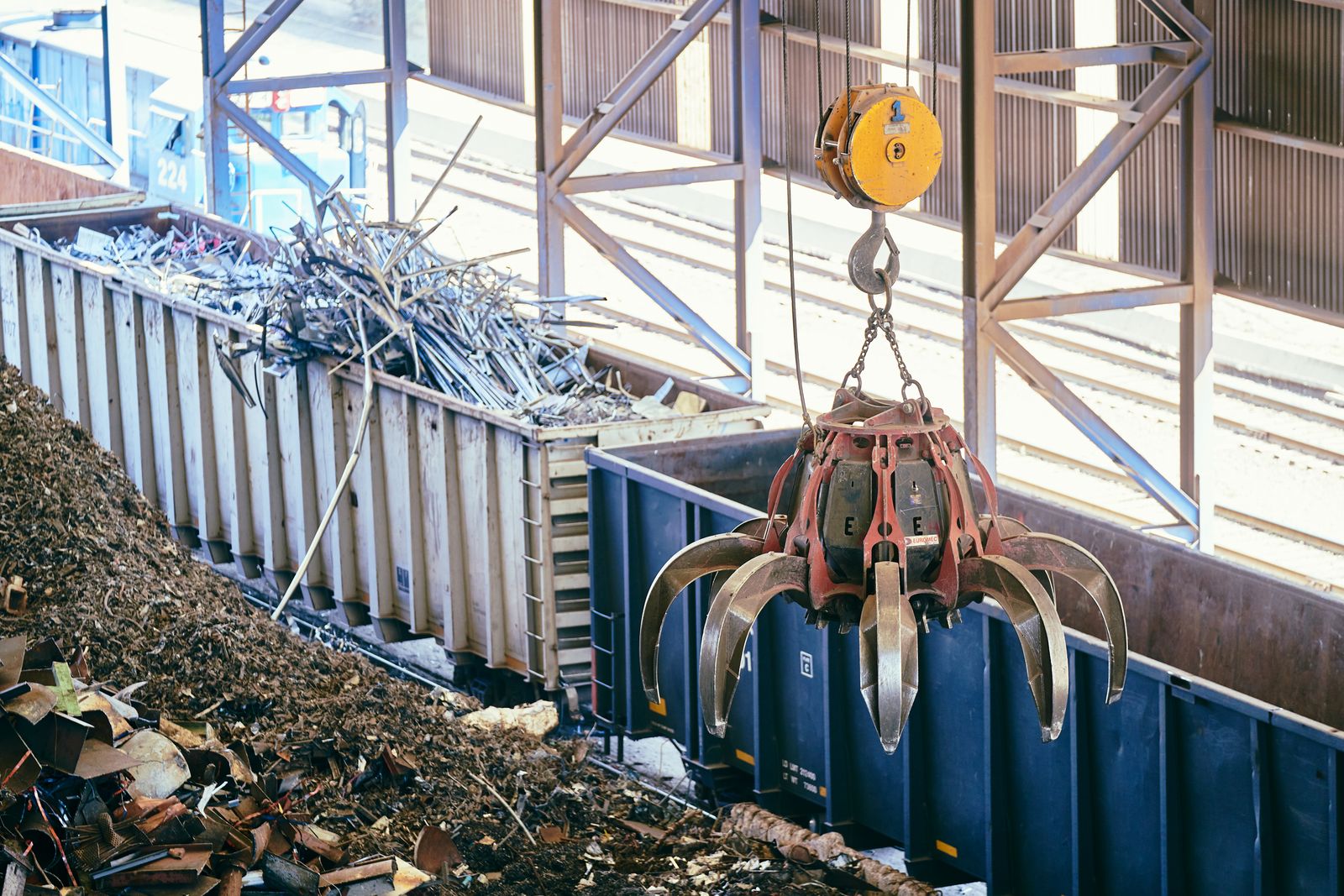
Conventional battery recycling begins with discharging and dismantling a battery pack. Cells may then be shredded or pulverized, after which copper, aluminum, steel, plastics and other fractions are separated. What remains is the dark mixture of cathode and anode materials commonly called black mass.
Black mass generally proceeds through one of two major routes. Pyrometallurgy uses very high temperatures to produce a mixed metal alloy that requires additional refining. Hydrometallurgy uses leaching agents, solvent extraction and precipitation steps to recover metals from the powder. Both approaches can recover valuable materials, but both destroy the carefully manufactured electrode structure before rebuilding it.
A Nature Index overview of lithium-ion battery recycling describes sulphate-based leaching as the current industrial baseline while highlighting reagent use, mixed battery chemistries and economic viability as continuing challenges.
DEER shortens that route. The active materials remain attached to their current collectors, there is no black-mass stage, and the electrode does not need to be reconstructed from separately recovered compounds.
The numbers the Cornell team ran
The researchers used technoeconomic and life-cycle models to compare DEER with conventional recycling followed by fresh electrode production. Their analysis found that the process could reduce recycled-cell manufacturing costs by 56 percent while lowering environmental impacts relative to pyro- and hydrometallurgical routes.
Much of that projected saving comes from eliminating steps. DEER does not require the active materials to be separated into metal compounds, purified, resynthesized into cathode material and coated onto a new current collector. The retained value lies in an electrode that has already been manufactured and may only need regeneration.
What DEER does not yet fix
Interphase accumulation can be a major contributor to capacity fade, but it is not the only way a lithium-ion cell deteriorates. Batteries can lose active lithium through irreversible reactions, develop cracks in electrode particles, suffer structural changes or experience damage associated with abnormal operating conditions. DEER, in its present form, is designed primarily to remove accumulated interphase material from otherwise recoverable electrodes.
The researchers are now examining larger battery systems and additional degradation mechanisms, including permanent lithium loss. Addressing those mechanisms could widen the range of cells suitable for regeneration.
A process that also replenishes lost active lithium would go beyond removing resistive surface material. That remains a future development rather than a capability demonstrated in the current paper.
A parallel line of attack: build cells that age more slowly
While DEER attempts to reverse one form of degradation after it occurs, another branch of battery research is trying to slow degradation from the beginning. A study published in July 2026 in Nature Communications describes a thiourea-derived treatment for lithium-rich manganese oxide cathodes that retained approximately 97% of their initial capacity after 600 cycles in laboratory-scale solid-state half-cells.
The treatment creates an ultrathin sulfur-rich coating and a spinel-like region near the particle surface. The outer layer helps suppress oxygen-related interfacial degradation, while the reconstructed surface provides more favorable pathways for lithium-ion transport. The modified cathodes also showed improved initial Coulombic efficiency and lower interfacial resistance.
The work remains at laboratory scale. The tests used small Li-In half-cells operating under substantial pressure, not commercial pouch cells. The authors identify practical pouch-cell validation, lower-pressure operation and full-cell testing as future steps.
Where the storage transition intersects
The relevance to solar and grid storage is direct. Lithium-ion installations are expanding, and a growing number of stationary systems will eventually reach the performance limits set by their owners. A method that can recover most of an electrode’s original capacity, and potentially repeat that recovery, could change the economics of second-life and third-life storage.
The parallel with photovoltaic recycling is instructive. Solar-panel recyclers face a similar choice between breaking a product into commodity materials and preserving higher-value structures wherever possible. Direct battery regeneration applies that second principle at the electrode level.
Regeneration also works on material that is already circulating through the economy. It cannot replace mining, refining or conventional recycling, but it could reduce how frequently an intact electrode must be destroyed and rebuilt.
What still has to happen
DEER has been demonstrated in laboratory cells using NMC cathodes and graphite anodes. Industrial deployment would require reliable systems for opening retired cells, removing electrodes without damage, sorting different cell designs and chemistries, controlling contamination and managing the DMI-based bath as dissolved interphase material accumulates.
The economics will also depend on automation. A process that preserves electrodes is useful only if those electrodes can be extracted, inspected and returned to manufacturing at sufficient speed and consistency.
Larger stationary batteries may offer an early test case because their packs can contain more uniform cells and operate in controlled service environments. Even there, the technique must move from laboratory demonstrations to repeatable industrial processing.
A different model for a retired battery
The word “dead” can hide how much remains inside a retired lithium-ion battery. A cell leaving vehicle service may still retain 70% to 80% of its original capacity, along with valuable electrode structures that took substantial energy and precision to manufacture.
DEER asks whether those structures should be repaired before they are destroyed. Its answer is not yet an industrial recycling line, but the laboratory result is substantial: approximately 95% capacity after one regeneration and about 90% after a second.
A cell that would once have been reduced to black mass instead reached a documented third life. That is the change in perspective the Cornell work places before the battery industry.