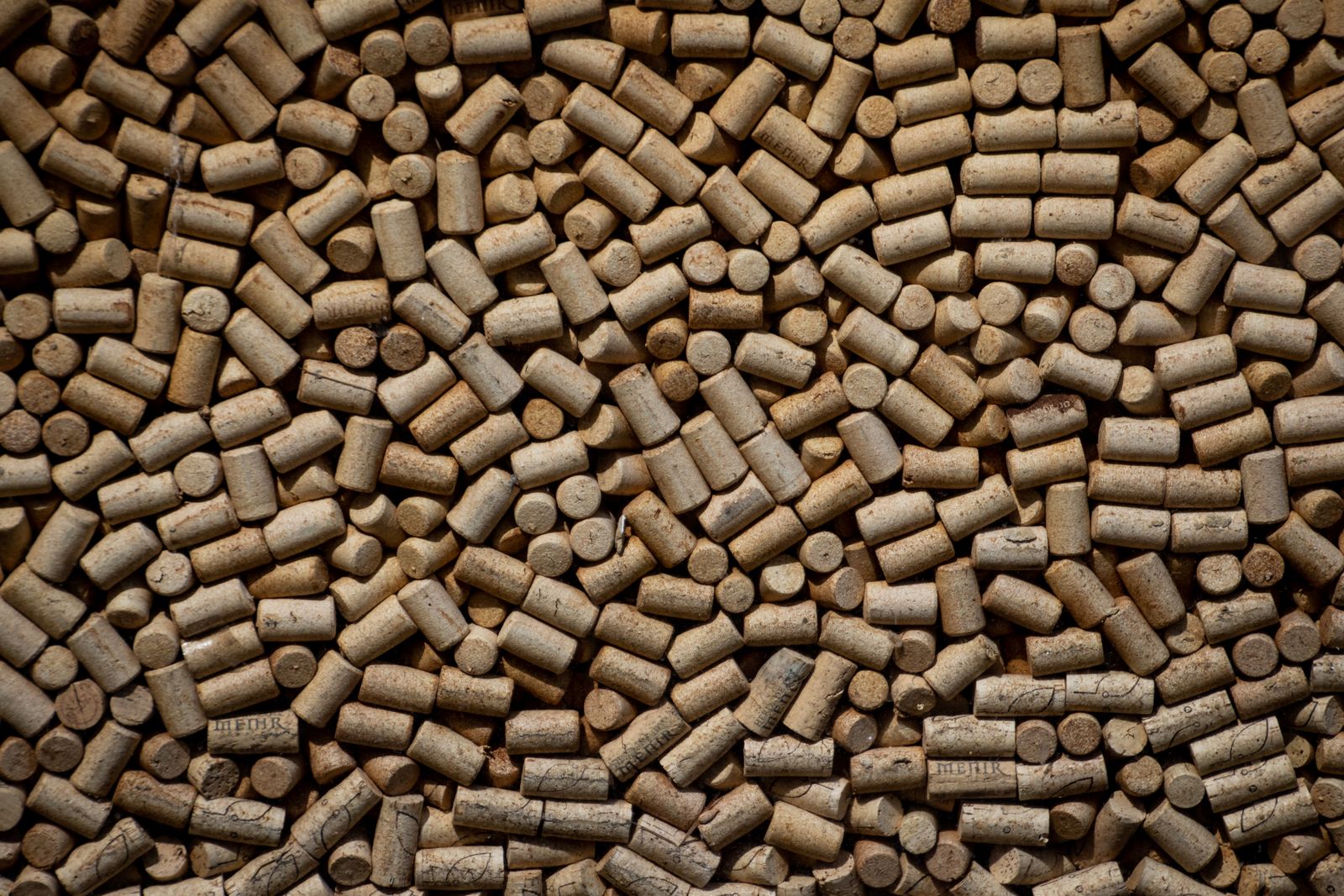
In 1665, a thin shaving of cork slid onto the stage of a compound microscope in a London workshop, and Robert Hooke bent over the eyepiece to see what nobody had ever described before: a honeycomb of tiny empty rooms, each walled off from the next, the whole slice reading like a cross-section of a monastery. He reached for the Latin word cellula — the small chamber where a monk sleeps — and wrote it down. That single word, chosen in Restoration London, is still the word every biology student learns in their first week of class.
The book he put it in, Micrographia, went on sale that same year. The diarist Samuel Pepys bought a copy, took it home, and sat up with it until two in the morning. He called it the most ingenious book that ever he read in his life.
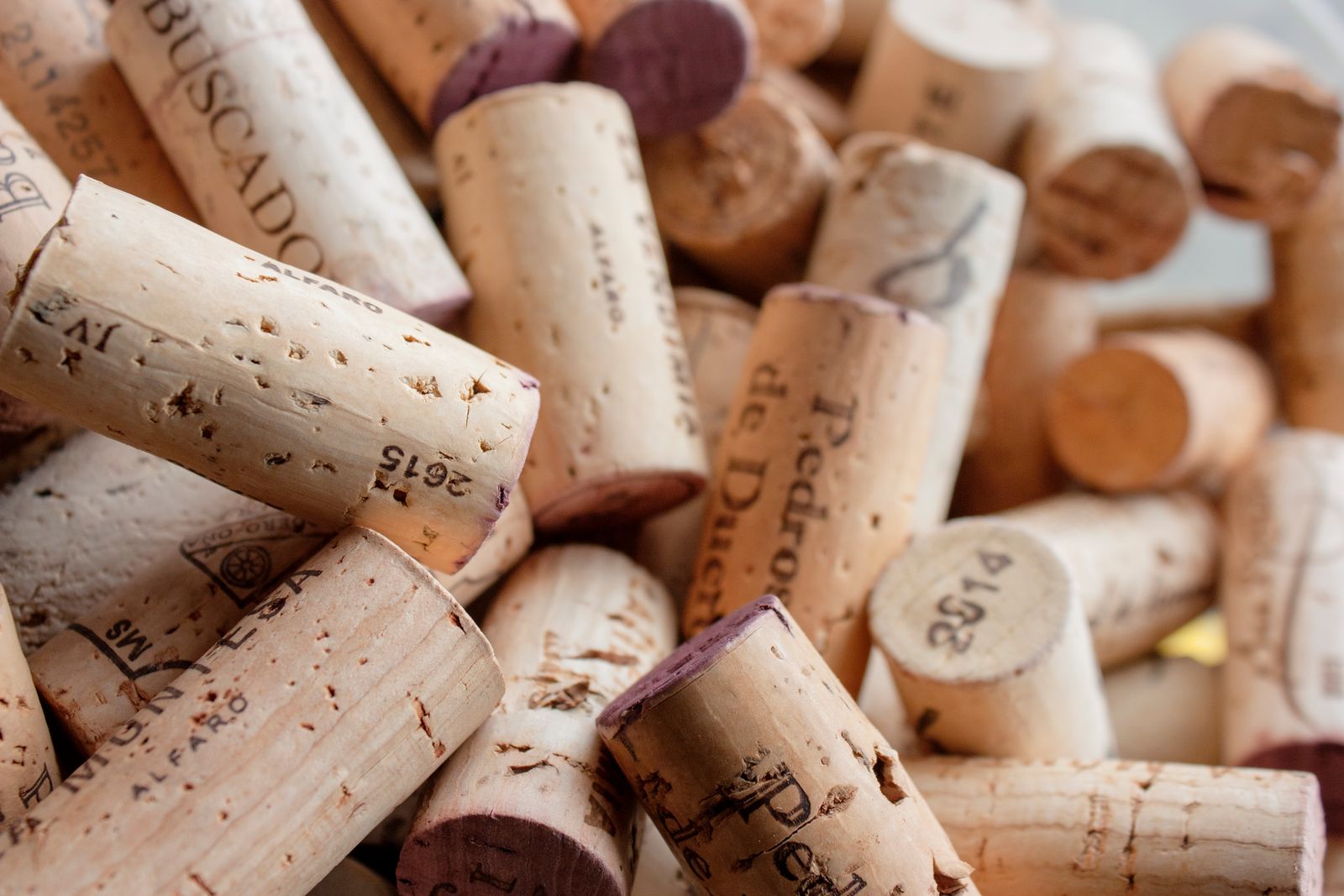
The sliver of cork on the stage
The specimen was almost comically ordinary. Cork is the bark of the cork oak, and by the 1660s it was already the stopper of choice for wine bottles across Europe. Hooke sliced a piece “exceeding thin” with a penknife, laid it on a glass plate, and lit it from below with an oil lamp whose light he focused through a water-filled glass sphere — a homemade condenser that concentrated the flame into something bright enough to see by.
What he saw looked like a network of little boxes. Empty ones. Dead ones, in fact — because cork is made of the husks of plant cells whose contents have long since dried away, leaving only the woody walls. As Science Friday recounts in its history of the word, Hooke was looking at cork cells (phellem), dead cells from the outer bark tissue of the cork oak. He had no idea. All he knew was that the pattern reminded him of the small sleeping quarters — cellulae — of a Carthusian monastery.
A microscope built by hand
The instrument on his workbench was not bought from a shop. Hooke, who served as Curator of Experiments at the newly founded Royal Society, was one of the most gifted instrument-makers of the seventeenth century. He designed the compound microscope himself, ground and polished the lenses, and had the brass body turned by a London craftsman named Christopher Cock. The finished tube was about six inches long, ringed with tooled leather and decorated with gold-leaf trim.
Its magnification was modest by modern standards — somewhere between 30x and 50x at best — and it suffered badly from chromatic aberration, the rainbow fringing that would plague optics for another 150 years. As IFLScience notes in its history of early lensmaking, contemporaries like Antonie van Leeuwenhoek were already achieving higher magnifications with simpler single-lens designs. But Hooke’s compound microscope had one thing Leeuwenhoek’s did not: a stage large enough, and an illumination system bright enough, to draw what he saw.
And draw he did.
The book that kept Pepys awake
Micrographia: or Some Physiological Descriptions of Minute Bodies Made by Magnifying Glasses was printed in folio — the largest and most expensive book format of the period, roughly the size of a modern atlas. It ran to 246 pages with 38 copperplate engravings, several of which folded out to more than three times the width of the page. The flea plate, when unfolded, stretched about 18 inches across, showing the insect’s armoured body in a level of detail that would have been physically impossible to see with the naked eye.
Pepys was not a scientist. He was a naval administrator with a taste for gossip, music, and new things. He bought a copy from the bookseller. That night he wrote in his diary that he sat up in bed reading it until two in the morning — an entry cited in nearly every modern biography of Hooke. He called the book “most ingenious.” He was, by his own account, transfixed.
Why the word stuck
Hooke did not, at the time, understand what a cell was. He thought the little boxes in cork were channels for sap, structural voids in a woody material. Living cells — the plump, watery, membrane-bound units that make up leaves and skin and blood — would not be recognised as the fundamental unit of life for another 174 years, when the German botanist Matthias Schleiden and the physiologist Theodor Schwann proposed cell theory in 1839.
But the name had already taken root. The vocabulary Hooke coined in Micrographia — cell, pore, texture — became the working language of a discipline that did not yet exist. When Schleiden and Schwann needed a word for the thing they had discovered, the word was already waiting for them, printed in Hooke’s folio, sitting on library shelves across Europe.
The same word travels into modern physics: a solar cell is a solar cell because a nineteenth-century engineer, borrowing from biology, wanted a term for a self-contained unit that generated a small amount of something useful.
What else was in the book
Cork was only the beginning. Over 60 chapters, Hooke turned his microscope on the point of a needle (which, magnified, looked like a battered iron mountain), the edge of a razor (jagged, not smooth), a sheet of taffeta, a piece of Muscovy glass, mould on the cover of a leather-bound book, the sting of a bee, a louse gripping a human hair, the compound eyes of a grey drone-fly. He described the eye as “latticed,” counted the hexagonal facets, and produced an engraving so precise that entomologists still reproduce it in textbooks.
The flea was his showpiece. To keep it still long enough to draw, he first tried gluing its feet to wax; when that failed, he dropped it into “well-rectified spirit of wine” — essentially high-proof brandy — which killed it in a natural posture. He then spent weeks on the drawing. The finished engraving shows every plate of the flea’s armour, every hooked hair on its legs, every segment of its antennae. Readers who had spent their whole lives being bitten by fleas suddenly saw what was biting them, and it looked like a small tank.
He also turned around and pointed a 36-foot telescope at the Moon. In the same book, on facing pages almost, readers went from the shallow chambers of cork to the craters of the lunar highlands. Hooke showed the scale of nature, from the minutely small to the astronomically large.
A folio priced like a house
Buying Micrographia in 1665 was not a casual purchase. A folio-sized scientific book with 38 engraved plates cost roughly what a skilled tradesman earned in two weeks. Pepys paid several shillings for his copy, and he was a man on a rising civil-service salary who could absorb the cost. Most readers encountered the book at coffee houses, at the Royal Society’s rooms in Gresham College, or in the libraries of wealthy patrons.
It sold well enough to be reprinted, and a second edition appeared in 1667. It was translated into Latin, then into other European languages. Copies travelled to Paris, Leiden, and eventually to the workshops of Delft, where Leeuwenhoek — a draper with no formal scientific training — read it and began building his own single-lens microscopes, which within a decade would reveal bacteria and sperm cells that Hooke’s compound instrument could not resolve.
The man who built almost everything
Hooke was 29 when Micrographia was published. He would go on to formulate the law of elasticity that still bears his name (the stretch of a spring is proportional to the force applied), to argue — before Newton, and to Newton’s lasting irritation — that gravity might follow an inverse-square law, to design the anchor escapement that made pendulum clocks accurate to seconds per day, and to survey and rebuild large sections of London after the Great Fire tore through the city in September 1666, only 18 months after his book appeared.
The Conversation, in a profile of Hooke by the science historian Felicity Henderson, calls him the English Leonardo — a description supported by the sheer breadth of what he built, published, and argued about in a career that lasted until his death in 1703. No verified portrait of him survives. The one usually reproduced is a nineteenth-century reconstruction.
The chamber and its echo
The word cell has now travelled a long way from a monk’s sleeping room. There are prison cells, terrorist cells, battery cells, fuel cells, solar cells, storage cells, and — in the direct line of biological descent — the roughly 37 trillion cells that make up an adult human body. Every one of them carries, in its name, the memory of Hooke leaning over a lamp-lit stage in a London workshop three and a half centuries ago, looking at a shaving of wine-stopper and thinking of monks.
The specimen he examined that night was already dead when he saw it. Cork is bark stripped from a living tree and left to dry; the cell walls are what remain after the living contents have gone. What Hooke was really looking at, in other words, was the architecture of a plant that had continued to exist without the tenants of its rooms. He named the rooms anyway. The tenants — the actual living stuff of biology — would not be recognised for another six generations.
His folio still exists. The New York Academy of Medicine’s copy, examined by Science Friday, still opens flat on the reading-room table, the flea plate still unfolds to its full 18 inches, and the cork engraving on Plate XI still shows the same tidy grid of empty chambers. If you tilt the page under a strong lamp, the ink catches the light the way it did the night Pepys stayed up reading, and the little rooms are still there, waiting to be named.