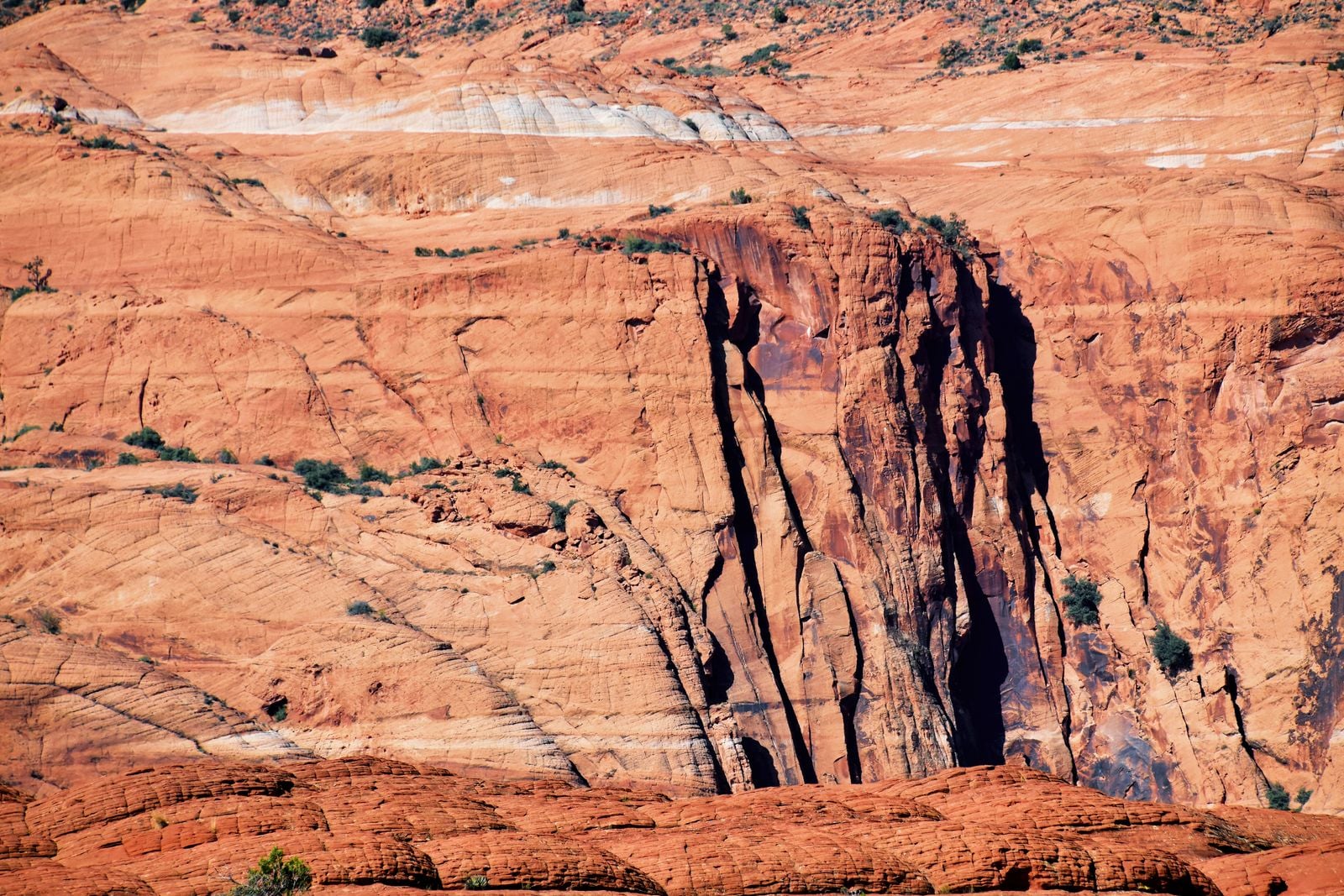
The Wollemi pine was known only from fossils until 1994, when a New South Wales Parks and Wildlife officer named David Noble abseiled into a slot canyon in Wollemi National Park, northwest of Sydney, and noticed a strange conifer he could not identify. The trees he was standing under had bark like bubbling chocolate, fern-like foliage, and no match in any Australian field guide. Botanists at the Royal Botanic Gardens Sydney later confirmed the species belonged to the family Araucariaceae, a lineage whose fossil record stretches back to the Cretaceous and then, in Australia, effectively vanishes around the time non-avian dinosaurs did.
The wild population is tiny. Fewer than 100 mature adults are estimated to survive across a handful of small groves in one remote gorge system inside the park, protected by cliff walls, closed to the public, and their exact coordinates kept secret by the New South Wales government. The canyon sits within a sandstone plateau within day-trip range of Sydney. The tree that has been nicknamed a ‘dinosaur tree’ was, in other words, hiding in Sydney’s backyard.
A fossil that started breathing
Before 1994, the genus Wollemia was a fossil taxon. Pollen and leaf impressions attributed to close relatives appeared in Australian rock layers from the Cretaceous and early Cenozoic, then dropped out of the record. Palaeobotanists assumed the lineage had gone the way of most Gondwanan conifers: pushed out by flowering plants, cooked by shifting climates, buried under ice ages and aridification.
Then Noble, canyoning on a weekend, rappelled into a narrow gorge and brought back a sprig of foliage that nobody at the herbarium recognised. Within months, staff at the Royal Botanic Gardens Sydney had matched the living specimens to fossils dated at roughly 90 million years old — the same mid-Cretaceous window when, on the other side of the planet, resin was oozing down conifer trunks on a forested Antarctic coast and hardening into the amber grains that a team led by Johann Klages of the Alfred Wegener Institute would eventually pull from Pine Island Bay, the first amber ever confirmed from Antarctica.
The Wollemi pine, in other words, is a survivor from a world that had conifer rainforests near the South Pole.
Why the canyon survived
The gorge that shelters the wild trees is unusually cool, wet, and stable. Sandstone walls a hundred metres high funnel a permanent creek. The canyon floor stays humid year-round. Frost is rare. Bushfire, the great destroyer of Australian vegetation, has trouble climbing down into the slot — most fires burn overhead across the plateau and skip the wet crack in the rock.
Refugia like this are how deep-time survivors persist. When the rest of Australia dried out and burned across the Miocene and Pleistocene, a small population of Wollemi pines happened to be sitting in a microclimate that behaved less like modern New South Wales and more like the wet temperate forests of 50 million years ago. Everything around them changed. Their slot did not.
The parallel with other Lazarus taxa is exact. The coelacanth, presumed gone for millions of years, was pulled from a South African trawl in 1938 because it lived deep enough to escape notice. Monoplacophoran mollusks, whose fossil record ends in the Paleozoic, turned up alive in deep ocean waters in the mid-20th century, as a BGR survey of rediscovered species notes. The recipe is always the same: a stable habitat that human eyes rarely reach, and a small population patient enough to wait.
The record keeps refusing to close on lineages like this. In 2026, researchers working with Tambrauw elders on a remote peninsula in Indonesian Papua confirmed the ring-tailed glider, a species previously feared lost, was still present in local forests — a finding driven by Indigenous accounts that had described the animal for generations, as Mongabay reported. For the Tambrauw, the glider was never lost. It was documented in hunting stories and initiation practices. It was simply not in the herbarium.
Solar Daily has looked at this pattern before, in the case of Greenland sharks living past 400 years in Arctic water cold enough and dark enough to hide a slow-metabolism vertebrate for centuries at a time. Deep time survives in the places humans do not go.
What the trees actually look like
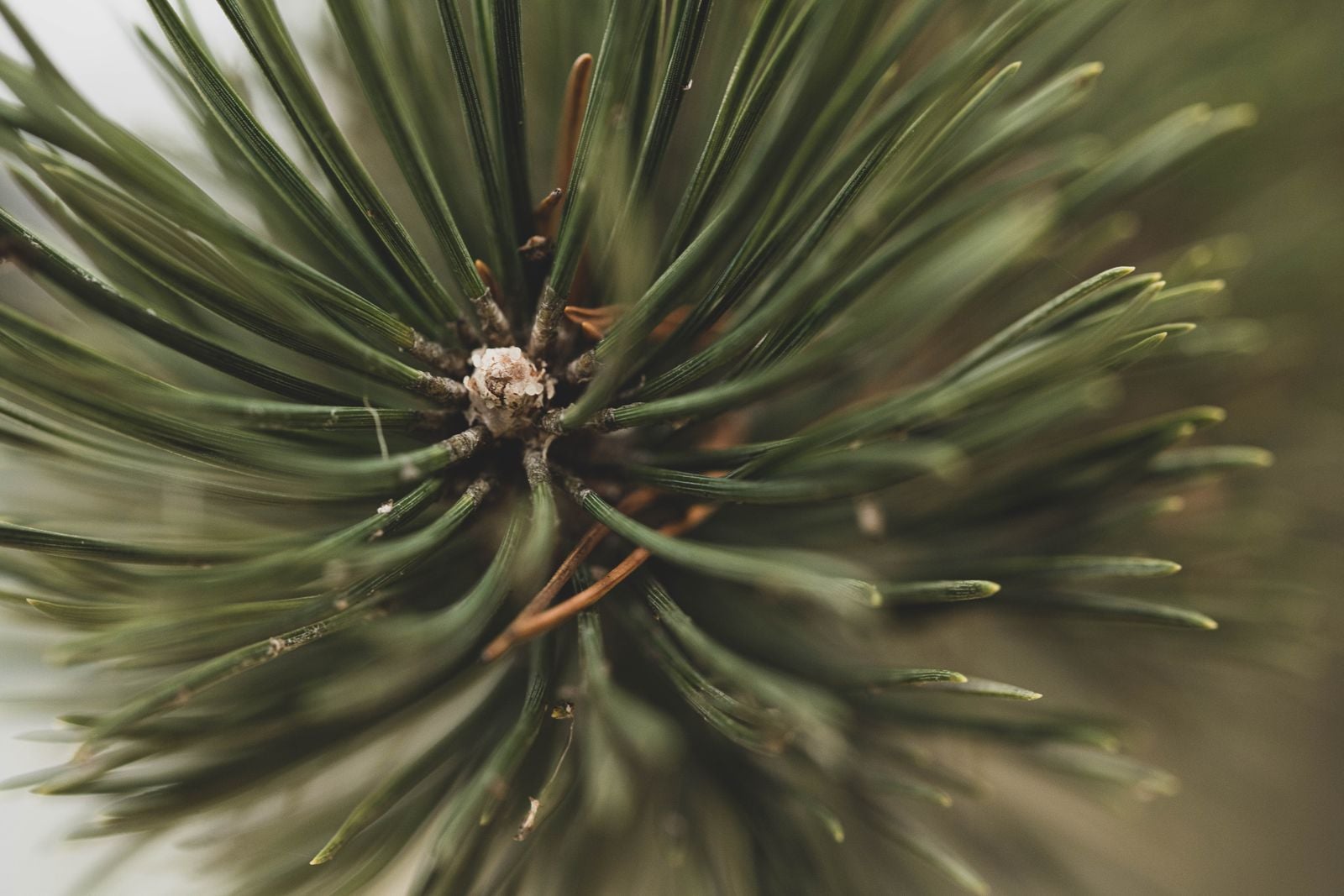
A mature Wollemi pine can reach about 40 metres — roughly the height of a 12-storey building. The bark forms dense clusters of small nodules that resemble bubbling dark chocolate. The foliage grows in flat sprays of soft, waxy leaves, bright green when new and dulling to bronze with age. In cold months the growing tips coat themselves in a white waxy cap that looks like snow, a trait thought to protect the meristem from frost.
The trees are self-cloning. Individual Wollemi pines typically send up multiple trunks from a single root system, so what looks like a grove of forty stems may in fact be a handful of genetic individuals — a coppicing habit that lets a wounded or burnt tree resprout from its base. Genetic surveys of the wild population have found extraordinarily low diversity, consistent with a species that has been squeezed through a very narrow bottleneck and has been reproducing largely by cloning itself for a very long time.
The dawn redwood parallel
The Wollemi pine has an obvious sibling in botanical history: the dawn redwood, Metasequoia glyptostroboides. Fossil foliage of the genus was described in 1941 and assumed to represent a long-extinct tree. A few years later, a Chinese forester found a grove of living dawn redwoods in Szechwan Province. Wartime made communication impossible, and only after 1945 did scientists connect the fossils and the living trees. Harvard arborists collected seed, and by the late 1940s dawn redwoods were growing in botanic gardens around the world.
The Wollemi followed the same script fifty years later. Within a decade of Noble’s discovery, the Royal Botanic Gardens Sydney had set up a commercial propagation program. Cuttings and tissue-cultured saplings were distributed to botanic gardens around the world. The idea was simple: get the species out of the single canyon before something — a fire, a pathogen, a hiker with dirty boots — ended it.
Fire, rot, and a helicopter rescue
The something turned out to be Phytophthora cinnamomi, a soil-borne water mould that kills a huge range of Australian native plants and to which the Wollemi pine has essentially no resistance. Phytophthora has been detected at the wild site, almost certainly carried in on human footwear during unauthorised visits. It is the reason the exact location remains secret, why access is restricted to a small number of researchers, and why those researchers scrub and disinfect boots, ropes, and equipment before entering the canyon.
Then came the fires. During the 2019-2020 fire season, the Gospers Mountain megafire burned through much of Wollemi National Park. As the front approached the canyon, a specialist team from the New South Wales National Parks and Wildlife Service was inserted by helicopter to protect the trees. The trees survived. A few were scorched. None of the adults were lost. It was one of the most targeted and expensive rescue operations ever mounted for a single plant species.
Ninety million years, one gorge
The number that gets repeated — 90 million years — is a fossil age, not a species age. The oldest fossils confidently assigned to Wollemia-type conifers are Cretaceous. The living species is presumably younger, but its lineage’s continuity with those fossils is what makes the tree remarkable. Ninety million years ago, when the resin that would become the Antarctic amber was flowing, flowering plants were still a novelty and Tyrannosaurs had not yet evolved. Ancestors of the Wollemi were part of vast southern-hemisphere conifer forests that stretched from what is now Patagonia across Antarctica to Australia and New Zealand.
Everything else in that forest is gone. The dinosaurs are gone. The polar rainforest is gone. The continent the trees grew on has moved thousands of kilometres and is now buried under two kilometres of ice. What remains, in one wet crack in a sandstone plateau outside Sydney, is under a hundred adult stems of a plant that was already ancient when the asteroid hit.
A wild adult count under 100 is precarious. For comparison, the mountain pygmy possum — Australia’s only hibernating marsupial, itself rediscovered in 1966 after being known only from fossils — has an estimated 2,000 to 3,000 individuals across three populations and is still listed as critically endangered. The Wollemi’s wild adult count is one to two orders of magnitude smaller than that, concentrated in one gorge, with essentially no genetic diversity to fall back on.
The insurance policy is ex situ cultivation. Wollemi pines are now growing at the Royal Botanic Gardens Kew in London, at the Atlanta Botanical Garden, at the Botanic Gardens of Sydney, in private gardens across Europe and North America, and in commercial nurseries that sell them to homeowners. A backyard Wollemi in Manchester or Melbourne is genetically almost identical to a wild one in the secret gorge. If the wild population is lost to fire or pathogen, the species itself will persist as a planted ornamental — a diaspora of clones descended from cuttings taken in the 1990s.
That is not the same as surviving in the wild. A tree in a botanic garden is not doing what the Wollemi has been doing for 90 million years, which is holding its ground in one specific canyon while continents drifted and climates shifted and hominids evolved and built a city of five million people close enough to visit on a weekend.
The trees were not lost in 1994. They had been growing continuously in the same gorge, presumably for millions of years, throughout the entire span in which humans arrived in Australia, in which agriculture was invented, in which the pyramids were built, in which Sydney was founded and grew into a metropolis on the coast a short drive away. The trees were not hiding. Nobody had looked in the right slot.
The canyon is still there. The trees are still there. Somewhere under a plateau in New South Wales, a stand of conifers whose ancestors dropped pollen onto dinosaur nests is putting on new needles this month, growing at a few centimetres a year, waxing its meristems against a winter that would not have surprised its 90-million-year-old cousins on the Antarctic coast.