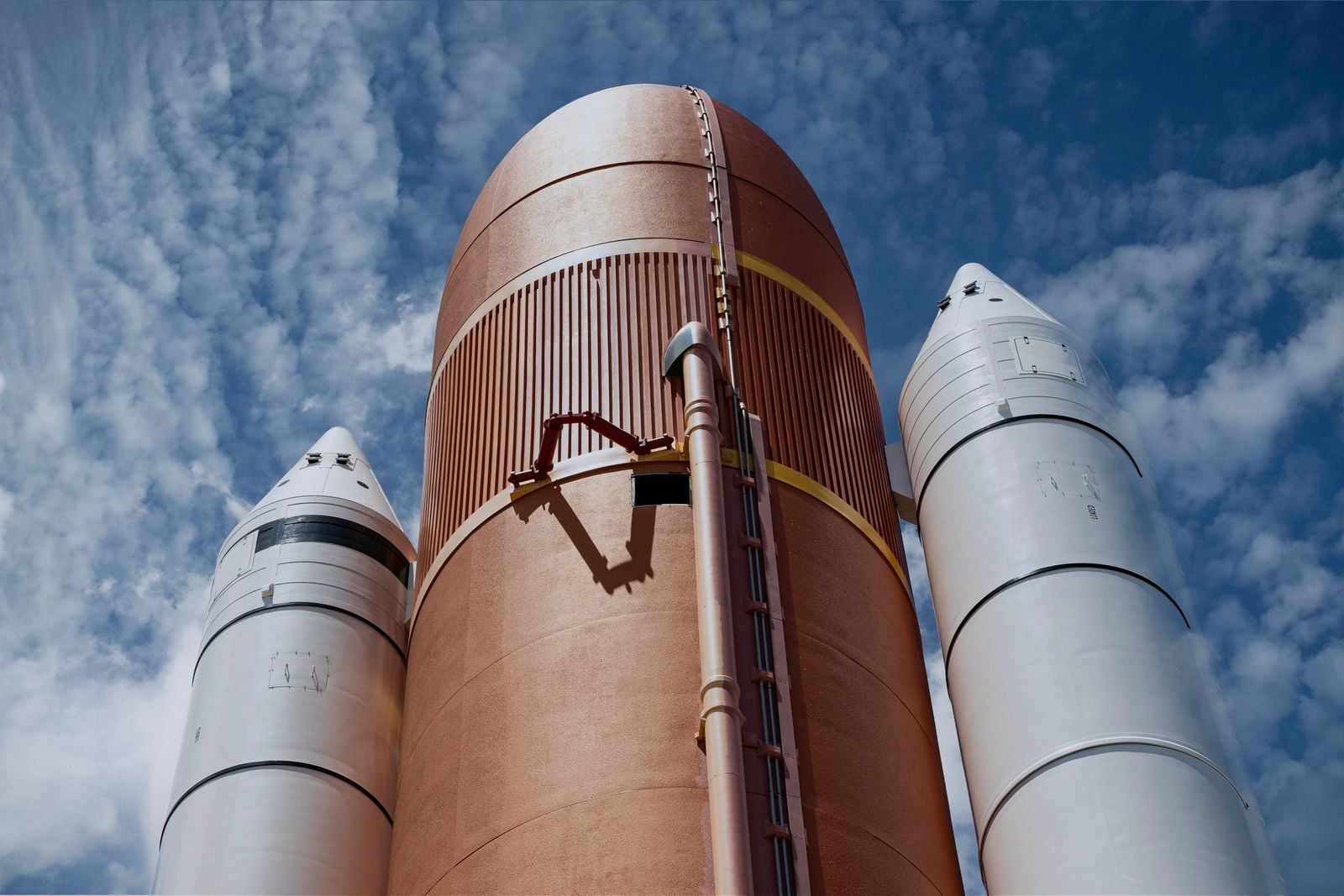
On the morning of 22 July 1962, an Atlas-Agena rocket lifted off from Launch Complex 12 at Cape Canaveral carrying a solar-powered spacecraft bound for Venus. Just under five minutes later, a range safety officer flipped a switch and blew it up over the Atlantic. NASA’s mission record puts the destruct command at T+294.5 seconds.
Mariner 1 was meant to be the first American spacecraft to reach another planet. It never made it out of the lower atmosphere. The reason has been retold for six decades as a story about a missing hyphen, and the retelling is only about half right.
A five-minute mission
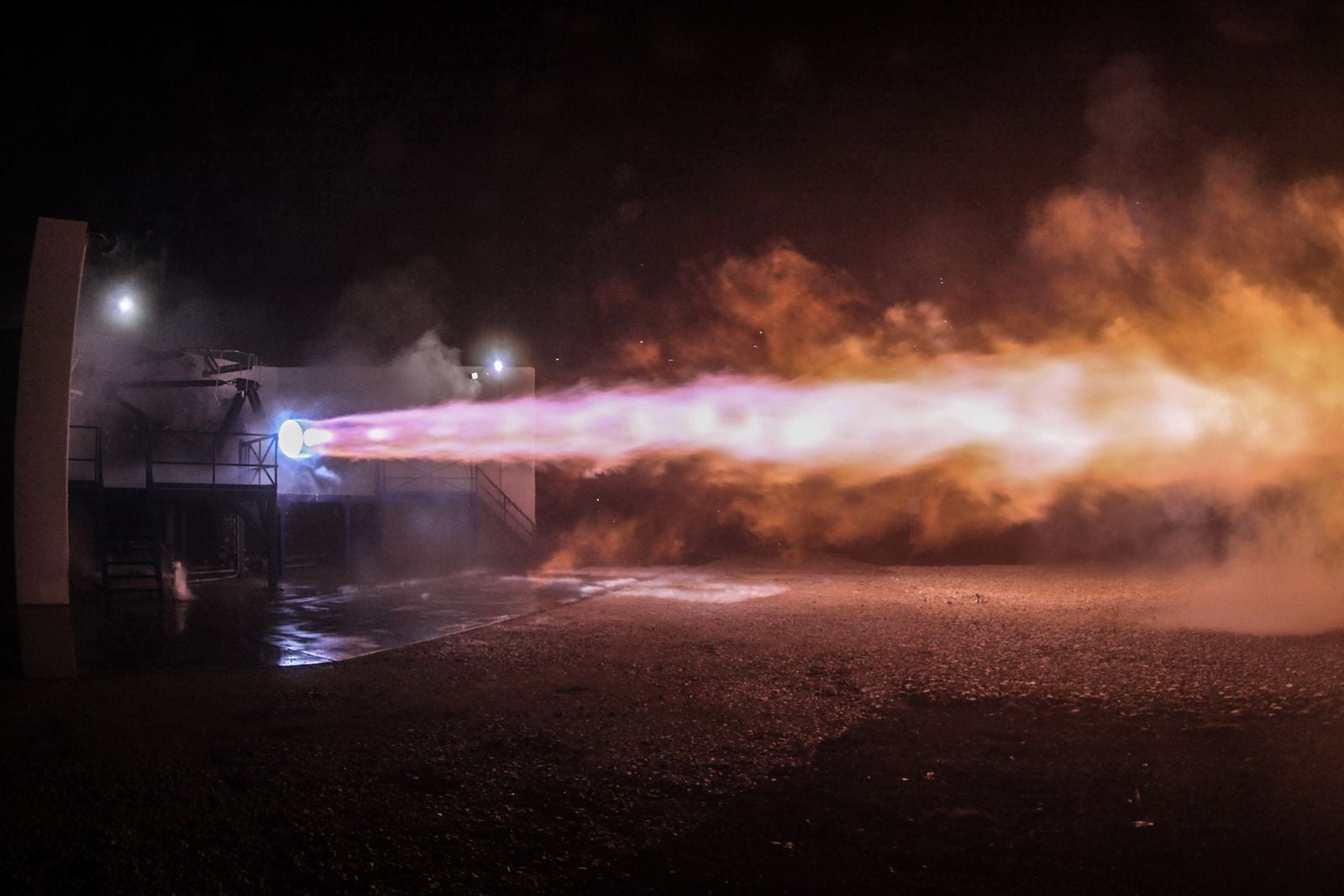
The launch sequence began cleanly. Liftoff came at 09:21:23 UT, which is 5:21 in the morning local time, well before sunrise. The Atlas cleared the pad in the dark, rolled into its programmed trajectory, and climbed on a pillar of kerosene flame. For the first few minutes, everything looked textbook.
Then the rocket started to wander. Its steering, which depended on a continuous exchange between the vehicle and a ground-based guidance computer, began throwing the booster into a series of unplanned pitch and yaw maneuvers. The vehicle was drifting toward the North Atlantic shipping lanes.
At T+294.5 seconds, the range safety officer triggered the destruct command. The Atlas exploded. Mariner 1, still bolted to the upper stage, went with it. The command came only seconds before the spacecraft was due to separate from the Agena, after which destroying it would no longer have been possible.
The whole mission, from ignition to fireball, had lasted less time than it takes to boil an egg.
What actually went wrong
The popular version of this story has one villain. The investigation found two, and it took both of them to lose the spacecraft.
The first was hardware. Silicon Republic’s reconstruction of the incident describes an onboard guidance antenna failing a few minutes into the flight, which cut the clean radio link the Atlas relied on and forced the ground software to take over the job of holding the vehicle on course. NASA’s own summary traces the failure to that antenna first, and to the software second.
The second was the software. One of the hand-written guidance equations included a symbol carrying an overbar, a horizontal line drawn above the letter to indicate a smoothed running average rather than a raw instantaneous reading. The averaging existed to filter out momentary noise in the tracking signal. When the equations were transcribed for the ground computer, the overbar was left out.
Without it, the computer stopped averaging. Instead of feeding the Atlas a smoothed value, it fed it raw, unfiltered data. Every tiny fluctuation in the tracking signal became a real steering command. The rocket did exactly what it was told to do. It chased noise.
The uncomfortable detail is that the flawed code was not new. Silicon Republic notes, citing Paul Ceruzzi’s history of computing in flight, that the same equations had already flown on earlier Ranger launches without causing trouble. It took the antenna failure to expose the bug that had been sitting there all along.
The most expensive punctuation mark
Writing in his 1968 book The Promise of Space, Arthur C. Clarke called the omission the most expensive hyphen in history. The line was too good to die. It has been repeated in engineering textbooks, launch-failure retrospectives and cautionary lectures on software quality ever since.
It was also, strictly, wrong. NASA’s mission page goes out of its way to say the missing mark was not a hyphen, as is sometimes erroneously reported. But contemporary newspapers had already run with it. The New York Times headline five days after the launch was “For Want of Hyphen Venus Rocket Is Lost,” and once a phrase like that is in print it stops mattering what the notation was actually called.
Whether it holds the record is another matter. NASA has lost bigger spacecraft to bigger bugs. Silicon Republic puts the Mariner 1 loss at $18.5m in 1962 money, which is real but not catastrophic by the standards of what came later. What captured people was the disproportion. One missing character. One destroyed planet-bound probe.
What Venus had to wait for
NASA’s response was fast. Mariner 2 had already been built as a near-identical twin, carrying the same scientific equipment. It launched from the same pad on 27 August 1962, thirty-six days after Mariner 1’s destruction, with the guidance problems fixed.
On 14 December 1962, Mariner 2 flew past Venus at a range of about 34,854 kilometres, becoming the first spacecraft in history to complete a successful planetary science mission. Its microwave radiometer read temperatures between 216 and 237 degrees Celsius across the planet, far hotter than expected and consistent across the day and night sides. It detected no discernible planetary magnetic field.
NASA describes the science return as only a modest success. That is fair, and it misses the point. The mission proved a spacecraft could reach another planet and send numbers home, and none of it would have happened without a spare probe sitting in a clean room and a programme willing to fly it within weeks of a very public failure.
Why one character mattered so much
Modern software has redundancy built into nearly every layer. Compilers catch syntax errors. Version control tracks every change. Automated tests run before code ever gets near a rocket. Even a routine web application typically passes through more validation than the Mariner 1 guidance code ever saw.
In 1962, none of that existed. The guidance equations were written out by hand, transcribed by hand, and punched onto cards by hand. There was no compiler warning that would flag a missing overbar, because the overbar was not a formal syntactic element. It was a mathematical convention being translated into a computing convention on the fly. Every character was a potential single point of failure.
The Atlas had no onboard guidance smart enough to sanity-check the commands it was being handed. If the ground computer said pitch hard left, the rocket pitched hard left, even if the command was nonsense. There was no dissenting voice in the loop, which is exactly why a hardware fault and a transcription error could combine into a total loss.
The genre of tiny errors, giant consequences
Mariner 1 sits at the head of a long tradition of small mistakes producing outsized damage. The 2010 Reinhart-Rogoff economics paper, cited across continents to justify austerity policies, contained an Excel error that dropped Australia, Austria, Belgium, Canada and Denmark from a key average. Correcting it turned a headline 0.1 per cent decline into a 2.2 per cent increase.
Even now, high-stakes space programmes run into problems that look absurd from the outside. On 2 April 2026, hours into the Artemis II mission and more than 30,000 miles from Earth, commander Reid Wiseman told Mission Control he had two instances of Microsoft Outlook running and neither was working. Houston remote-accessed his device and fixed it. Nothing about the mission was at risk. The technology has changed. The category has not.
What Mariner 1 established, more than any single technical lesson, was the principle that in a system where a computer commands a rocket, the code is the rocket. A flaw in the equations is a flaw in the vehicle, no less real than a cracked weld or a stuck valve.
The pieces of Mariner 1, its solar panels, its magnetometer, its radiometers, its antenna, fell into the Atlantic a few kilometres east of Cape Canaveral in the last of the pre-dawn dark, where they presumably still sit.
The investigation described the fault as a transcription error and recommended tighter review procedures. No individual engineer was publicly identified. Whoever left out the overbar went on with their career, uncredited and unnamed, which is probably the correct outcome for a failure that was structural rather than personal.
Six decades on, the launch has become shorthand. Engineers cite it in code review meetings. Programming instructors mention it in the first week of introductory courses. It appears in books about software reliability, in lists of cautionary tales for founders and technologists, and in the folklore of every space agency that has ever launched a rocket controlled by a computer.
A magnetometer that never sensed a magnetic field. A radiometer that never read a temperature. A radio that never phoned home. All of it lost to a broken antenna and a mark, less than a millimetre wide, that nobody typed.