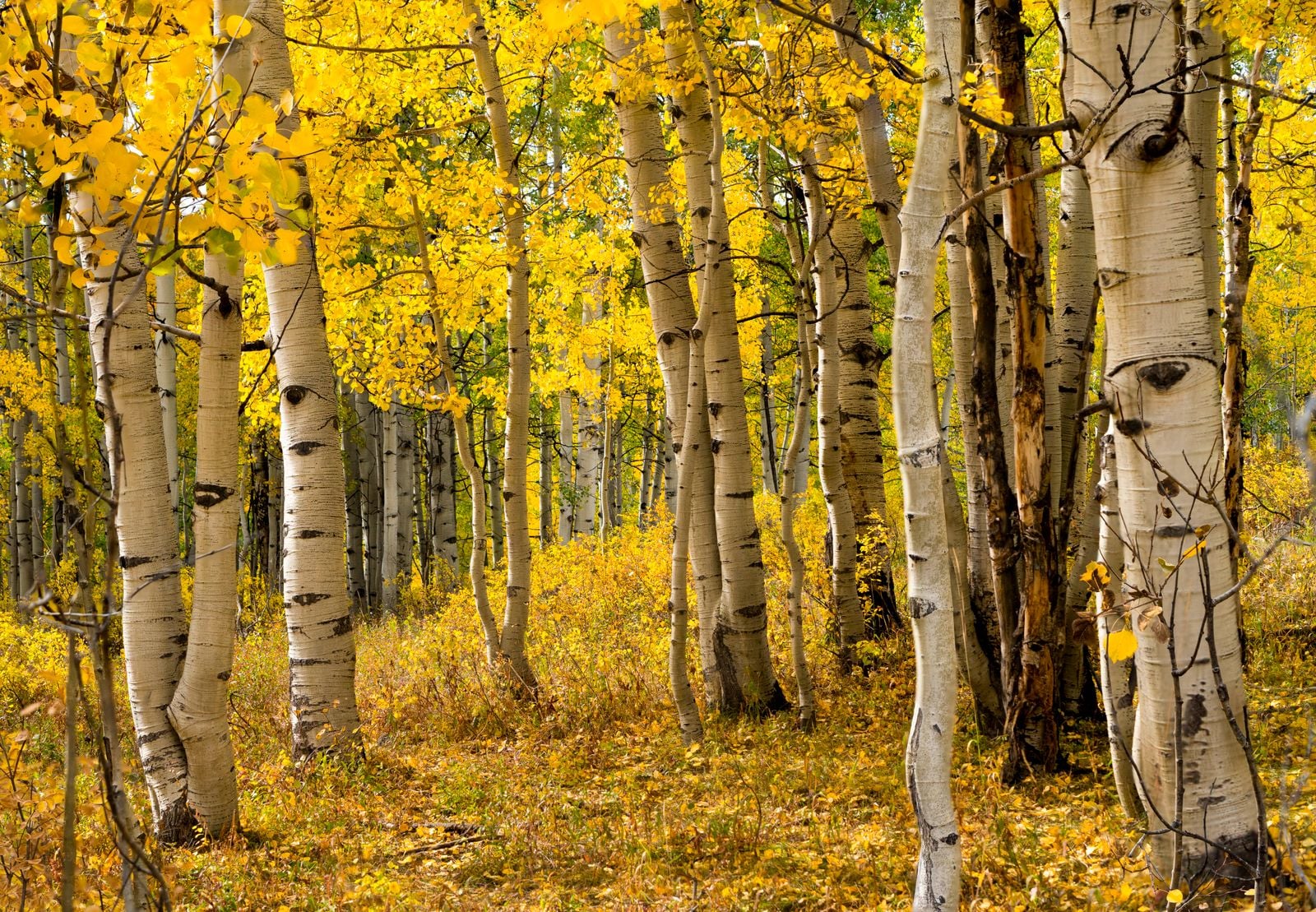
On the western side of Fish Lake in south-central Utah, what appears to be an ordinary aspen forest is actually one enormous plant. Around 47,000 pale trunks rise from the ground, but they belong to a single clonal quaking aspen known as Pando.
The standard estimates are difficult to absorb. Pando covers 106 acres, roughly the footprint of 80 American football fields, and weighs about 13 million pounds, or close to 6,000 metric tonnes. It is widely described as one of the heaviest single organisms on Earth, although rankings depend on how scientists define and compare vast plants, fungi, and marine colonies.
NASA describes its trees and root system as spanning 106 acres and weighing 13 million pounds. The name Pando is Latin for “I spread.” Few names have ever fitted an organism so precisely.
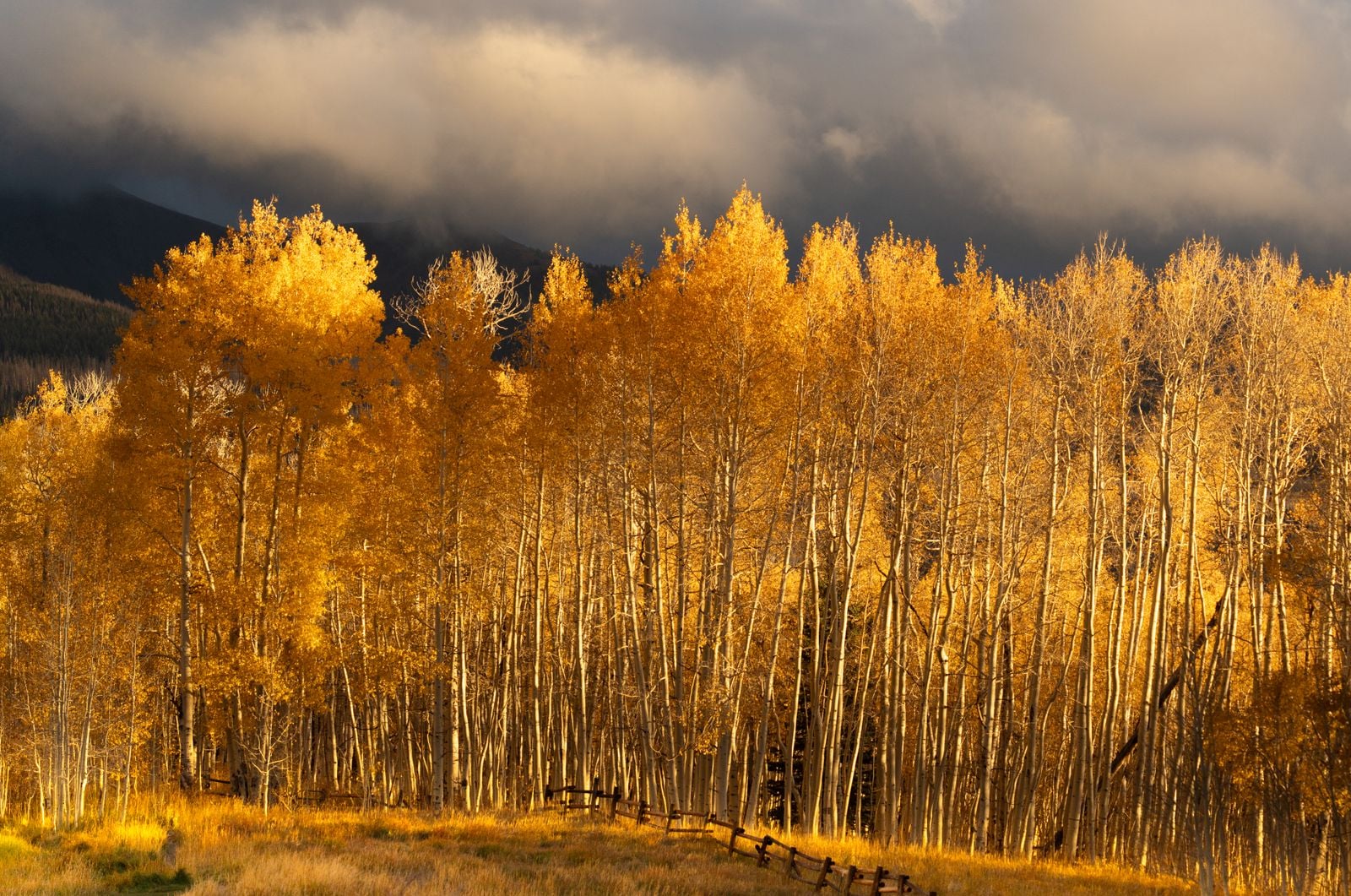
One tree, tens of thousands of trunks
Pando is a clonal colony of Populus tremuloides, the quaking aspen. Each visible trunk is a ramet, a vertical shoot produced by a larger genetic individual called a genet. New ramets rise from lateral roots, making what looks like a forest behave biologically as one spreading plant.
In 2008, researchers sampled 209 stems across the grove and examined seven genetic markers. Their study confirmed a single genetic entity covering approximately 43.6 hectares, closely matching the boundary researchers had previously mapped from the trees’ physical characteristics.
Pando is also a male clone. Its stems share a common genetic origin and reproductive identity, which is why researchers describe the entire stand as one organism rather than thousands of separate trees.
That does not mean every cell has remained letter-for-letter identical for thousands of years. Long-lived organisms accumulate somatic mutations as their cells divide. Pando is one genet, but it is not genetically frozen in time.
How old is Pando?
For decades, Pando’s age could only be inferred indirectly. Individual trunks can be dated with tree rings, but the root system continually replaces them, leaving no ancient central trunk that can be cored back to the plant’s beginning.
A recent genomic preprint analyzed more than 500 samples of leaves, roots, bark, and nearby clones. Its latest version estimates that Pando is approximately 12,000 to 37,000 years old, using patterns of accumulated somatic mutations alongside the long presence of aspen pollen in sediments from nearby Fish Lake.
The estimate remains provisional because the work is still identified as a preprint rather than a peer-reviewed journal article. An earlier version produced a much wider upper estimate of 80,000 years, which generated headlines in 2024, but that figure is no longer the range reported in the current version.
Even the lower estimate is extraordinary. Most of the mature stems standing today are only around a century old, with some older ramets reaching roughly 120 to 150 years. The organism keeps living because the root system produces replacements as its visible stems age and die.
The physics of a plant this large
Pando has never been placed on a scale. Its mass is an estimate derived from the enormous number of stems and the biomass associated with the wider organism. That estimate comes to about 5.8 million kilograms, usually rounded to 6,000 metric tonnes.
An individual Pando trunk is unremarkable by forest standards. It may stand around 80 feet tall, with the smooth pale bark, dark branch scars, and trembling leaves found throughout the species’ North American range. Pando’s distinction comes from repetition and continuity rather than the size of any single stem.
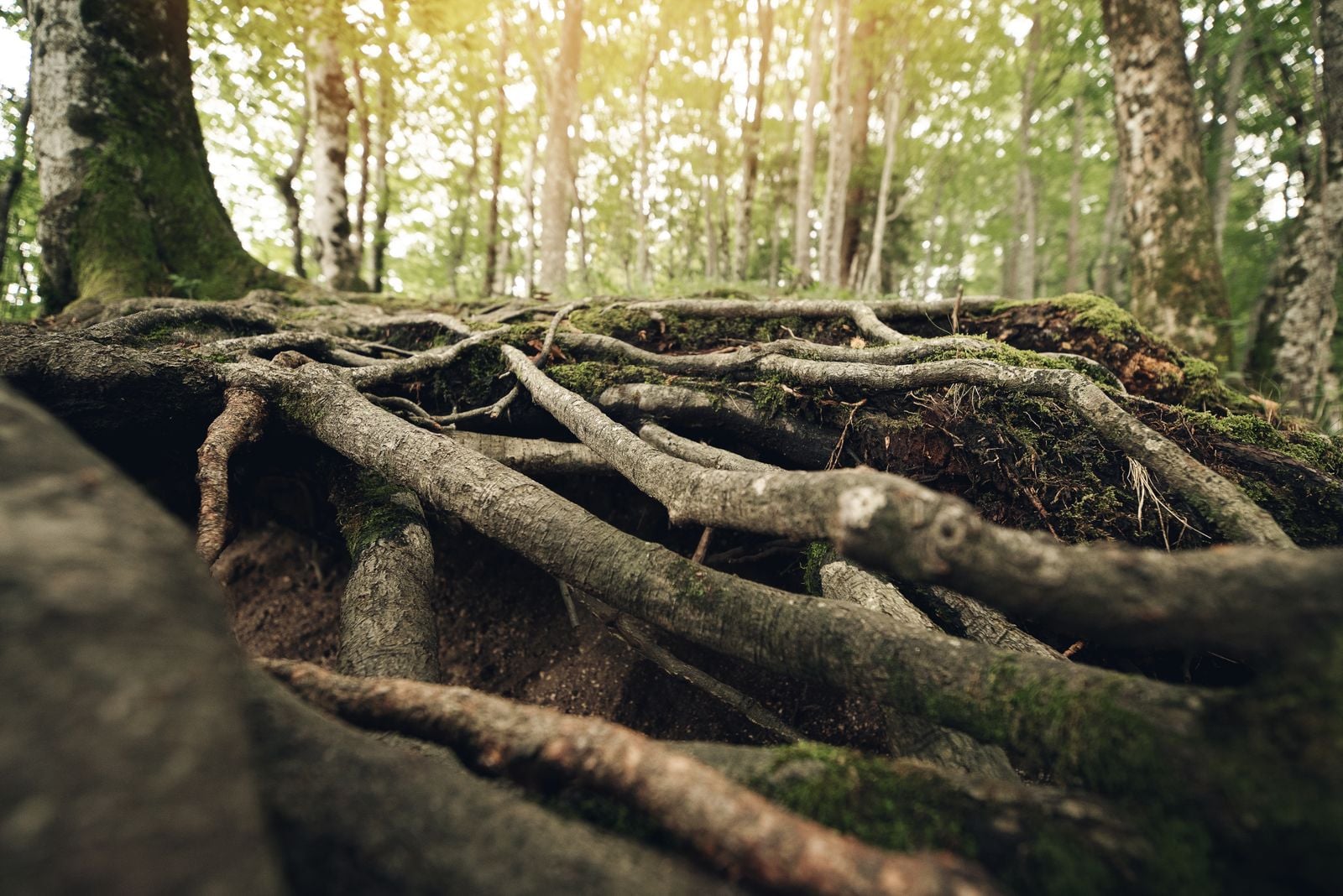
Aspen roots spread laterally through the soil and produce new shoots called suckers. When older stems die or the canopy opens, increased light and changes within the plant can encourage those suckers to emerge. Fire, cutting, and other disturbances can stimulate regeneration, but only when the young growth survives long enough to become established.
The above-ground forest is therefore temporary architecture. Stems appear, mature, and disappear while the larger clone persists beneath them.
The problem is not producing shoots
Pando is still capable of sending up young stems. The immediate conservation problem is that too few of them survive into the next age class.
A peer-reviewed 2018 study of 65 monitoring plots found that mule deer presence strongly affected successful regeneration. Domestic cattle also contributed to browsing pressure, although the study identified mule deer as the stronger influence.
Young aspen suckers are tender and accessible. Repeated browsing removes their growing tips before they can rise beyond the reach of animals. Mature stems continue to stand overhead, but the middle and younger generations needed to replace them remain scarce across much of the clone.
This makes Pando’s decline demographic rather than sudden. The organism is not disappearing in a single event. Its canopy is ageing while too few young stems are entering the ranks beneath it.
What the fences revealed
Managers have fenced portions of Pando to test whether protecting suckers from browsing allows the clone to rebuild its age structure. The results show that protection matters, but they also demonstrate why fencing alone is an incomplete solution.
Inside a well-maintained enclosure established in 2013, young aspen grew far more successfully. A second enclosure incorporated older fencing that deer could penetrate, and its regeneration results were much weaker until repairs were made.
A 2022 follow-up assessment concluded that Pando was beginning to split into different ecological trajectories because of herbivory and uneven protection. One section contained successful young growth, another carried the legacy of ineffective fencing, and nearly half of the clone remained exposed to chronic browsing.
The contrast does not prove that the roots, soil, and climate are otherwise perfect. It does show that young stems can survive where browsing is effectively controlled. It also raises a difficult question: how much of a wild organism should be enclosed behind fencing to keep it alive?
Other pressures have not disappeared
Browsing is the best-documented immediate threat to Pando’s recruitment, but it is not the only pressure on the grove. Older stems are affected by sooty bark canker, leaf spot, and conk fungal disease. These organisms are not new to aspen forests, but their effects become more consequential when younger stems are failing to replace older ones.
Warming temperatures, drought, changing snow conditions, recreation, livestock use, and surrounding forest management may also influence Pando’s future. Direct research separating the effects of each pressure at Pando remains limited, so claims that any one of them will determine the clone’s fate should be treated cautiously.
The central finding is narrower and firmer: successful recruitment falls where browsing remains high, and it improves where young stems receive effective protection.
A management problem with no simple answer
The U.S. Forest Service manages the land containing Pando, but the animals crossing it, livestock use, recreation, fencing, and forest treatments involve overlapping interests and responsibilities. Restoring one enormous organism therefore requires coordination across systems that are usually managed separately.
Extending or repairing fences can protect more suckers, but permanent enclosure would change the character of the grove. Cutting or prescribed fire can stimulate new growth, but producing more shoots achieves little if browsers immediately consume them. Reducing browsing pressure across the wider landscape is harder than protecting a limited experimental plot.
The most defensible approach is adaptive rather than absolute: monitor recruitment, maintain effective protection where it is working, adjust failed treatments, and manage wild and domestic herbivores with the survival of young aspen in mind.
Standing inside one organism
In summer, Pando does not look like an organism in crisis. Its leaves flutter on flattened petioles that respond to the smallest movements of air. The bark is pale and smooth, marked by dark eye-shaped scars. Wind moving through the canopy produces the soft, rain-like sound that gives quaking aspen their name.
PBS captured that contrast in a February 2025 episode of Untold Earth. The mature canopy remains visually impressive, while the forest floor reveals cropped suckers and the shortage of young stems that should eventually replace it.
Pando has survived for at least 12,000 years by repeatedly rebuilding its visible body. The question is no longer whether its roots can produce another shoot. They can. The question is whether enough of those shoots will be allowed to grow into the next forest.