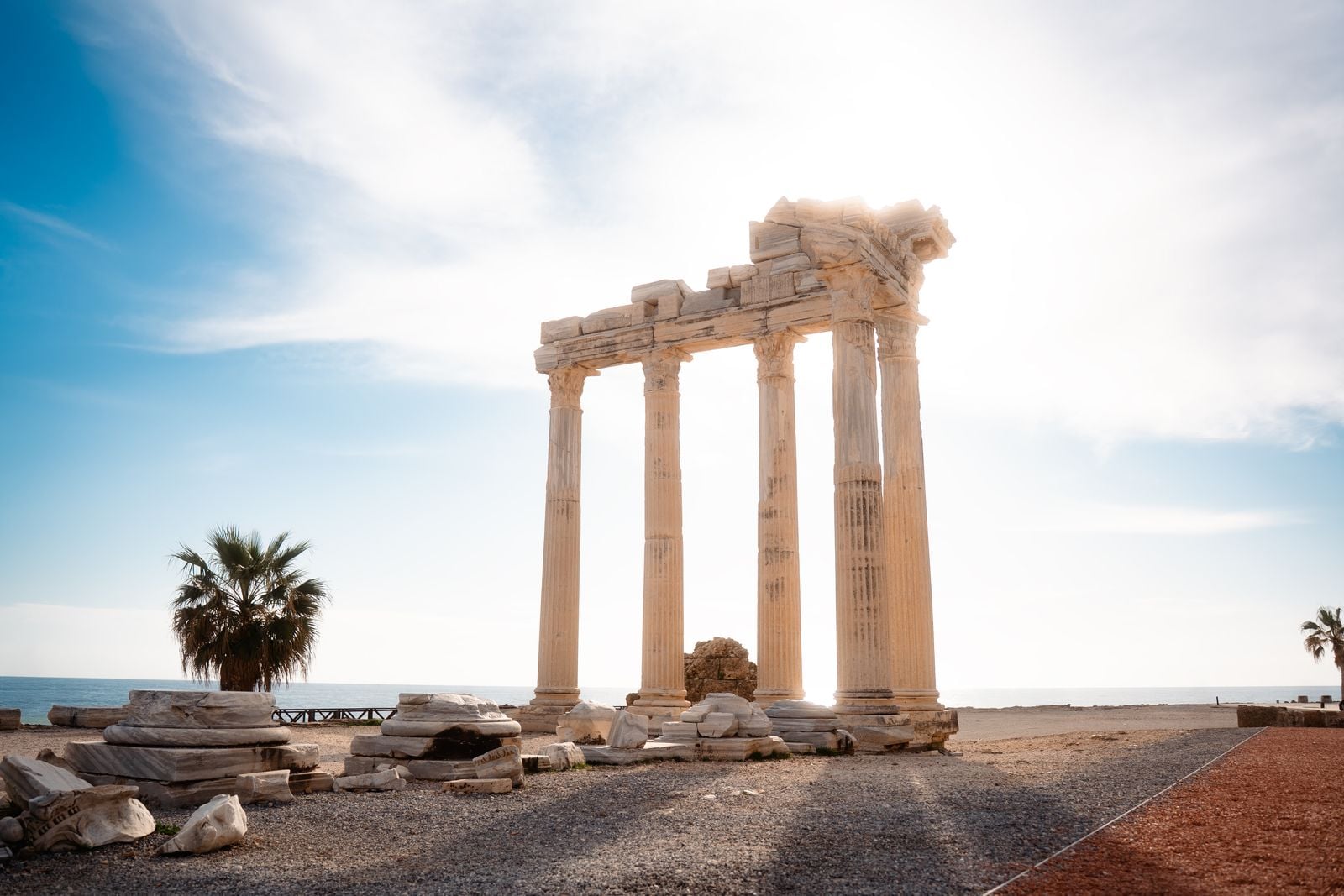
The breakwater at Portus Cosanus, on the Tyrrhenian coast north of Rome, has been sitting in salt water for roughly two thousand years, and it is still there. Modern concrete piers poured into the same sea in the mid-20th century are spalling, rust-stained, and in some cases scheduled for demolition. The answer comes down to two ingredients and a mixing order that modern engineers spent most of the last century reading as a mistake: volcanic ash from the Bay of Naples, lumps of quicklime that were never fully slaked, and a hot, dry pre-mix that leaves the material able to heal itself for as long as water keeps finding its way inside. The Roman wall is not merely surviving. At the mineral scale it is still reacting, gaining calcite in its cracks and pores after nineteen centuries of exposure.
That answer arrived in two instalments. In January 2023 an MIT-led team identified the mixing technique. In July 2026 a Berkeley-led team showed that the reaction never stopped, and that the mineral doing most of the binding was not the one anyone had been looking at.
The wall that keeps getting harder
Modern Portland cement concrete, the grey stuff poured into every highway overpass and marina piling since about 1900, typically lasts 50 to 100 years before requiring major repair or replacement. In seawater it often does worse. Chloride ions from the ocean diffuse through the pore network, reach the steel reinforcement, and rust it. The rust expands. The concrete cracks. Once a crack opens in a modern pier, seawater accelerates the failure. Roman marine concrete does the opposite: seawater seeping in triggers new mineral growth that plugs the cracks tighter than the original mix.
The Portus Cosanus breakwater at Orbetello, the harbour moles at Baiae, the piers at Portus at the mouth of the Tiber. The oldest of them go back to the late Republic; the imperial port complex at Portus was begun under Claudius in the mid-first century CE and extended under Trajan into the early second. All are still measurable, and still faintly reacting under the microscope.
The Romans noticed. Pliny the Elder wrote in his Naturalis Historia that concrete poured into harbours fused, once the waves closed over it, into a single stone mass that grew stronger by the day. For most of the intervening two millennia this read as Roman boasting. It was a description.
Two ingredients, and a mixing order nobody expected
The Romans built with what was under their feet. On the Bay of Naples that meant pozzolana, a fine volcanic ash weathered out of the Campi Flegrei and the flanks of Vesuvius. Pozzolana is glassy, silica-rich, and highly reactive when it meets calcium hydroxide.
The second ingredient was lime, produced by calcining limestone in wood-fired kilns to drive off carbon dioxide, leaving calcium oxide: quicklime.
The 1st-century-BCE architect Vitruvius described a recipe in De architectura. Slake the quicklime with water first, then mix the resulting paste with the ash. For centuries scholars took Vitruvius at his word. But actual samples of Roman concrete kept showing something this method could not produce: bright white lumps of unreacted lime, up to a few millimetres across, scattered through the matrix. These lime clasts were long dismissed as sloppy work, evidence of a bad batch or a lazy foreman.
They were not sloppy. They were the mechanism.
The case was first made in January 2023, when a team led by MIT civil engineer Linda Seymour, with materials scientist Admir Masic, analysed 2,000-year-old concrete from the archaeological site of Privernum in Italy using scanning electron microscopy, X-ray spectroscopy, powder X-ray diffraction and Raman imaging. The lime clasts, they reported in Science Advances, were inconsistent with slaked lime. The Romans had been mixing quicklime dry with pozzolana and adding water afterwards, a process the team called hot mixing.
Then Pompeii handed them the worksite. Excavations in Regio IX, Insula 10, announced in March 2024, uncovered a house under renovation when Vesuvius erupted in 79 CE, with the dry ingredients still sorted in piles alongside finished walls, unfinished walls and repair patches. Field sampling under an agreement between the Archaeological Park of Pompeii and MIT ran from January 2024 to May 2025. Petrographic, EDS, Raman, X-ray diffraction and isotopic analysis of the piles and the mortar in the walls, published in Nature Communications on 9 December 2025 with Masic as senior author, showed unequivocally that quicklime had been pre-mixed with dry pozzolan before water was added.
Water hitting quicklime is violently exothermic. The mixture heats intensely. That heat drives chemistries impossible in a cool slaked-lime paste: high-temperature calcium-aluminium-silicate phases form, curing times drop from weeks to days, and crucially, small chunks of the quicklime survive the mixing intact, embedded in the hardened matrix like raisins in bread.
Those surviving chunks are the concrete’s medical kit.
How a crack heals, and why seawater helps
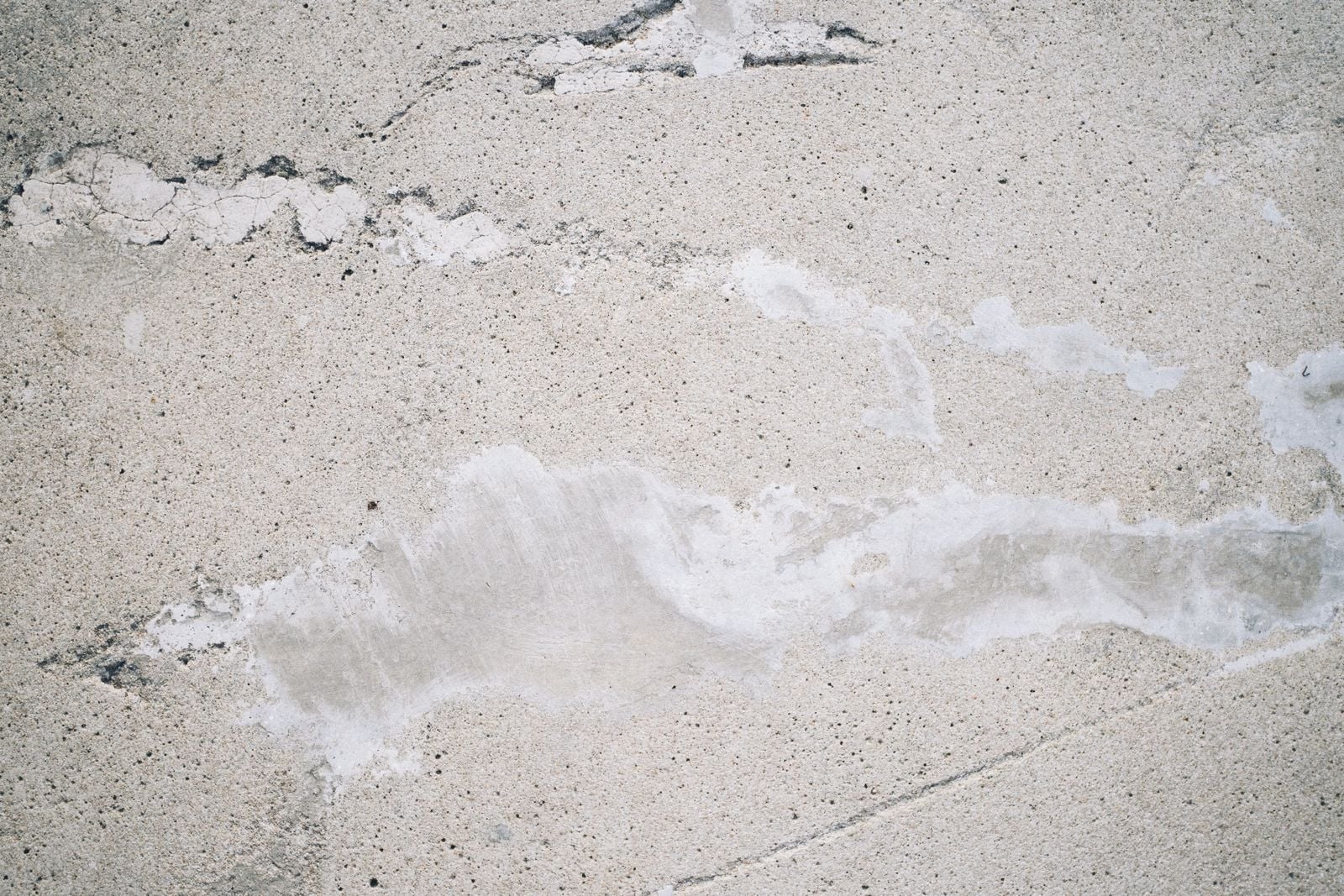
When a fracture opens in Roman concrete, from an earthquake, a wave impact, thermal stress, or the slow settlement of a foundation, it tends to run toward the lime clasts. The clasts present more reactive surface than the surrounding matrix, so they are lines of least resistance. Water follows the crack in. The water dissolves calcium from the exposed clast, forms a calcium-rich solution, and as that solution dries and reacts it hardens as calcium carbonate, gluing the crack shut.
In seawater the chemistry is richer still. University of Utah geologist Marie Jackson and colleagues found that seawater percolating through Roman harbour concrete dissolved components of the volcanic ash and let new crystals grow from the leached alkaline fluids: aluminous tobermorite and phillipsite, minerals so difficult to synthesise that nobody has produced tobermorite at 20°C except the Romans. The rock is not just being patched. It is being reinforced from the inside by the very seawater that would destroy a modern pier.
The latrine that nobody restored
The clearest picture of this ongoing chemistry came from an unglamorous place: a communal toilet twenty-seven kilometres east of Rome. A study led by Xiaohong Zhu of Beijing University of Technology, with Paulo J. M. Monteiro of UC Berkeley as senior author, published in Science Advances on 8 July 2026, examined a concrete sample from the western substructures of the Canopus at the second-century Villa of Hadrian in Tivoli.
Its value was that nobody had ever repaired it. Conservators patch temples and colonnades; as Monteiro put it, “nobody restores a latrine”. The material had sat undisturbed for nineteen centuries, running an experiment no living researcher could have started.
Using high-resolution X-ray tomography, electron microscopy and chemical mapping down to tens of nanometres, the team traced a weblike network of calcite threading through the ancient matrix, filling pores, coating grains and bridging micro-cracks. Carbonation, the slow reaction of atmospheric CO₂ with calcium-rich compounds, had been running continuously for 1,900 years. The finding that reordered the field was volumetric: the calcium-aluminium-silicate-hydrate gel produced by the pozzolanic reaction accounted for a modest share of the binder, while carbonate networks did most of the binding and densifying. Calcite had been suspected before; what was new was watching how it binds.
In modern concrete carbonation is a slow enemy. It lowers the pH inside the material and eventually strips the alkaline shield that keeps rebar from rusting. In Roman concrete, with no steel to protect, carbonation is a friend. It builds mineral bridges where cracks used to be.
Why modern piers crumble
Modern concrete is a different animal. Portland cement, patented in 1824 by the Englishman Joseph Aspdin, is made by burning limestone and clay together at around 1,450°C in a rotary kiln, grinding the resulting clinker to a fine powder, and adding a small amount of gypsum. Mixed with water and aggregate, it hydrates into a dense matrix of calcium silicate hydrates. Its aggregates are chosen specifically not to react.
It is fast. It is strong on day 28. It is also brittle, essentially inert after curing, and in almost every structural application cast around a cage of steel rebar. The steel gives it tensile strength the concrete alone cannot provide. But the steel is also the failure mode. Chlorides from seawater or road salt reach the bars, rust forms, rust occupies more volume than the iron it came from, and the concrete around the bar breaks off in sheets. Engineers call it spalling. Any coastal drive past a 1970s highway bridge shows it: rust weeping from the underside, chunks of concrete missing, exposed rebar oxidising in the sea air.
Cement manufacture also carries a climate cost, split between the fuel burned in the kiln and the CO₂ driven out of the limestone itself. Producing it accounts for roughly 8 percent of global carbon emissions. A material that lasts 50 years and then must be demolished and repoured is a compounding carbon problem.
The strangest part of the story is that the Romans wrote it down. Pliny the Elder, in the same century the Pompeii worksite was buried, described the violent reaction of quicklime with water in terms any modern chemist would recognise. Vitruvius described pozzolana mixing, but not hot mixing, and it was Vitruvius the later tradition followed. Somewhere between the fall of the western empire and the industrial revolution, the specific practice of dry-blending quicklime with volcanic ash before wetting was lost. Concrete was reinvented in the 19th century from a different starting point, optimised for speed and compressive strength, and the self-healing property was neither sought nor missed.
Roman engineers were pragmatic about what they were building. Harbour moles at Portus and Baiae were poured into wooden forms directly in seawater, the hot mix reacting with the ocean as it cured. The Pantheon’s dome, poured around 126 CE, used progressively lighter aggregates, from travertine at the base to pumice near the oculus, to keep the unreinforced 43-metre span from collapsing under its own weight. It still holds the record for the world’s largest unreinforced concrete dome, nearly 1,900 years after the last workman climbed down, without a single reinforcing bar.
What remains in the water
Masic has co-founded a company, DMAT, to commercialise a hot-mixed, self-healing concrete inspired by the Roman recipe; its D-Lime product claims to seal cracks up to 0.6 millimetres wide. Other groups are running parallel experiments, substituting fly ash, calcined clay or ground volcanic material for a portion of the Portland cement and deliberately leaving small lime clasts in the mix as healing reservoirs.
In the 2023 crack tests, quicklime-bearing specimens sealed themselves within two weeks of water exposure while control specimens without quicklime stayed cracked. Translation to real structures is harder. Maria Juenger, who studies cement and concrete materials at the University of Texas at Austin and was not involved in the Hadrian’s Villa work, identifies steel as the central obstacle: the same slow carbonation that thickened the latrine with calcite will, in a modern reinforced beam, eventually depassivate the rebar and start it rusting. Any Roman-inspired mix aimed at bridges or high-rises has to reckon with that trade-off.
At Baiae, at the northwestern edge of the Bay of Naples, the volcanic ground began subsiding in the fourth century CE and much of the imperial resort now lies under five to fifteen metres of water. Divers swim through concrete rooms, past concrete piers, over concrete floors. The lime clasts inside those walls are still faintly reactive. Every winter storm that drives seawater into a hairline crack triggers another small precipitation of calcite, another few micrograms of mineral growing in a pore, another tiny episode of the wall repairing itself.
The concrete piers built along the same coast in the 1970s will be gone within a human lifetime. The Roman ones, on current evidence and current chemistry, will still be measurably reacting when the piers that replaced them have been demolished, replaced, and demolished again.