In 1839, 19-year-old Edmond Becquerel reported that light could produce an electrical response in an electrochemical cell. In a follow-up paper presented to the French Academy of Sciences that November, he described platinum blades connected to a sensitive current-measuring instrument and immersed in conducting solutions. Changing which blade received sunlight moved the instrument’s needle.
Those experiments are recognised as the first documented observation of the photovoltaic effect. Becquerel conducted them in Paris while working in the laboratory associated with his father, physicist and electrochemist Antoine César Becquerel. The younger Becquerel could demonstrate that light, rather than heat alone, produced the response, but the microscopic physics needed to explain it did not yet exist.

The experiment that started everything
The surviving report describes something more elaborate than a single glass jar. Becquerel used a blackened wooden box divided into two compartments by a thin membrane. Each compartment held a test solution and a platinum blade, and removable boards controlled which blade received sunlight.
He tested several metals and light-sensitive compounds. In one important experiment, freshly prepared silver chloride was spread over a platinum blade and immersed in water made conductive with a few drops of acid. Sunlight or diffuse light blackened the chloride and deflected the galvanometer needle. Silver bromide and silver iodide also produced measurable responses.
This was a photoelectrochemical system. Light absorbed by the silver compounds drove chemical and electrical processes at the boundary between the electrode and the liquid, separating charge and producing a current in the external circuit. It was not simply a bare platinum plate behaving like a modern silicon solar cell.
Becquerel’s interest in light-sensitive silver chemistry continued. In 1848, he produced what is generally regarded as the first colour photograph of the solar spectrum. Researchers finally explained the origin of its colours more than 170 years later, tracing them to metallic silver nanoparticles within silver chloride grains.
Why the full explanation took almost a century
Becquerel recognised that the effect was associated with particular parts of the spectrum and was not merely caused by heating. He could also describe the chemical changes occurring in the silver compounds. What he lacked was an atomic account of light, electrons, energy levels, and charge transport.
The electron was identified by J. J. Thomson in 1897. Max Planck introduced energy quanta in 1900, and Albert Einstein used the idea of light quanta in 1905 to explain the photoelectric effect. That effect, in which light ejects electrons from a material, is related to photovoltaics but is not identical to the sustained charge separation inside a solar cell.
The remaining pieces arrived through quantum mechanics and solid-state physics. Alan Wilson used quantum mechanics to explain basic semiconductor properties in 1931. Russell Ohl’s discovery of a light-sensitive silicon p-n junction at Bell Labs followed in 1940. Together, those developments supplied the theoretical and material framework that had been unavailable to Becquerel.
From a wet cell to a silicon wafer
The decisive engineering breakthrough came at Bell Laboratories in 1954. Daryl Chapin, Calvin Fuller, and Gerald Pearson created the first practical silicon solar cell, with an efficiency of about 6 percent. Bell Labs called the linked cells a “solar battery” and demonstrated the device by powering a toy Ferris wheel and a radio transmitter.
Silicon made a continuous solid-state device possible. Photons absorbed in the crystal create mobile electrons and corresponding holes. The electric field around the p-n junction directs those charge carriers toward opposite contacts, allowing current to flow through an external circuit without a liquid electrolyte.
The technology has advanced far beyond that first Bell device. Commercial monocrystalline products now operate at efficiencies above 20 percent, while tandem and multijunction research cells go considerably higher. The 2025 IEA PVPS industry review also records the rapid replacement of p-type PERC cells by n-type TOPCon designs. TOPCon’s market share rose from about 30 percent in 2023 to 70 percent in 2024.
What Becquerel’s apparatus shares with a modern panel
The materials and internal processes are different, but both devices turn absorbed light into separated electrical charge. Becquerel relied on a light-sensitive compound at a liquid interface. Modern silicon cells use energy bands and an engineered junction inside a solid crystal. In each case, the device must prevent newly generated charge carriers from immediately recombining and guide them into an external circuit.
Becquerel’s wet cell was never a practical power source. Its output was small, its chemistry changed during illumination, and a liquid laboratory apparatus offered no obvious route to durable modules. Its importance was evidentiary: it showed that light could directly produce an electrical response.
Photoelectrochemical research has not disappeared. In 2018, a University of British Columbia team led by Vikramaditya Yadav reported a biogenic solar cell made with genetically engineered bacteria. The bacteria produced the light-harvesting pigment lycopene and were coated with a semiconductor mineral. The device worked in dim light as well as bright light, but it was biogenic and photosynthetic, not bioluminescent.
The long path from observation to infrastructure
Science often records a phenomenon before it has the theory or manufacturing methods required to make it useful. Becquerel’s work was followed by experiments with selenium, the development of semiconductor physics, Ohl’s silicon junction, and finally the Bell Labs cell. Each step solved a different part of the problem.
Becquerel continued studying the solar spectrum, phosphorescence, magnetism, and photography. He later held a physics chair at the Muséum national d’Histoire naturelle. His son Henri Becquerel discovered spontaneous radioactivity and shared the 1903 Nobel Prize in Physics with Pierre and Marie Curie.
The family connection was unusually strong. Antoine César, Edmond, and Henri all conducted research associated with the Muséum in Paris. Across three generations, their work repeatedly returned to the interaction between radiation and matter.
The current that flows from 1839 to now
Photovoltaics has moved from a laboratory effect to global infrastructure. The IEA PVPS reported 601 gigawatts of new capacity in 2024, bringing cumulative global photovoltaic capacity above 2.2 terawatts at the beginning of 2025.
Silicon still dominates production, but the research field now includes cadmium telluride, organic photovoltaics, perovskites, and tandem cells. Some work reaches deep into the structure of these materials. In 2024, simulations reported by the University of Texas at Austin revealed vortex-like arrangements in polarons inside halide perovskites, structures that may influence how long excited charge carriers remain mobile.
Spaceflight provided one of photovoltaics’ earliest lasting markets. Vanguard 1 became the world’s first solar-powered satellite in March 1958. Solar arrays have since powered thousands of spacecraft, particularly satellites operating near Earth.
The technology’s use on Mars has been more selective. Sojourner, Spirit, and Opportunity used solar panels, while Curiosity and Perseverance generate electricity with plutonium-powered radioisotope thermoelectric generators. Solar power is foundational to spaceflight, but it is not the power source for every rover or deep-space mission.
NASA’s four-spacecraft PUNCH mission is solar-powered and is now using continuous images of the solar wind to improve space-weather forecasting. In an initial test reported on August 4, 2026, scientists used PUNCH observations to predict a solar eruption’s arrival near Earth within 30 minutes.
What the needle actually meant
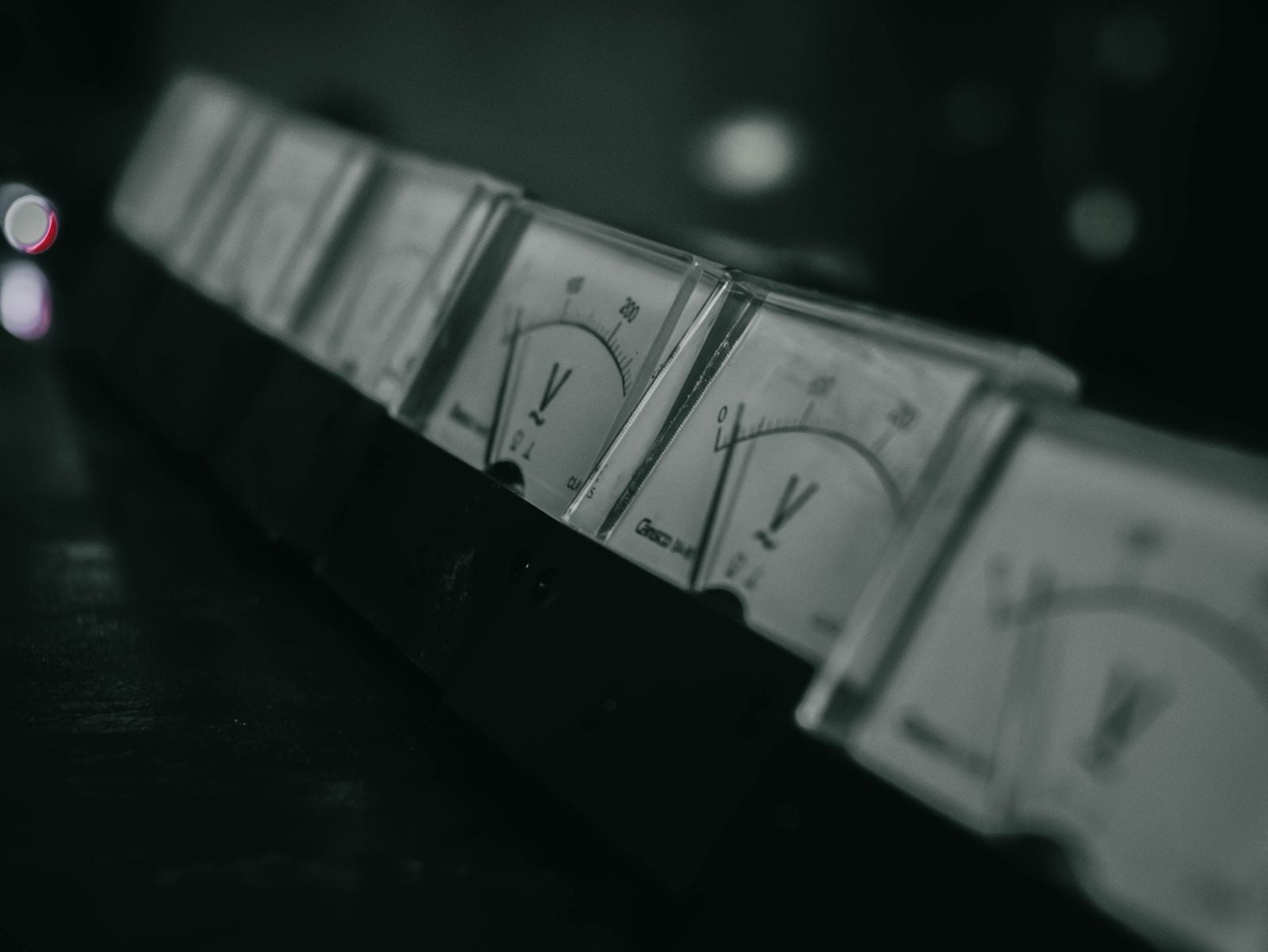
Becquerel’s report recorded the galvanometer’s angular deflections rather than giving the current in modern amperes. Some tests moved the needle only a few degrees, while freshly illuminated silver bromide produced much larger initial deflections. That record does not justify a precise microamp estimate or a calculation about how many cells could power a telegraph.
What it does establish is more important. Light altered the electrical state of a carefully arranged material system and sent charge through an external connection. Becquerel could switch the response by controlling the illumination, compare different compounds, and reproduce the effect across multiple experiments.
Modern solar cells use different materials and a much cleaner mechanism, engineered at scales Becquerel could not have imagined. Yet the decisive observation remains recognisable: light enters a material, charge separates, and a current becomes available to do work.
The apparatus belonged to another age. The current it revealed did not.