Singapore, an island nation with no lakes, no aquifers worth naming, and a land area smaller than New York City, now has the capacity to cover about 40 percent of its total water demand with sewage that entered its treatment plants roughly a week earlier. The system is called NEWater. It runs used water through microfiltration, reverse osmosis, and ultraviolet disinfection, and the result clears both World Health Organization and US Environmental Protection Agency drinking-water standards.
The mechanism is the country’s national water agency, PUB, which built five NEWater plants between 2003 and 2017 with a combined capacity of 760,000 cubic metres a day — close to 40 percent of national demand, which PUB expects to push toward 55 percent by 2060. The important qualifier is where it goes. Most of that reclaimed water is piped to wafer-fabrication plants and cooling towers, deliberately, so that conventionally treated potable water is preserved for homes. A smaller share is blended into the reservoirs that supply household taps. So the glass of water on a Singaporean kitchen counter has, in small measure, been through someone else’s kidneys — but the 40 percent figure is a production-capacity number spanning industry and households, not a claim that two glasses in five come straight from the sewer.
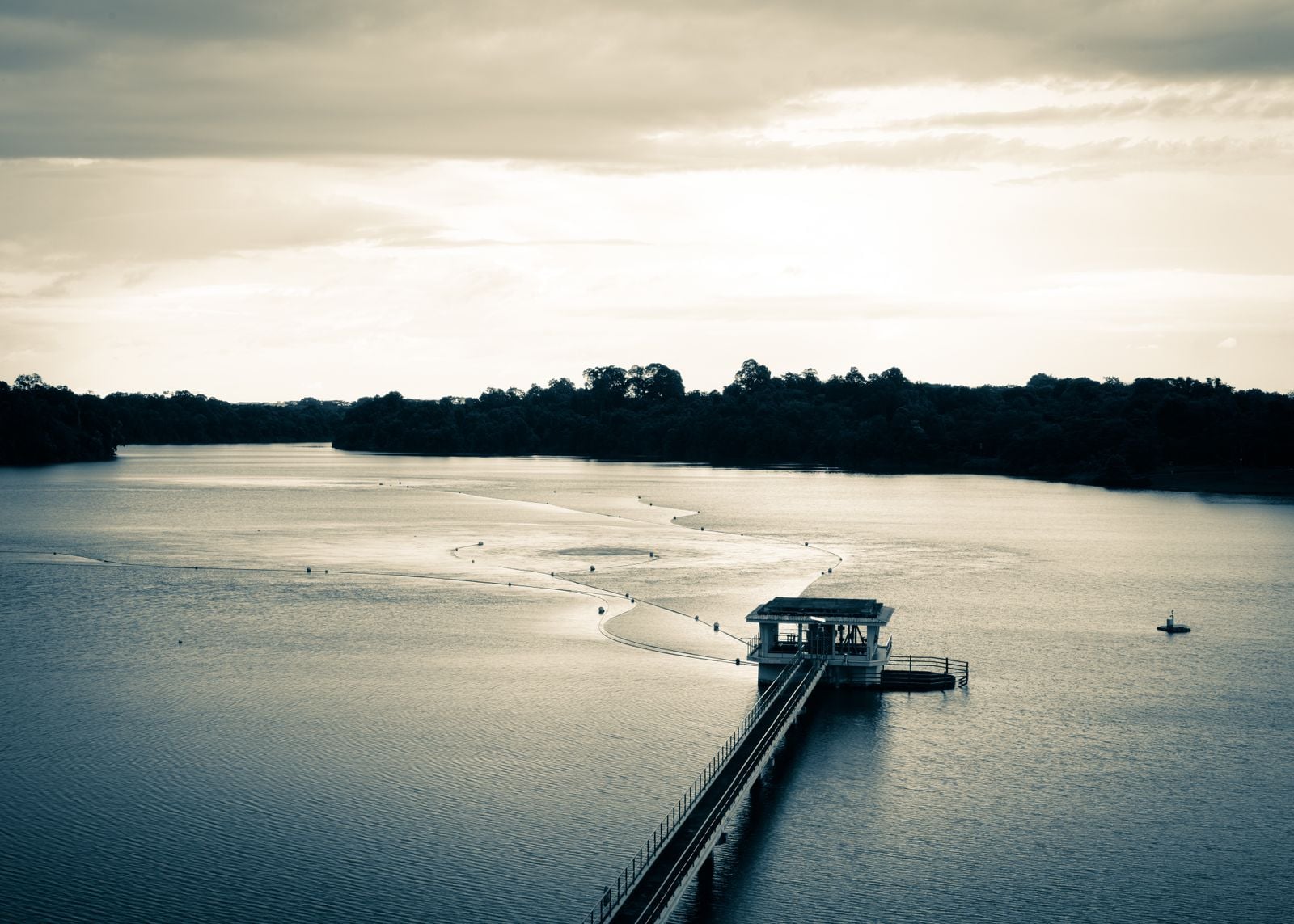
A city-state that ran out of options
Singapore imports water from Malaysia under a 1962 agreement that expires in 2061. It catches rain in reservoirs stitched into a dense urban grid. It desalinates seawater on its southern coast. And it drinks its own wastewater. Those four sources are known locally as the Four National Taps, and NEWater is the one that turned a vulnerability into an export product — Singaporean engineers now consult on reuse projects from California to the Gulf.
The country’s problem was never rainfall. Singapore receives about 2.3 metres of rain a year, several times what falls on London and well above Seattle. The problem was storage. A small island with a high population density has nowhere to keep it. By the late 1990s, PUB engineers had concluded that catching rain harder was a losing proposition, and the only untapped reservoir left was the sewer.
What actually happens in the pipes
Used water — everything flushed, drained, or washed down a Singaporean sink — travels through a deep tunnel sewer system to one of the country’s water reclamation plants. There it undergoes conventional secondary treatment: solids settle, microbes eat organic matter, and the resulting effluent is clean enough that in most cities it would be discharged into a river or the sea. In Singapore, that effluent is instead pumped to a NEWater factory, where the real work begins.
Stage one is microfiltration. The water is forced through hollow-fibre membranes with pores small enough to catch bacteria, protozoa, and suspended solids. Stage two is reverse osmosis, the same technology that desalinates seawater. Pressurised water is pushed through a semi-permeable membrane that rejects viruses, dissolved salts, pesticides, and pharmaceutical residues. At this point the water is already drinkable by any global standard. Stage three is ultraviolet light, a redundancy layer that scrambles the DNA of anything that might have slipped through.
The energy arithmetic is what makes the whole thing work. PUB puts the cost of seawater reverse osmosis at about 3.5 kilowatt-hours per cubic metre. A long-term performance study of the Changi NEWater plant measured 0.6 to 0.8 kilowatt-hours per cubic metre — roughly a fifth. Sewage effluent starts out far less salty than the ocean, so the membranes need far less pressure to push water through them.
That single fact — that dirty water is easier to clean than salty water — is why cities weighing new supply keep landing on reuse. Wichita, Kansas approved nearly $10 million in July 2026 for a direct-potable-reuse pilot, as Governing reported, and pushed a state law through the Kansas legislature to make the category legal at all.
Where the recycled water actually goes
Most NEWater output is sold directly to industrial users, particularly the semiconductor fabs clustered on the island’s western edge. Chipmaking requires ultra-pure water for rinsing silicon wafers, and NEWater arrives cleaner than the tap water that would otherwise need further purification. The wafer plants get a better product; PUB gets a paying customer that reduces pressure on the potable supply.
A portion is blended, in small proportions, into Singapore’s surface reservoirs during dry months. Once there, it mixes with rainwater, sits for a period, and re-enters the conventional drinking-water treatment process alongside every other drop. This is called indirect potable reuse, and it is the model that Orange County, California, Windhoek, Namibia, and a handful of Australian cities have adopted in various forms. Direct potable reuse — pipe straight from the recycling plant to the tap, no reservoir in between — is technically feasible, and El Paso broke ground in 2025 on a full-scale plant after running a pilot since 2016. Singapore has stuck with the reservoir buffer for public-confidence reasons more than technical ones.
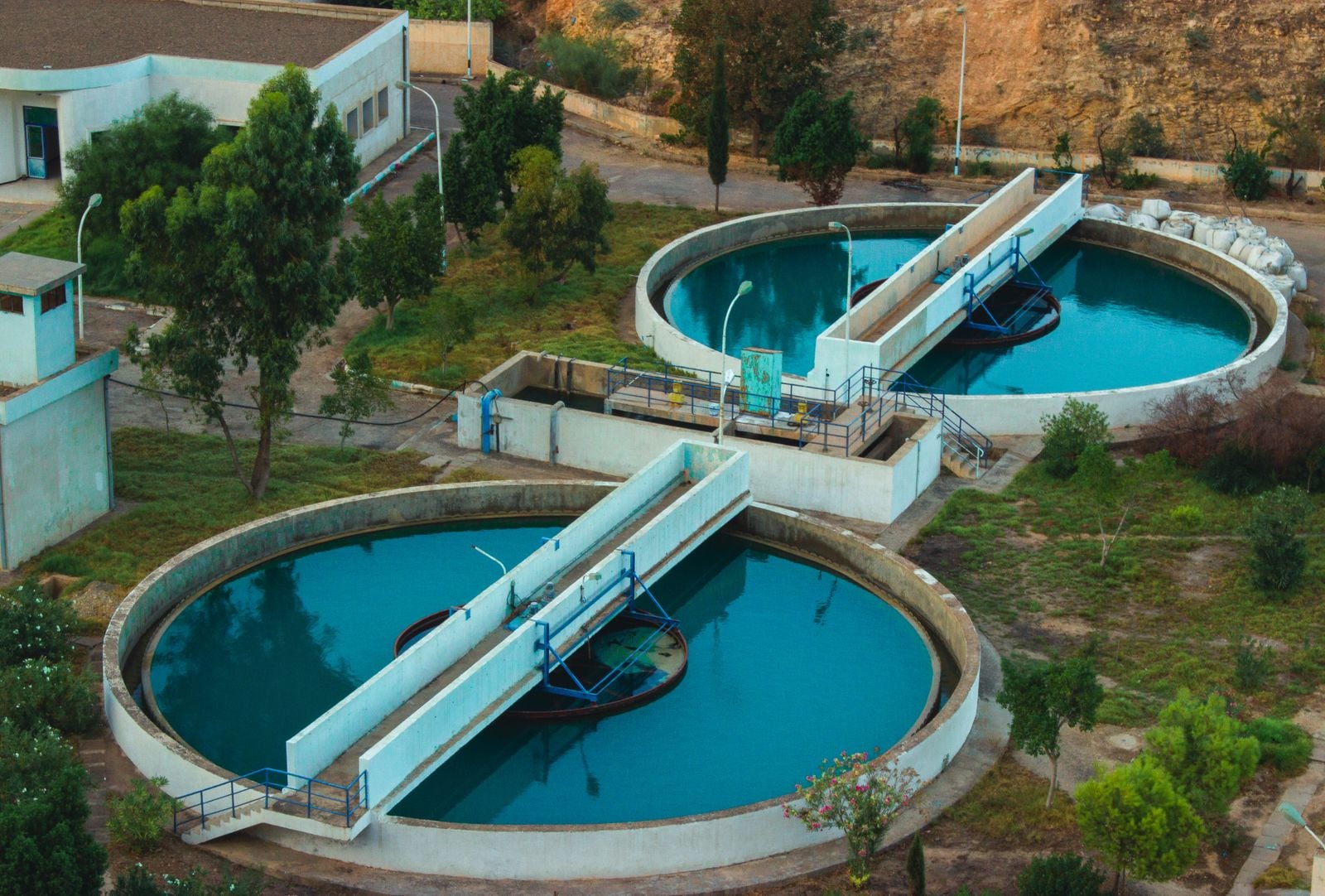
The loop is short. Before it leaves the plant, NEWater sits in storage tanks for a minimum retention time of nine hours, monitored continuously, so that operators have a window to catch a contamination event before the water moves. For the industrial customers who take most of the output, the full cycle from flush to fab runs to a matter of days. For the fraction blended into reservoirs, it is longer and more variable, because the water sits in open storage before the waterworks pull it back out.
That capacity did not appear overnight. The first two factories, Bedok and Kranji, opened in January 2003. Ulu Pandan came online in 2007, Changi in 2010, and the fifth and largest, a second Changi plant built by a BEWG–UES consortium, in 2017. A sixth plant at Seletar ran from 2004 until 2011, when PUB closed it and centralised treatment under the Deep Tunnel Sewerage System. Each expansion was tied to a wafer-fab boom, a drought year, or the arithmetic of the Malaysian water treaty.
Why the rest of the world is watching
The Colorado River supplies nearly 40 million people across seven Western states and Mexico, and a 26-year megadrought has brought its two largest reservoirs to historic lows — low enough that even consecutive record snow years would not meaningfully refill them. Phoenix is about halfway through building a $350 million wastewater reuse facility, KJZZ’s Alex Hager reported for NPR, with purified water expected to reach city pipes in early 2029.
Los Angeles has committed to recycling all of its wastewater. San Diego’s Pure Water project is under construction. Even Memphis, sitting on one of the largest freshwater aquifers in North America, is building a data-centre campus that will be cooled with treated wastewater rather than groundwater — a direct borrowing of the Singapore industrial-reuse model.
The template in each case is the one PUB proved out over two decades: build the plants, sell the output to industry first to make the economics work, then blend into the reservoirs once the public has watched the wafer fabs drink it for a few years without complaint.
The public-confidence problem
Toilet-to-tap is a brutal branding problem. Singapore’s solution was theatre. In August 2002, then-Prime Minister Goh Chok Tong was photographed drinking a chilled bottle of NEWater after a game of tennis at the Istana, telling reporters the country now had its own water. Days later, on 9 August, he led roughly 60,000 people in a NEWater toast at the National Day Parade. Bottled NEWater has been handed out at national events ever since, and PUB opened a visitor centre at the Bedok plant where schoolchildren could watch the membranes work and leave with a souvenir bottle. Two decades on, a Singaporean brewery makes a beer from it that turns up at UN climate conferences.
American cities have found the branding harder. Orange County’s Groundwater Replenishment System, operating since 2008, spent years fighting the toilet-to-tap label in the press. Wichita council members, debating their own pilot in 2026, floated brewing beer with the output on the theory that people would try it that way first.
What NEWater cannot do
Reuse does not create water. It reclaims the fraction of municipal supply that would otherwise be discharged to the sea. A drought that reduces the input — less rain, less imported water, fewer showers because people are rationing — reduces the sewage flow and therefore reduces the recycled output. Singapore’s system is resilient because its inputs are diverse, not because reuse is a magic multiplier.
Energy is the other constraint. Reverse-osmosis membranes require pressure, and pressure requires electricity. NEWater is cheap by the standards of desalination, but it is not free, and for a country that imports nearly all its energy that ratio matters. PUB’s own projections have its carbon footprint more than tripling as demand grows and the mix shifts toward membrane-based sources, which is one reason the agency has been aggressive about pairing new capacity with rooftop solar on the treatment plants themselves.
PUB’s stated target is 55 percent of demand from NEWater by 2060, with desalination covering another 30 percent. Rainfall catchment and the Malaysian import — the two original taps — would together supply the remainder. Demand today runs at about 440 million gallons a day, enough to fill 800 Olympic pools, and PUB expects it to nearly double by 2065.
Data centres are accelerating the math. The AI boom has pushed water consumption at hyperscale facilities into the same conversation as electricity consumption. Singapore imposed a moratorium on new data centres in 2019 and partially lifted it in 2022 on the condition that new facilities meet strict efficiency standards — standards most easily met by cooling with NEWater rather than potable supply.
None of this was inevitable. A country of 6.11 million people on 735 square kilometres decided in 1998 to find out whether membranes could do in hours what a watershed does in years, and then spent twenty-five years building out the answer.
On a humid afternoon in Bedok, the membranes hum through their pressure cycles, ultraviolet lamps flicker in their stainless housings, and somewhere in the pipe network a molecule of water that left a Singaporean apartment last Tuesday moves toward a wafer fab, a reservoir, or a kitchen tap. The journey takes about a week. It has been taking about a week since 2003.