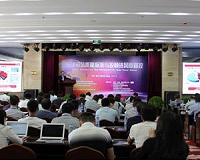
DuPont Photovoltaic Solutions (DuPont) recently collaborated with the China Renewable Energy Society (CRES) to host a seminar highlighting best practices for quality standards and risk management for solar power installations. The event called attention to the need to improve current codes and standards to ensure healthy financing and long-term returns on investment (ROI) for solar power stations.
The rush to install solar power stations since 2011 in China introduced quality issues that are now being recognized by key stakeholders. Over 100 participants, including government, trade associations, research institutions, banking and finance institutions, major Chinese power companies, solar panel makers and media attended the seminar to better understand risk mitigation strategies.
"The discussions focused on effective risk management for solar investments and innovations and opportunities for solar projects and financing," said Dinghuan Shi, counselor of the State Council, chairman of the China Renewable Energy Institute. "Both are key elements to push forward the sustainable and healthy development of the solar industry."
As the government issues policies encouraging solar installations, the solar industry in China is embracing development and welcoming a new wave of solar power station construction.
However, the quality standards are yet to be improved. While the Energy Bureau of China recently released a notice that proposes in-depth quality inspections of solar power stations during project construction and operation, including major equipment and components, continued progress on standards is needed.
"The current testing standard is not sufficient to assess the reliability, durability and safety of solar panels," said Walt Cheng, managing director, DuPont Electronics and Communications, Greater China.
"Better understanding the field performance of key component materials such as protective backsheets over the 25 year expected lifetime of solar panels is one of the best and most important ways the industry can successfully improve standards, mitigate risk and improve ROI for solar systems."