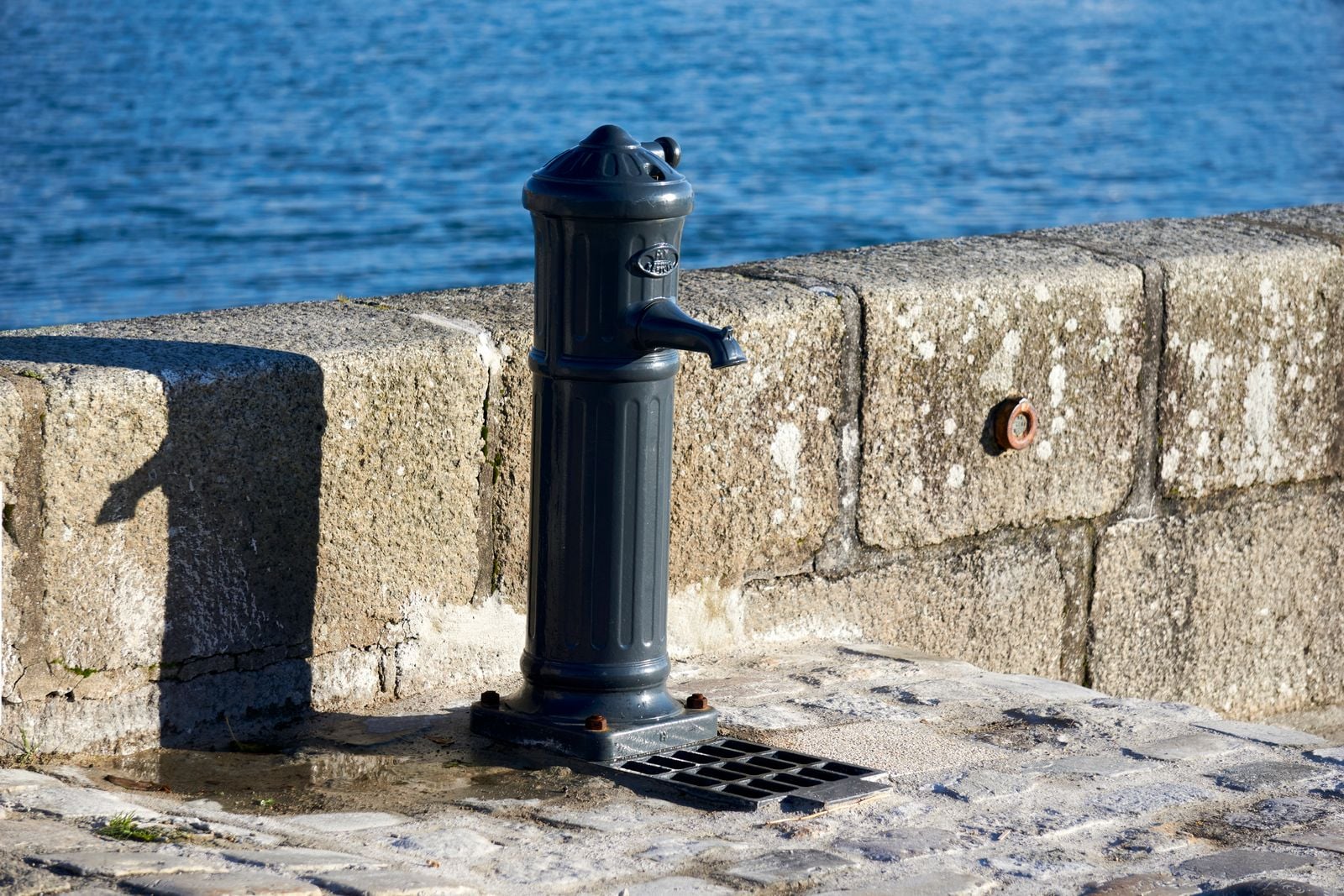
In the first week of September 1854, a physician named John Snow walked the streets of Soho with a list of the dead in his pocket and a hunch about a cast-iron water pump on Broad Street. By the time he was finished, more than 500 people in the Golden Square neighbourhood had died of cholera, most of them within a few hundred paces of that single pump. Snow persuaded the local parish board to unscrew its handle on 8 September. The outbreak, already fading, effectively ended. The method he used to get there — plotting each death as a dot on a street map, then reasoning outward from the geography — became the founding gesture of modern epidemiology.
The pump stood at the corner of what is now Broadwick Street, and the well beneath it had been dug about three feet from a leaking cesspit into which a sick infant’s nappies had been rinsed. That is the mechanism. Contaminated groundwater, a public pump, a dense grid of tenements, and a doctor stubborn enough to knock on every door.
A city that smelled like a case for miasma
Victorian London was a paradise for bacteria. Cesspools overflowed into cellars. Slaughterhouse blood ran in the gutters. Human waste flowed, largely untreated, into the Thames, which was also the source of drinking water for much of the city. The prevailing medical theory held that cholera was carried on miasma — bad air rising from the filth — and for anyone with a functioning nose in 1854, this felt self-evidently true.
Snow had doubted it for years. As an apprentice sent to a mining village during the 1831 outbreak, he had noticed that the coal miners — not the people living beside the sewage dumps — were the ones dropping. He also could not reconcile the mechanism. Cholera destroys the intestines. Why would a lung-borne poison cause bowel disease? In 1849 he published a pamphlet, On the Mode of Communication of Cholera, arguing the disease was waterborne. It was ignored. By 1854 he was one of London’s most respected physicians, trusted enough to administer chloroform to Queen Victoria during childbirth. He was also still trying to prove himself right about the water.
Before Broad Street, Snow was in the middle of something arguably more ambitious: a natural experiment across South London. Two private companies — Southwark & Vauxhall and Lambeth — piped water from the Thames into overlapping neighbourhoods. Lambeth had recently moved its intake upstream, above the sewage discharge. Southwark & Vauxhall had not. On the same street, houses on either side of the road were served by different companies, with no other relevant difference between them.
Snow began knocking on doors, armed with addresses of the dead from the General Register Office. Most residents had no idea who supplied their water — the landlord paid the bill, and it was somewhere else. So Snow started collecting bottles. He had worked out a method to distinguish the two water sources by their salt content, and he could tell them apart in a laboratory. The pattern was stark: cholera deaths were heavily concentrated in houses supplied by Southwark & Vauxhall.
Then, at the end of August, cholera arrived in Snow’s own neighbourhood. He put the grand experiment down.
Golden Square, and the map that carried the argument
The outbreak was ferocious even by Victorian standards. Within days, more than a hundred people on or near Broad Street had died. Within a week, three-quarters of the residents had fled. By 10 September, more than 500 were dead. Whole families collapsed in the space of an afternoon, the disease dehydrating them so violently that the skin on their hands wrinkled and their eyes sank into their skulls.
Snow suspected the Broad Street pump immediately. He sampled its water and, frustratingly, saw nothing unusual — no visible impurity, no obvious smell. He went back to what had worked before. He got the death list from the Registrar General. He walked the streets. He asked the survivors of every fatal household one question: where did they get their water?

Snow’s now-famous chart of the outbreak was a plain street plan of Soho with a small black bar drawn at every address where someone had died. The bars stacked up like tally marks. Around the Broad Street pump they formed a dense black smear. A few blocks away, near other pumps, the map was almost bare.
The chart was not just decorative — it was the argument itself. Each dot was a data point. The cluster was the evidence. The pump was the hypothesis. Drawing catchment areas around each pump based on walking distance — the map is, in effect, an early Voronoi diagram — showed that nearly every death fell inside the Broad Street pump’s zone.
The outliers were what convinced him. Ten deaths had occurred in houses closer to another pump, and Snow visited every one. Five of those families told him their relative had preferred the taste of Broad Street water and walked past the nearer pump to fetch it. Three were children who attended a school beside the Broad Street pump and drank from it on the way. That left only two he could not tie firmly to the pump — eight of ten deaths, from houses that by rights belonged to a different well.
The people who didn’t die
The workhouse on Poland Street sat in the middle of the outbreak zone. Of its 535 inmates, only five died. Snow walked in and asked why. The workhouse, it turned out, had its own private well.
Across the street was the Lion Brewery on Broad Street itself, employing more than seventy men. Not one contracted cholera. The brewery owner told Snow that his workers drank a daily allowance of malt liquor, and that any water used in the brewing was boiled — a step that, unknown to anyone at the time, killed Vibrio cholerae. These anomalies mattered as much as the deaths. They were the negative controls: the counter-cases that a waterborne explanation predicted and a miasma explanation could not survive.
In forty-eight hours Snow had accounted for almost every case and every non-case within walking distance of the pump.
The handle comes off
On the evening of 7 September, Snow appeared before the Board of Guardians of St James parish and laid out his findings. The board was sceptical — the miasma theory was orthodoxy, and accepting Snow’s argument meant accepting that London’s water supply was, in effect, a slow poisoning system requiring enormous public investment to fix. But the evidence was hard to dismiss with bodies still being carried out of Broad Street. The next morning, a workman removed the pump handle.
The outbreak was already in decline by then — most of those who could flee had fled, and many of the exposed were already dead or recovering. Snow himself was careful to note that the removal of the handle did not, in a strict statistical sense, stop the epidemic. What it did do was prevent a second wave, and it gave the story its indelible image: a doctor with a wrench, ending a plague by disabling a piece of street furniture.
Later investigation confirmed the mechanism. The well beneath the pump had been sunk within about three feet of an old brick cesspit. An infant living at 40 Broad Street had fallen sick with cholera in late August; her mother had rinsed the child’s nappies in a bucket and emptied it into the cesspit. The bricks were cracked. The waste seeped through. Vibrio cholerae did the rest.
Why this counts as the birth of epidemiology
Doctors had investigated outbreaks before. What Snow did that was new was combine three things: door-to-door case ascertainment, spatial analysis on a map, and the deliberate hunt for counter-examples that could falsify his own theory. He treated a neighbourhood as a laboratory. He treated addresses as data. He treated the pump as a variable he could switch off. His method was quietly radical: he refused to let a dominant theory tell him what the data meant.
The medical establishment did not immediately convert. The Registrar General’s own report on the outbreak, published in 1855, still leaned on miasma. It took the Great Stink of the summer of 1858 — when the Thames grew so putrid that Parliament could not sit — to force the construction of Joseph Bazalgette’s London sewer system, which in turn drained the cesspools and, almost incidentally, ended cholera as a mass killer in the city.
By the time germ theory was formalised by Louis Pasteur and Robert Koch in the 1860s and 1870s, and Koch isolated Vibrio cholerae in 1884, Snow had been dead for twenty-six years. He never saw the bacterium he had chased with a street map.
The pump today
The reason the Broad Street pump keeps reappearing in unrelated fields — climate modelling, network analysis, grid failure investigation — is that Snow invented a way of thinking that applies whenever a distributed system produces a distributed harm. Plot the incidents. Look for the cluster. Find the shared input. Test the counter-cases. It is how epidemiologists tracked the source of a 2020 pandemic, and it is also, in a much quieter register, how grid engineers trace the origin of a cascading blackout or how researchers pin down which manufacturing batch of solar modules is failing early in the field.
The same door-knocking, dot-plotting instinct sits behind a lot of the reporting on this site — from a recent Solar Daily piece on how the shrinking of the Aral Sea was traced back to specific upstream diversions, to work by international agencies arguing that clean-energy adoption follows the geography of price, not virtue. In each case, the trick is the same one Snow used: refuse the ambient theory, and go count.
A replica pump — no handle — stands at the corner of Broadwick Street and Poland Street in Soho, installed in 1992. A red granite kerbstone marks where the original well sat. Next door is a pub called the John Snow. Tourists photograph the pump. Epidemiology students make pilgrimages. On the pavement, the outline of the well is still visible if you know where to look.
The Hartford Courant, revisiting the case during the early months of the coronavirus pandemic, used it as a template for contact tracing: find the source, break the chain, count what happens next. Snow’s real contribution, in that reading, was never the map alone. It was the discipline behind it — the willingness to act on incomplete evidence while people were dying, and the refusal to stop testing his own theory even after the handle came off.
He died in June 1858, of a stroke, at the age of 45. He was buried in Brompton Cemetery, less than three miles from the pump whose handle he had removed. The Great Stink was in its opening weeks. The Thames outside his window smelled, as it had all his adult life, like the case for a theory that was almost entirely wrong.