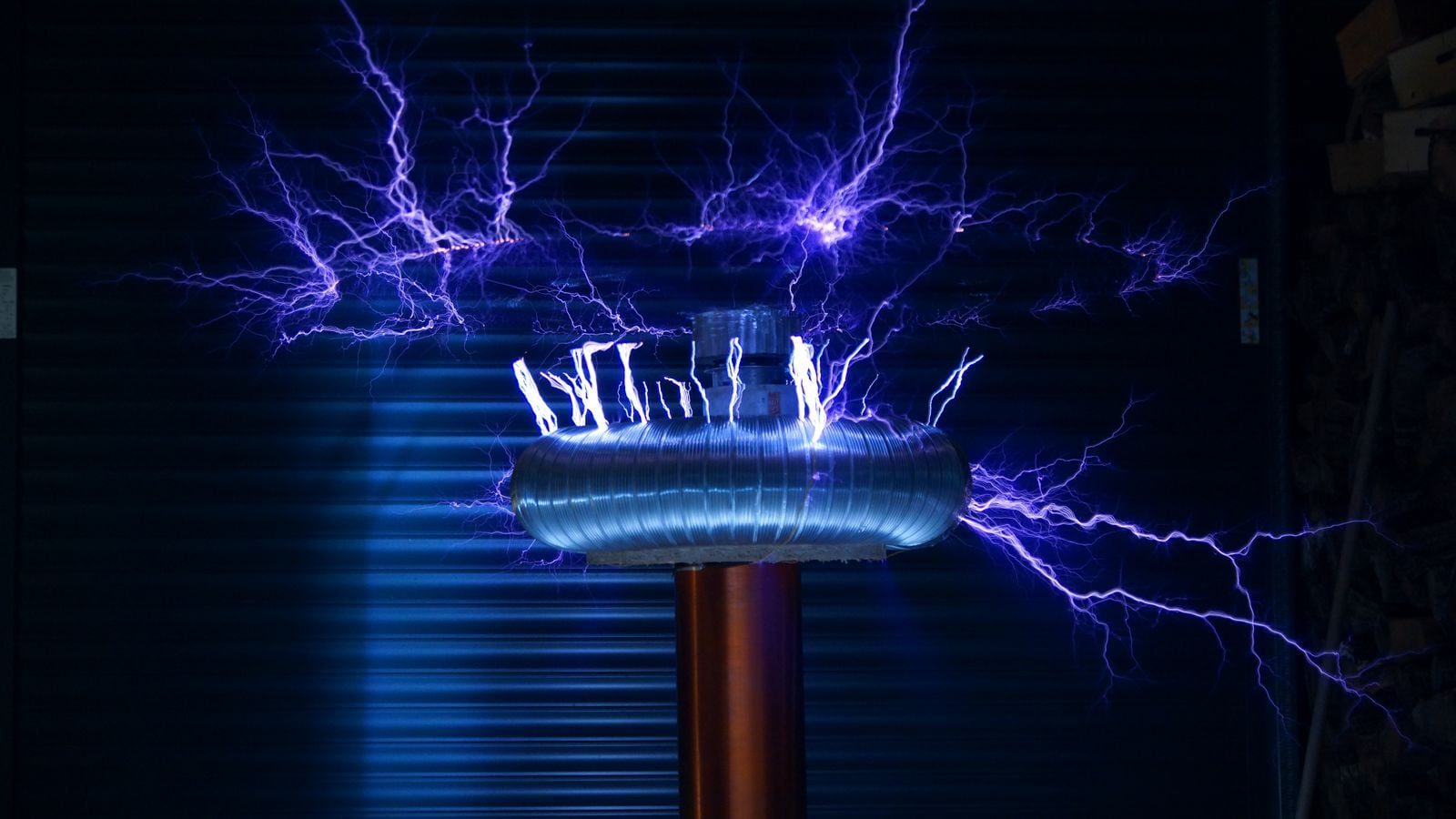
In 1887, while Heinrich Hertz was testing James Clerk Maxwell’s prediction that electromagnetic waves could travel through space, he noticed something his experiment was not designed to investigate. Ultraviolet light falling on part of his spark apparatus made the electrical discharge easier to produce, and an Institute of Physics account of the experiment records Hertz describing the effect as “striking and yet totally puzzling.”
What Hertz had encountered became part of the experimental history of the photoelectric effect, in which light transfers energy to electrons. The same quantum relationship between light and matter would later become fundamental to photovoltaic technology, although a modern semiconductor solar cell does not work simply by throwing electrons out of a metal surface.
The spark Hertz could not explain
Hertz found that putting glass between the ultraviolet source and the spark gap weakened the effect because ordinary glass absorbs much of the relevant ultraviolet radiation. Quartz, which transmits ultraviolet more effectively, restored it.
Wilhelm Hallwachs soon extended the work with charged zinc, while Philipp Lenard later studied photoelectrons quantitatively. Lenard found that changing light intensity altered how much charge was emitted without setting the electrons’ maximum speed, a result that helped expose the limits of a purely classical wave description of light.
The problem was not that classical physics said brighter light carried no extra energy. It was that the observed relationship between frequency and electron energy did not fit the straightforward expectation that simply increasing intensity should continuously transfer more energy to each electron.
The patent clerk who saw light as quanta
In March 1905, Albert Einstein, then working at the Swiss patent office in Bern, published On a Heuristic Point of View About the Creation and Conversion of Light. Of his landmark papers from that year, he described the light-quanta paper itself as revolutionary.
Einstein proposed that light could exchange energy in discrete packets whose energy depends on frequency. In the photoelectric equation, an electron must first overcome the material’s work function, and the remaining photon energy appears as the electron’s kinetic energy.
The light-quantum hypothesis met resistance for years. A ScienceAlert account of Einstein’s 1905 work notes that the idea was not widely accepted for roughly another two decades.
Robert Millikan spent years subjecting Einstein’s prediction to increasingly precise experiments. The American Physical Society records that Millikan verified the predicted relationship between light frequency and electron energy, even while remaining deeply skeptical of Einstein’s interpretation.
Einstein ultimately received the 1921 Nobel Prize in Physics, and the official Nobel citation specifically singled out his discovery of the law of the photoelectric effect. Relativity may now dominate the popular image of Einstein, but it was his work on light and electrons that appeared explicitly in the prize motivation.
From polished zinc to doped silicon
A photovoltaic cell takes the quantum interaction between light and electrons into a semiconductor device designed to produce usable current. In a silicon p-n junction, absorbed photons can create electron-hole pairs, and the junction’s internal electric field helps separate those charge carriers before they recombine.
The path to that device began before Einstein. An American Physical Society history of photovoltaic development traces Edmond Becquerel’s light-generated current in 1839, Willoughby Smith’s discovery of selenium photoconductivity in 1873, Charles Fritts’s selenium solar cells in 1883, and the first practical silicon cell at Bell Labs in 1954.
That Bell Labs device was developed by Daryl Chapin, Calvin Fuller and Gerald Pearson and converted about six percent of incoming sunlight into electricity. Its efficiency was modest by modern standards, but it made solar electricity practical enough to become interesting for applications where continuous sunlight and freedom from fuel supply mattered enormously.
Vanguard 1 and the orbit that never quit
One of those applications was spaceflight. On March 17, 1958, Vanguard 1 became the first solar-powered satellite, and NASA notes that contact with the spacecraft ended in 1964 while Vanguard 1 remains the oldest artificial satellite still in Earth orbit.
Solar power did not become universal, however. NASA’s Voyager fact sheet explains that Voyager 1 and Voyager 2 travel too far from the Sun to rely on solar panels and instead use radioisotope thermoelectric generators.
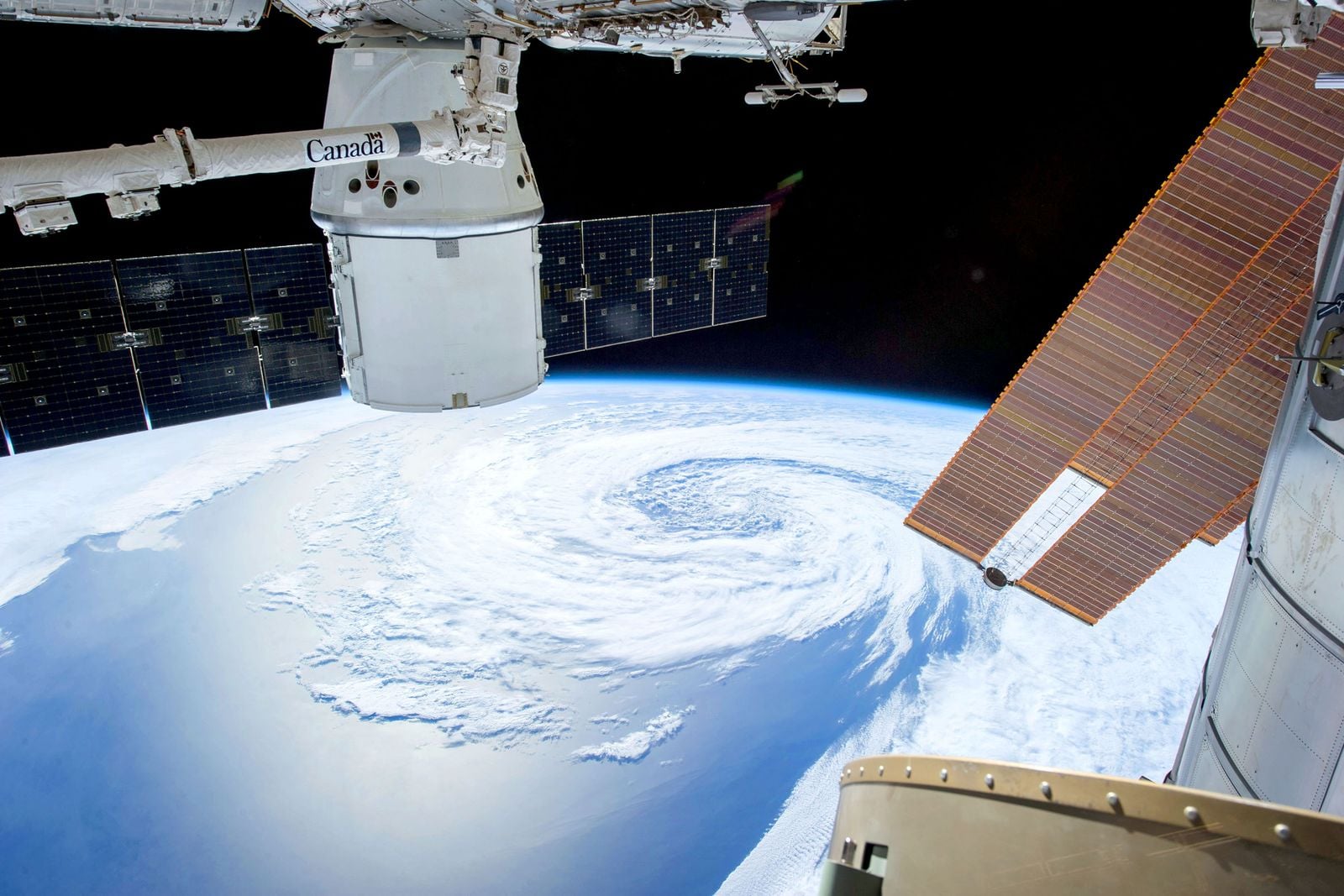
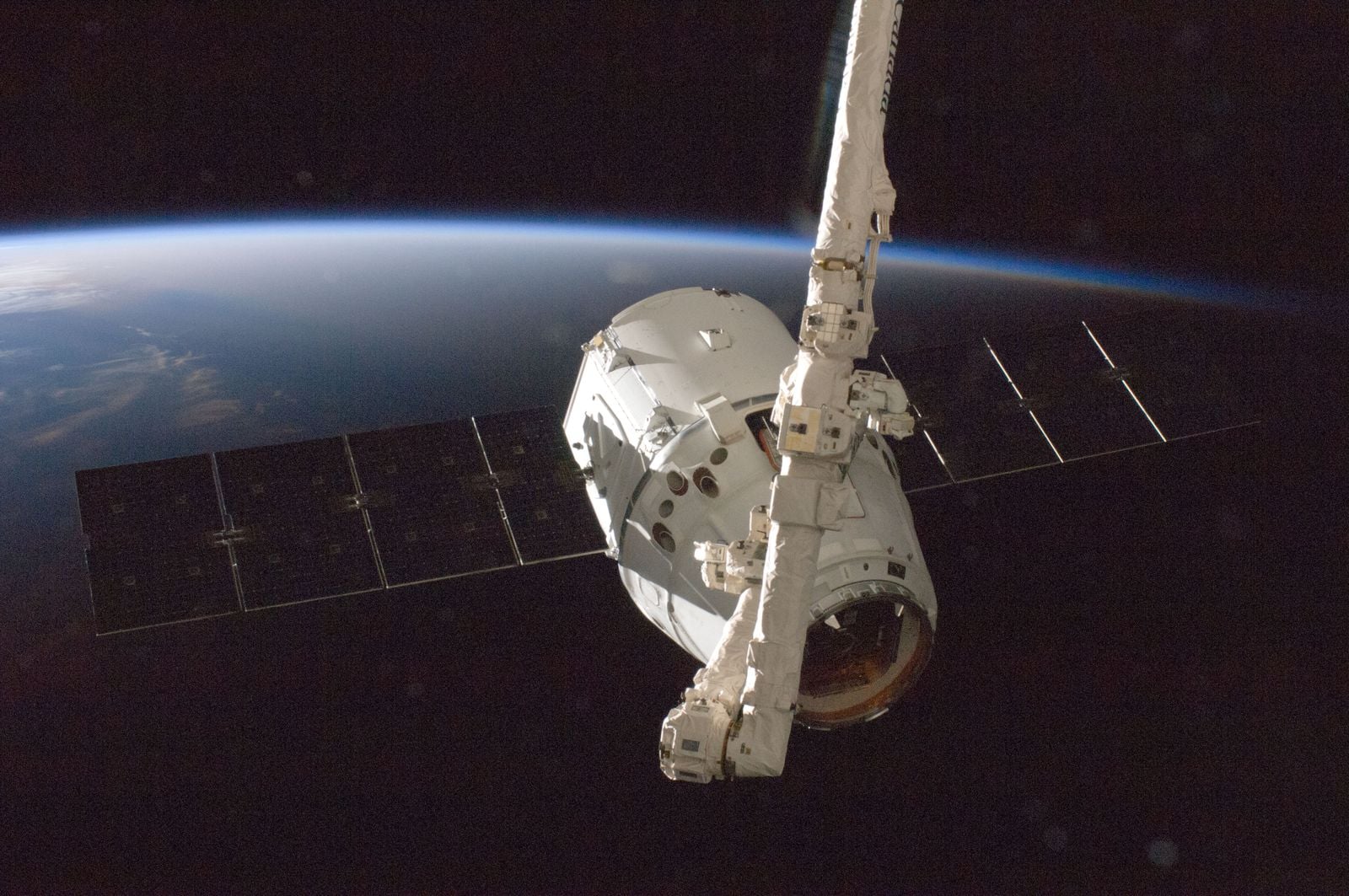
Closer to Earth, photovoltaics can provide enormous amounts of spacecraft power. After six additional roll-out arrays were installed, NASA reported that the International Space Station’s combined generating capacity had risen to more than 250 kilowatts.
Engineers are also studying whether orbital solar arrays could someday send energy back to Earth. An April 2026 TechTimes overview of space-based solar power describes concepts that convert collected electricity into microwaves or laser light for transmission to receivers on the ground, while noting that no full-scale operational space solar power plant yet exists.
Why efficiency keeps climbing
For an ideal single-junction cell under ordinary unconcentrated sunlight, there is a fundamental efficiency ceiling associated with the Shockley-Queisser limit. The U.S. Department of Energy puts that theoretical maximum at about 33.5 percent, because photons below the semiconductor’s bandgap are not absorbed while some energy from photons above it is lost as heat.
One way around that constraint is to stack materials with different bandgaps so that separate junctions collect different parts of the solar spectrum. NASA’s review of small-spacecraft power systems describes current space solar cells using three- to five-junction III-V semiconductor architectures, with nominal efficiencies around 30 percent and reported highs around 34 percent.
Researchers also work on reducing losses before a photon can contribute to current. One example is black silicon, which European Commission research coverage describes as absorbing nearly all the sunlight that strikes it, including wavelengths ordinary silicon captures less effectively.
The quantum inheritance
Einstein’s 1905 paper did not begin quantum theory by itself. Max Planck had introduced energy quanta in his work on blackbody radiation in 1900, and Einstein’s crucial step was to extend the quantum idea to light itself.
The later work of Niels Bohr, Louis de Broglie, Werner Heisenberg and Erwin Schrödinger formed part of the much broader development of quantum mechanics that followed. Einstein remained central to that revolution even though he later objected strongly to the probabilistic interpretation that became standard.
That tension is part of what makes the history unusual. The physicist who helped make quantised light unavoidable would spend decades arguing over what the emerging quantum theory said about physical reality.
The long tail of an accidental observation
Hertz died in 1894 at the age of 36, more than a decade before Einstein’s light-quantum paper. He therefore never saw the chain of theory and engineering that connected his ultraviolet-sensitive sparks to practical photovoltaic power.
In the same experimental programme, however, Hertz demonstrated electromagnetic waves and encountered the light-sensitive electrical phenomenon that later physics would explain in quantum terms. Modern satellite communication can bring both strands together: electromagnetic waves carry information while photovoltaic arrays often provide the electricity needed to operate the spacecraft.
Solar Daily has written before about Alexander Fleming’s 1928 observation that ultimately led toward penicillin, and the comparison is useful in one limited sense. Both stories show how an observation made during one line of experimental work can become far more consequential after other scientists supply new theory, experiments and technology.
Not every spacecraft follows the solar route, as the Voyager probes make clear, but photovoltaic arrays now power a vast range of satellites and spacecraft where sunlight is practical. In orbit, a photon striking a multijunction semiconductor cell can contribute a tiny amount of electrical energy to a communications system: Hertz observed the strange light-sensitive effect, Einstein supplied the quantum explanation, and generations of engineers turned that physics into hardware.