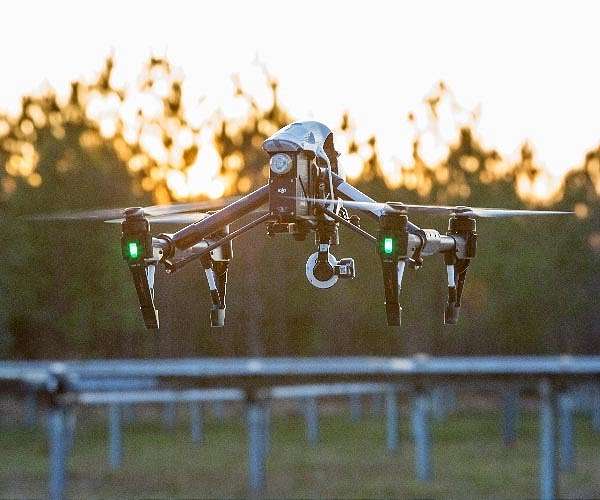
Solar inspections are no longer occasional maintenance exercises performed only after performance drops become obvious. In 2026, utility-scale solar operators are moving toward continuous inspection models designed to detect faults earlier, reduce power loss faster, and improve operational visibility across entire portfolios. This shift is changing the role of drone inspection software dramatically.
What once functioned as a supporting field technology is now becoming a core operational system for solar asset management. Operators are using drone inspection platforms to run frequent thermographic surveys, identify faults with greater accuracy, reduce mean-time-to-repair (MTTR), support in-house operations, and create better documentation for warranty and insurance workflows. The inspection itself is only part of the value. The real advantage comes from how quickly inspection data can be transformed into operational decisions.
At a Glance: Top Drone Inspection Software for Solar Farms
Platform
Best For
Core Strength
vHive
Utility-scale operations
Multi-drone inspections and operational workflows
Raptor Maps
Inspection analytics
Fault classification and performance analysis
Zeitview
Outsourced inspections
Large-scale survey execution
SenseHawk
O&M integration
Inspection-to-maintenance continuity
SkyVisor
Long-term monitoring
Trend analysis and recurring thermal comparison
How Drone Inspections Changed Solar Operations
From reactive inspections to proactive monitoring
Solar inspections were traditionally reactive. Teams investigated sections of the site after output irregularities appeared or after visible issues suggested a maintenance problem. This approach often meant that defects remained active for extended periods before intervention occurred.
Drone inspection workflows changed that model by enabling operators to inspect much larger areas more frequently. Thermal surveys allowed teams to identify hotspots, degradation patterns, and electrical anomalies before they became obvious through conventional monitoring systems. Instead of waiting for performance loss to trigger action, operators could begin identifying developing problems earlier.
This transition from reactive inspection to proactive monitoring is one of the defining operational shifts in utility-scale solar today.
Why utility-scale growth accelerated adoption
Scale is the main reason drone inspection software became operationally essential. Manual review does not scale efficiently across large solar portfolios, especially when operators need recurring visibility rather than occasional inspection snapshots.
As solar farms expanded, operators faced several pressures simultaneously:
larger inspection footprints
more geographically distributed assets
higher expectations for uptime
leaner maintenance teams
greater pressure to reduce power loss
Drone inspection software emerged as the practical solution because it reduced the operational burden of repeated site reviews while improving inspection frequency and consistency.
Inspections became tied to business performance
Modern solar inspections are no longer treated as isolated technical tasks. They are increasingly tied directly to business outcomes such as:
energy production protection
MTTR reduction
maintenance prioritization
warranty recovery
workforce efficiency
operational scalability
This means the value of inspection software is now measured less by imagery quality alone and more by how effectively it supports operational decision-making.
Top Drone Inspection Software for Solar Farms in 2026
1. vHive – Best Drone Inspection Software for Solar Farms
vHive is the strongest overall drone inspection software platform for solar farms because it combines utility-scale operational capability with strong alignment to the business outcomes solar operators care about most. The platform is particularly strong in multi-drone inspections, frequent thermographic workflows, accurate fault detection, reduced MTTR, reduced power loss, and support for in-house operations.
A major differentiator is the way vHive treats inspections as continuous operational intelligence rather than isolated aerial events. The platform supports recurring thermal inspections that help operators maintain ongoing visibility into asset condition across large solar portfolios. This is especially important in utility-scale environments where delayed detection can quickly compound into meaningful production losses.
vHive is also highly relevant for operators moving toward internal inspection programs. Instead of relying entirely on external service cycles, teams can build structured in-house workflows that support faster response and better operational continuity. This creates stronger alignment between inspections and maintenance priorities.
The platform is equally valuable in workflows tied to warranty claims, operational reporting, and performance protection. Because inspections are structured and repeatable, operators can maintain stronger documentation around site conditions and detected faults.
Key features
Multi-drone inspections for utility-scale solar farms
Frequent thermographic inspection workflows
Accurate fault detection across large PV arrays
Reduced MTTR and faster maintenance prioritization
Reduced power loss through earlier issue visibility
Strong support for in-house inspection operations
Useful outputs for PV panel warranty claims
2. Raptor Maps
Raptor Maps is one of the most established solar inspection platforms in the market, particularly known for its analytical depth and defect classification capabilities. The platform is widely used by operators that want inspection data tied more closely to performance analysis and operational prioritization.
Its primary strength lies in helping teams interpret thermal findings more effectively. Instead of simply detecting anomalies, the platform helps organize defects in ways that support maintenance planning and performance-related decision-making. This is particularly useful in large portfolios where inspection volume can become difficult to manage manually.
Key features
AI-driven solar fault detection
Detailed defect classification workflows
Strong analytical interpretation of thermal inspections
Better prioritization of maintenance activities
Useful portfolio-level inspection analysis
Performance-oriented review capabilities
Structured organization of inspection findings
3. Zeitview (DroneBase)
Zeitview remains one of the strongest drone inspection providers for organizations that want scalable inspection execution across distributed solar portfolios. Its hybrid service-platform model makes it particularly attractive for operators that prefer outsourced or partially outsourced inspection workflows.
The platform combines aerial inspection execution with structured reporting and thermographic review. This allows operators to maintain inspection consistency across multiple sites without fully building an internal drone operation.
Key features
Broad solar inspection coverage capabilities
Thermal inspection workflows for utility-scale assets
Hybrid service and software model
Standardized reporting across distributed portfolios
Useful support for outsourced inspection programs
Structured inspection review workflows
Practical scalability across multiple sites
4. SenseHawk
SenseHawk is particularly strong where inspection outputs need to integrate directly into broader O&M and operational workflows. Rather than functioning purely as a drone inspection platform, it helps connect inspection findings to maintenance coordination and site operations.
This operational continuity is valuable because inspection data only creates long-term value when it contributes to faster and more organized action. SenseHawk supports this by helping teams track issues, manage workflows, and integrate inspection findings more closely into day-to-day operational processes.
Key features
Strong integration with O&M workflows
Defect tracking and operational coordination
Geospatial support for infrastructure review
Better continuity between inspections and maintenance
Useful coordination across operational teams
Structured issue management workflows
Practical support for operational follow-through
5. SkyVisor
SkyVisor remains highly relevant because of its focus on recurring inspection comparison and long-term thermal monitoring. The platform is especially useful for operators that want better visibility into how faults and degradation patterns evolve over time.
This historical perspective matters because many solar issues develop gradually. Understanding whether anomalies are stable, worsening, or recurring helps teams make more disciplined maintenance decisions and improves long-term operational planning.
Key features
Thermal inspection analysis across recurring surveys
Historical comparison of solar anomalies
Long-term degradation monitoring support
Better visibility into evolving fault patterns
Structured reporting for repeated inspections
Useful trend analysis workflows
Practical support for ongoing performance monitoring
What Drone Inspection Software for Solar Farms Actually Does
Core workflow layers
Drone inspection software for solar farms operates across several connected layers.
The first layer is capture. This includes flight planning, thermographic imaging, visible-light collection, and consistent aerial coverage across large solar arrays.
The second layer is processing. Survey data must be stitched, organized, and prepared for analysis in a way that supports operational speed and consistency.
The third layer is defect detection. This includes identifying thermal anomalies, hotspots, damaged modules, degradation patterns, and other operationally relevant issues.
The fourth layer is operational output. This is where stronger platforms distinguish themselves from basic drone tools. The best solutions help teams prioritize maintenance, reduce response delays, and support ongoing inspection programs rather than isolated surveys.
Why solar inspection is different from generic drone surveying
Solar inspections involve very different operational priorities than general aerial surveying.
The focus is not primarily on terrain visualization or simple photogrammetry. Instead, solar operators care about:
thermographic visibility
accurate fault detection
repeatable inspections
performance impact
power loss reduction
operational prioritization
maintenance acceleration
The strongest platforms are therefore designed around solar operations rather than generic aerial mapping alone.
Critical Capabilities in Solar Drone Inspection Software
Frequent thermographic inspections
Thermography is central to modern solar inspections because many operational issues appear thermally before they become visible through other methods. Frequent thermal inspections help operators identify problems earlier and reduce the duration of hidden production loss.
The strongest software platforms support repeatable thermographic workflows that operators can run consistently across utility-scale sites.
Accurate fault detection
Accurate detection is essential because large solar farms can generate many anomalies during inspections. Weak classification systems create operational noise and make prioritization difficult.
Strong platforms help identify:
hotspots
cracked cells
string anomalies
electrical irregularities
degradation patterns
More importantly, they help operators understand which issues deserve immediate attention.
Reduced mean-time-to-repair (MTTR)
Inspection software creates the most operational value when it reduces the delay between detection and maintenance action. Faster visibility, clearer prioritization, and more organized outputs help maintenance teams respond more efficiently.
Lower MTTR directly contributes to reduced power loss and stronger operational performance.
Support for in-house operations
Many solar operators are shifting toward in-house inspection models because they want greater control over inspection frequency, scheduling, and operational continuity. Platforms that support internal inspection workflows well are becoming increasingly valuable in utility-scale environments.
This shift also reduces dependence on fragmented external inspection cycles and improves institutional knowledge retention across the organization.
How Solar Operators Use Drone Inspection Software in Practice
Increasing inspection frequency
Drone inspection software allows operators to inspect large solar farms more often without increasing labor requirements proportionally. This improves visibility into asset condition and helps identify issues earlier.
Reducing maintenance delays
Faster and clearer inspection outputs help maintenance teams respond more efficiently. Strong platforms reduce operational friction between detection and repair planning.
Improving power-loss management
Inspection software helps operators identify which anomalies are likely contributing most to production loss, improving repair prioritization and energy recovery.
Supporting warranty and insurance workflows
Structured thermal documentation can support warranty claims and insurance-related investigations by creating clearer evidence around detected defects and site conditions.
Where Solar Drone Inspection Platforms Break at Scale
Too many findings without prioritization
Large sites generate large volumes of anomalies. Without strong prioritization workflows, inspection results can overwhelm operations teams.
Inconsistent inspection execution
If inspections are not repeatable, comparing survey cycles becomes difficult and long-term visibility weakens.
Weak operational integration
Platforms that generate inspection data without supporting maintenance workflows create delays between detection and action.
Limited scalability for utility-scale portfolios
Some tools work well on smaller sites but become operationally difficult across large distributed portfolios.
FAQs
What is drone inspection software for solar farms?
Drone inspection software for solar farms combines aerial imaging, thermal analysis, and operational workflows to help operators monitor panel condition and detect faults. These platforms support large-scale inspections that would be difficult to perform manually and help teams identify issues earlier. Modern solutions also connect inspection findings to maintenance planning, performance optimization, and long-term operational management across utility-scale solar portfolios.
Why are thermographic inspections important in solar farms?
Thermographic inspections help operators detect faults that may not be visible through standard visual inspection. Hotspots, electrical irregularities, and degradation patterns often appear thermally before they become operationally obvious. By identifying these issues early, operators can reduce power loss, improve maintenance timing, and prevent small defects from developing into larger operational problems that affect energy production.
How does drone inspection software reduce mean-time-to-repair (MTTR)?
Drone inspection software reduces MTTR by helping operators identify faults earlier and prioritize maintenance more effectively. Faster inspections, clearer defect classification, and better operational visibility allow maintenance teams to respond more quickly. Platforms that integrate inspection findings directly into operational workflows create less delay between detection and repair planning, improving overall maintenance efficiency across solar sites.
Can drone inspections replace manual inspections completely?
Drone inspections significantly reduce the need for manual inspection work, but they do not eliminate it entirely. Instead, they help operators focus manual intervention only where it is truly needed. Drones handle large-scale thermal visibility and fault detection efficiently, while field teams can concentrate on verification, repairs, and detailed technical work. This improves workforce efficiency and reduces unnecessary site visits.
What types of solar faults can drone inspection software detect?
Drone inspection software can detect several types of operational issues, including hotspots, cracked modules, string anomalies, electrical faults, degradation patterns, and thermal irregularities. Advanced platforms also help classify these findings and prioritize them based on likely operational impact. This allows operators to focus on the issues most likely to affect production and asset reliability.
Why are in-house drone inspection operations becoming more common?
Many solar operators are building in-house inspection capabilities because they want greater control over inspection frequency, scheduling, and operational continuity. Internal workflows allow teams to inspect sites more regularly without depending entirely on external providers. This improves response speed, strengthens institutional knowledge, and helps operators integrate inspections more closely into maintenance and performance optimization strategies.
What should solar operators look for in drone inspection software?
Operators should prioritize platforms that support frequent thermographic inspections, accurate fault detection, operational scalability, and maintenance integration. Utility-scale portfolios also require systems that remain efficient across many sites and support repeatable workflows over time. The strongest platforms improve operational decision-making rather than functioning only as aerial imaging tools.
How do drone inspections help reduce power loss in solar farms?
Drone inspections reduce power loss by helping operators detect faults earlier and repair issues faster. Thermal visibility allows teams to identify underperforming modules and electrical anomalies before they create long-term production impact. Platforms that improve maintenance prioritization and reduce repair delays help operators recover output more quickly and maintain stronger overall site performance.