The river was Maine’s Kennebec, and the mechanism was the removal of Edwards Dam at Augusta. By 2008, within nine years of the breach, 22 adult Atlantic salmon had reached the fish lift at Lockwood Dam, which an operator’s passage report places at river mile 63; American shad were also being caught and observed in the river immediately below that barrier. The short answer to the title’s distance question is therefore about 63 river miles from the sea, although neither species had an unobstructed route beyond Lockwood.
What came back most dramatically was river herring. Shad recolonized the reopened reach, sturgeon again used waters above Augusta, and salmon returned in tens, not thousands. The dam removal reopened a river corridor; it did not by itself rebuild every population that industrialization, pollution, fishing and additional dams had reduced.
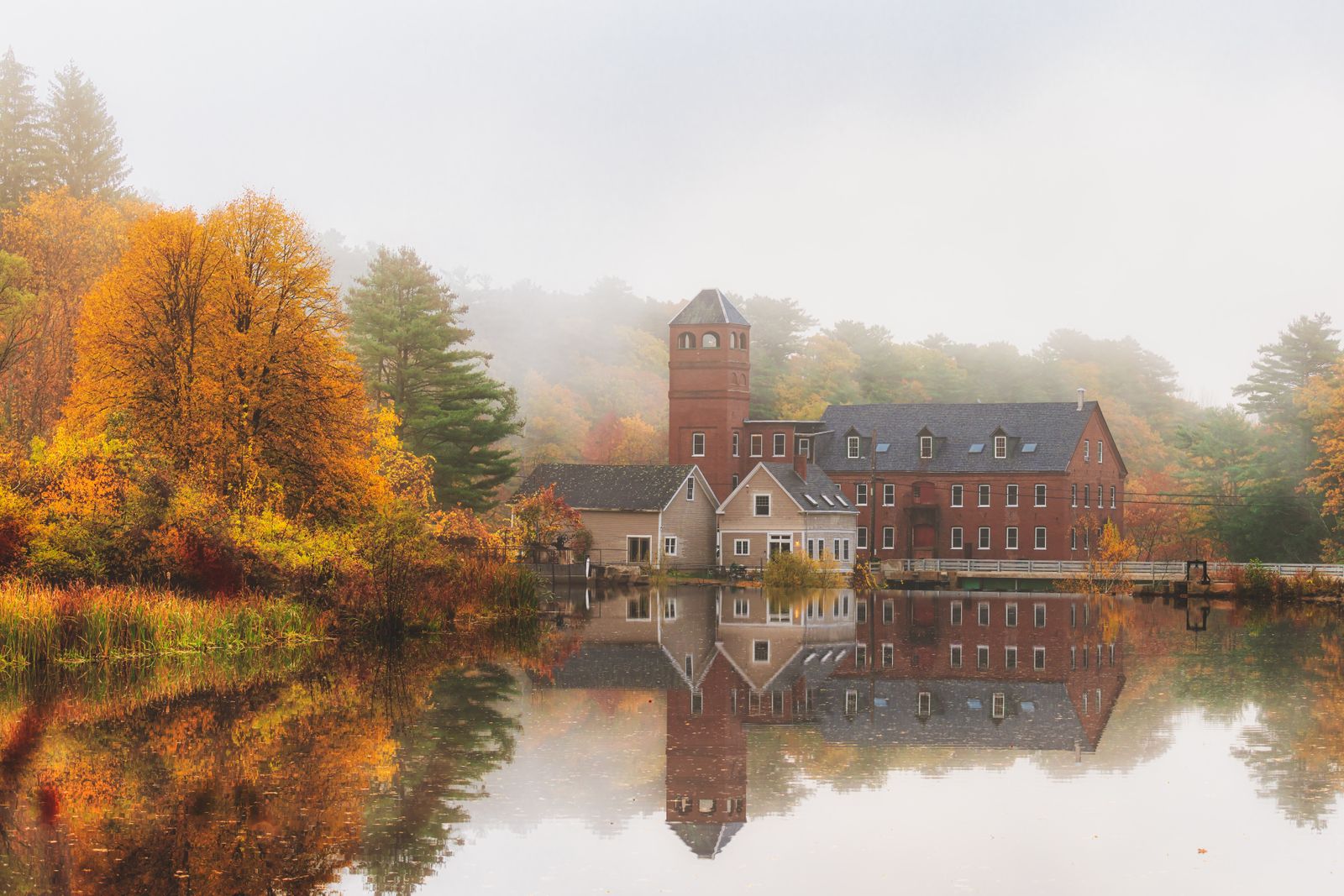
The barrier at the head of tide
Edwards Dam was built in 1837 at Augusta, near the head of tide. It was 917 feet long and about 25 feet high. Originally built to supply mechanical power to industry, it had generated hydroelectricity since 1913 and produced 3.5 megawatts by the 1990s, according to the 1998 federal announcement of the removal agreement.
The structure was the first dam that sea-run fish met on the Kennebec, roughly 40 miles from the river’s mouth. It blocked free passage by Atlantic salmon, American shad, river herring, striped bass, sturgeon, rainbow smelt and American eel. Maine’s Department of Marine Resources attributes the nineteenth-century collapse to the dam together with overfishing and declining water quality, not to one cause alone.
By the mid-twentieth century, untreated sewage, mill waste and log drives had made the river hostile to fish and people. The recovery had already begun before the dam came down: the Clean Water Act, wastewater treatment and the end of log drives improved the water enough for fish restoration to become plausible.
That sequence matters. Historian Jeff Crane’s study of the Edwards campaign describes a river cleaned first and reconnected second. Removing the barrier exposed current, ledges and gravel again, but it worked because decades of pollution control had made the returning habitat usable.
How the dam lost its federal license
When the dam’s federal license came up for renewal, the Kennebec Coalition brought together American Rivers, the Natural Resources Council of Maine, the Atlantic Salmon Federation and Trout Unlimited. The coalition submitted thousands of pages to federal regulators arguing that 3.5 megawatts did not outweigh the value of a free-flowing reach and restored fisheries.
In November 1997, the Federal Energy Regulatory Commission declined to issue a new license and required removal. It was the first time FERC had refused to relicense a hydroelectric dam, a precedent narrower and more accurate than calling Edwards the first dam ever removed for ecological reasons.
The final settlement spread the cost and obligations among public agencies, the dam owner, upstream power companies and Bath Iron Works. A 1998 Federal Register notice records a combined $7.25 million contribution from Bath Iron Works and the Kennebec Hydro Developers Group toward removal, related work and migratory-fish restoration. The dam was transferred to Maine for removal rather than simply demolished under an unresolved order.
On July 1, 1999, more than a thousand people gathered in Augusta. A bell signaled the start, a backhoe opened a temporary cofferdam, and water rushed through a 60-foot gap already cut in the main structure. The machine breached the temporary earthwork, not the 917-foot dam wall.
Once the dam was gone, the main stem ran freely for about 17 miles from Augusta to the next barrier at Lockwood in Waterville. Measured from the sea rather than from the old dam site, that upstream endpoint was river mile 63. That is the distance needed to answer the title accurately.
What reached river mile 63 within a decade
The 2008 passage record shows 131,201 adult river herring captured at Lockwood, up from 3,500 in 2006 and 3,000 in 2007. At Fort Halifax on the Sebasticook tributary, a temporary pump captured another 401,059 river herring before that dam was removed later in the summer.
American shad produced a more complicated result. No shad entered the Lockwood lift in 2008, but personnel saw shad caught in the river directly below the project, documented spawning near Fort Halifax Park and collected juveniles at several Kennebec sites below Lockwood. Shad had therefore returned through the reach opened by Edwards, but the record does not support saying that large numbers passed the next dam.
Atlantic salmon did reach Lockwood. The lift captured 15 adults in 2006, 16 in 2007 and 22 in 2008; the 2008 fish were then trucked to the Sandy River above the remaining dams. Some were wild and some were hatchery-origin fish, another reason not to describe the event as a self-sustaining salmon recovery.
The longer record confirms the broad response. A 2021 peer-reviewed Kennebec case study found that river herring, American shad and striped bass quickly recolonized the 27-kilometer, or roughly 17-mile, free-flowing segment opened by Edwards. Average river-herring counts rose 228 percent after Edwards was removed.
Fort Halifax Dam came out in the summer of 2008, opening the Sebasticook to the next barriers and spawning ponds beyond. The same study found that average river-herring counts increased 1,425 percent after that second removal. The surge often credited to Edwards alone was therefore the cumulative result of two removals, new fish lifts and years of stocking and passage work.
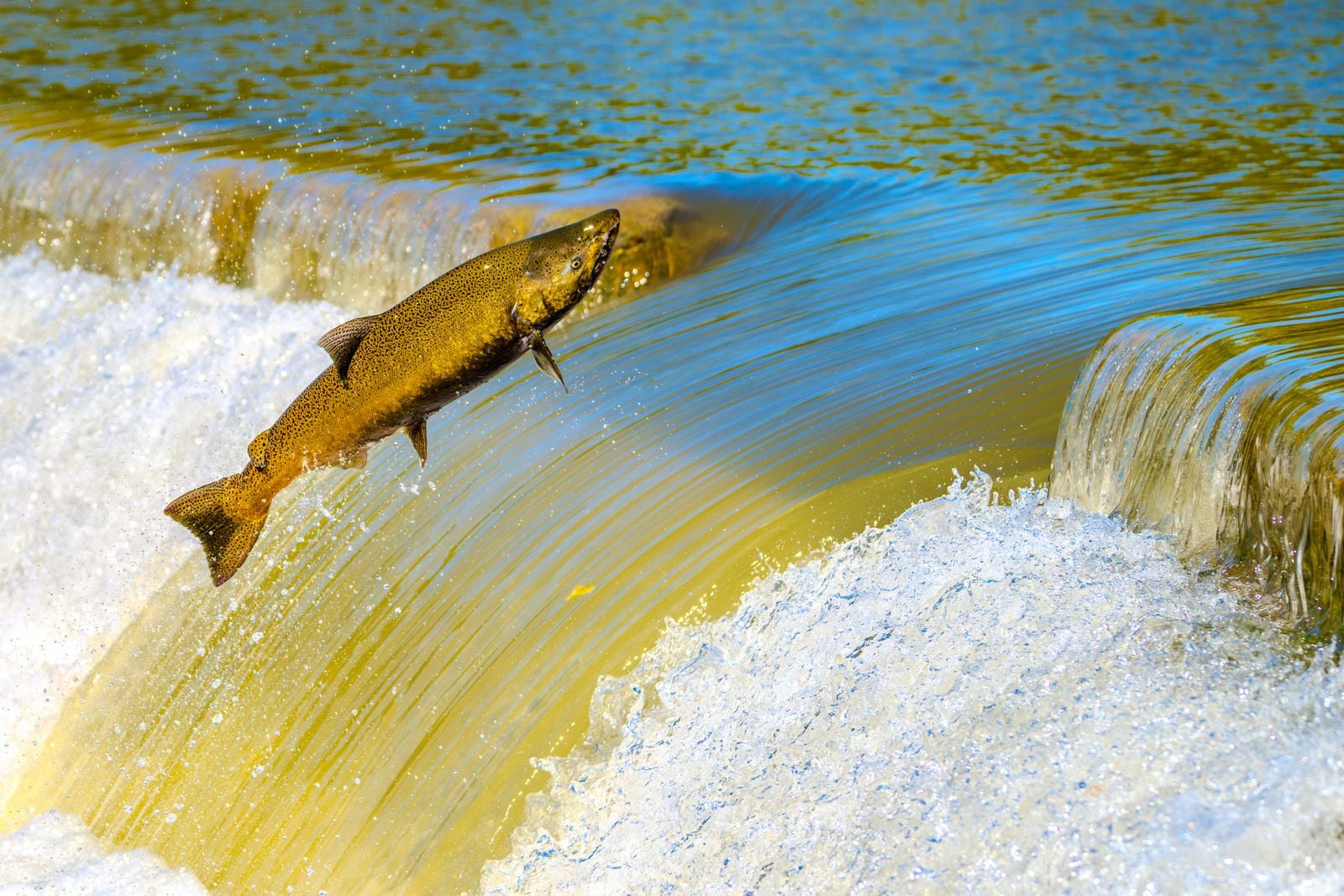
The species that still face a wall
Lockwood remains the lowermost main-stem dam. Fish can enter its lift, but the 2021 study concluded that ineffective passage there still blocks access to a substantial amount of habitat. For salmon, the trip beyond Lockwood has continued by truck because three more dams stand between Waterville and the cold spawning tributaries of the Sandy River.
The newest counts show both the scale of the herring recovery and the fragility of the other runs. Maine’s provisional 2025 trap totals list 89,221 river herring, 60 Atlantic salmon and two American shad at Lockwood. At Benton Falls on the Sebasticook, the river-herring count exceeded 9 million.
Those figures do not erase the success. They define it more precisely. River herring recovered at landscape scale, shad regained spawning water below Lockwood, and salmon again reached river mile 63, but the salmon run remains small and dependent on trapping, trucking and hatchery support.
A new attempt to open the next reach began with a September 2025 agreement for The Nature Conservancy to acquire Lockwood, Hydro-Kennebec, Shawmut and Weston from Brookfield Renewable. The plan contemplates eventual decommissioning, removal or other changes, but the dams are still operating.
As of July 2026, the transaction had not cleared its federal hurdles. FERC paused the licensing proceedings but asked for a decommissioning plan and evidence that the proposed new owners could operate the projects safely, according to Central Maine’s report on the order. The immediate future of the upper reach is therefore a regulatory process, not a completed dam sale or a guaranteed removal schedule.
Why the breach still echoes
Edwards changed the national conversation because a federal licensing agency formally judged a functioning dam less valuable than the river it obstructed. The wider movement has since become measurable: American Rivers counted 2,350 documented U.S. dam removals through 2025, including 100 in that year alone.
The Penobscot River restoration showed both the reach and the limits of the model. Two main-stem dams were removed and passage was improved elsewhere, but a 2023 review of migratory-fish challenges cautioned that the often repeated 2,000-mile figure means improved access, not 2,000 miles made freely passable by dam removal alone.
Solar Daily has also examined how altering one dam changed the northern Aral Sea and how one London pump became part of a larger public-health turn. The Kennebec belongs beside those stories because one physical intervention changed what was possible, while the work before and after determined how much of that possibility became real.
In Augusta, the old impoundment is current again. Sixty-three river miles from the sea, salmon still gather below Lockwood and enter a steel lift, while shad and herring work the same reach in radically different numbers. The first wall is gone; the living measure of the decision is what keeps arriving at the next one.