Tracking the power of the sun.
Solar Daily Editorial Team
Editorial Team

Solar Daily Editorial Team

Editorial Team

The Solar Daily Editorial Team produces Solar Daily's coverage of solar energy and the renewable transition. We report on photovoltaics, energy storage, project development, markets and policy, and the research advancing the next generation of solar technology. Articles reflect our team's collective editorial process, source verification, drafting, technical review, and editing, rather than a single writer's work. Solar Daily takes editorial responsibility for content under this byline. For more on how we work, see our editorial policy.

Solar Science

In 1839, a 19-year-old Edmond Becquerel dipped two platinum electrodes into an acidic solution in his father’s Paris laboratory, shone sunlight on one of them, and watched a current appear on the galvanometer — the first recorded photovoltaic effect, nearly a century before anyone could explain why it worked

In 1839, teenage Edmond Becquerel dipped two platinum electrodes into an acidic solution in his father's Paris lab and watched sunlight generate an electric current — the first observation of the photovoltaic effect, and the mechanism behind every solar panel on Earth today.


Psychology

The people who host every holiday, remember every anniversary, and keep the family group chat alive aren’t naturally organised, they often watched what happened in their childhood when nobody bothered, and quietly decided it wouldn’t happen again on their watch

The family member who hosts every holiday and keeps the group chat alive rarely became that person by accident. Psychology research on childhood emotional neglect and intergenerational family dynamics suggests they're often keeping a quiet promise made in childhood — that the silence they grew up in wouldn't repeat on their watch.

Solar Science

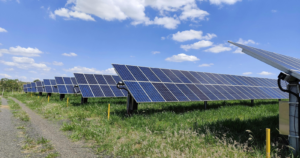
A perovskite solar cell can be printed from a liquid ink and processed below 150 degrees Celsius, cool enough for some plastic substrates, and the resulting film is about 100 times thinner than a human hair yet converts sunlight to electricity at efficiencies now rivalling rigid silicon cells made from crystals grown near 1,414 degrees

Perovskite solar cells self-assemble from a liquid ink at oven temperatures, coat films thinner than a wavelength of light, and — stacked on silicon — have now reached certified efficiencies above 35%, well past what any single silicon cell can achieve.

Aerospace

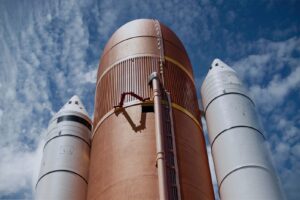
In 1962 NASA’s Mariner 1 was destroyed 294 seconds after launch when a failed guidance antenna handed control to a ground program missing a single overbar, and Arthur C. Clarke turned the loss of the $18.5 million Venus probe into a phrase that never went away: the most expensive hyphen in history

On 22 July 1962, a missing hyphen in the guidance code of NASA's Mariner 1 sent the Venus-bound probe off course 293 seconds after launch, forcing a range safety officer to destroy an $18.5 million spacecraft — a punctuation error Arthur C. Clarke would later call the most expensive in history.

Early Earth

How did a hilltop complex in southern Anatolia get built from roughly 10-tonne limestone pillars 11,500 years ago, about 6,000 years before Stonehenge and long before pottery, metal, or the wheel?

On a limestone ridge in southeastern Türkiye, hunter-gatherers quarried 20-tonne T-shaped pillars and arranged them into circular enclosures around 11,500 years ago — six millennia before Stonehenge, using flint tools, wooden sledges, and a geometric plan that suggests specialist designers before the invention of farming.

Solar Daily

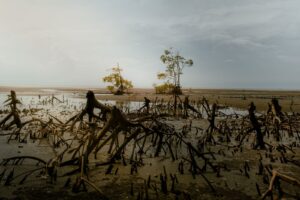
How does a coastal tree that grows in salt water store three to five times more carbon per hectare than tropical rainforest, and why do roughly two-thirds of restoration plantings still fail within five years?

Mangrove soils lock away three to five times more carbon per hectare than tropical rainforest by burying leaf litter in oxygen-starved mud — but roughly two-thirds of restoration plantings fail within five years because seedlings go into the wrong tidal elevation, the wrong species, or the wrong ecosystem entirely.

Solar Daily

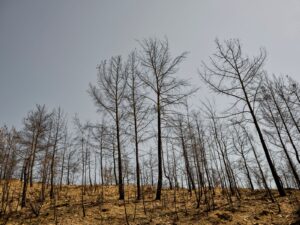
A boiling river runs for roughly 6.4 kilometres through the Peruvian Amazon at temperatures near 100 degrees Celsius with no volcano within 700 kilometres, heated instead by geothermal water rising along a fault the local shamans mapped centuries before geologists arrived

The Shanay-Timpishka river in the Peruvian Amazon runs for roughly 6.4 kilometres at temperatures near boiling, heated by groundwater rising through a fault. There is no volcano within 700 kilometres. Scientists now treat it as a preview of a hotter Amazon.