Tracking the power of the sun.
Solar Daily Editorial Team
Editorial Team

Solar Daily Editorial Team

Editorial Team

The Solar Daily Editorial Team produces Solar Daily's coverage of solar energy and the renewable transition. We report on photovoltaics, energy storage, project development, markets and policy, and the research advancing the next generation of solar technology. Articles reflect our team's collective editorial process, source verification, drafting, technical review, and editing, rather than a single writer's work. Solar Daily takes editorial responsibility for content under this byline. For more on how we work, see our editorial policy.

Solar Daily

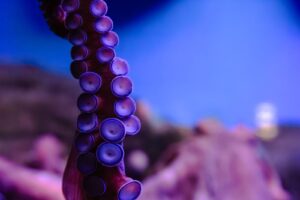
Octopuses have nine brains, three hearts, and blue copper-based blood, and roughly two-thirds of their nervous system lives in their arms, meaning each limb can taste, decide, and react to a passing crab without waiting for the central brain to weigh in

Roughly two-thirds of an octopus's neurons live in its arms, not its head, and each of the eight limbs can taste, decide, and grip prey without waiting for the central brain — a distributed intelligence powered by three hearts and copper-based blue blood.

Solar Daily

Lithium-ion battery electrodes can now be regenerated to about 95 percent of original capacity in an electrochemical bath that skips shredding, smelting, and acid leaching entirely, treating a dead cell more like a rechargeable one than a bag of scrap metal

Cornell engineers have shown that spent lithium-ion battery electrodes can be soaked in an electrochemical bath that dissolves the crust choking them, restoring about 95 percent of original capacity — no shredder, no furnace, no acid tank required.

Solar Daily

In 1665, Robert Hooke pressed a sliver of cork under his hand-ground microscope, saw tiny empty chambers that reminded him of monks’ rooms, and named them cells in a folio so lavish that Samuel Pepys stayed up until two in the morning reading it

In January 1665, Robert Hooke pressed a sliver of cork under a microscope he had designed himself, saw a honeycomb of empty chambers that reminded him of monks' sleeping rooms, and gave them a name that biology has used ever since.

Solar Daily

Greenland sharks can live more than 400 years, meaning some swimming the North Atlantic today were alive when Bach was composing, and nearly all of them spend those centuries functionally blind because a parasitic crustacean latches to each eye

Radiocarbon dating of eye lens proteins has confirmed Greenland sharks as the longest-lived vertebrates on Earth, with individuals reaching nearly 400 years old — and almost every one of them lives out those centuries with a parasitic copepod anchored to each eye.